By Edmond Ortiz
Heading towards summer budget discussions, six San Antonio-area cities are addressing a range of infrastructure issues.
Such recent initiatives include the replacement of water meters in Alamo Heights, and three Northeast Side towns seeking money to upgrade safety at railway crossings.
Alamo Heights
Alamo Heights City Council voted May 11 to approve a number of local infrastructure-related items, namely beginning the process of replacing the city’s water metering system.
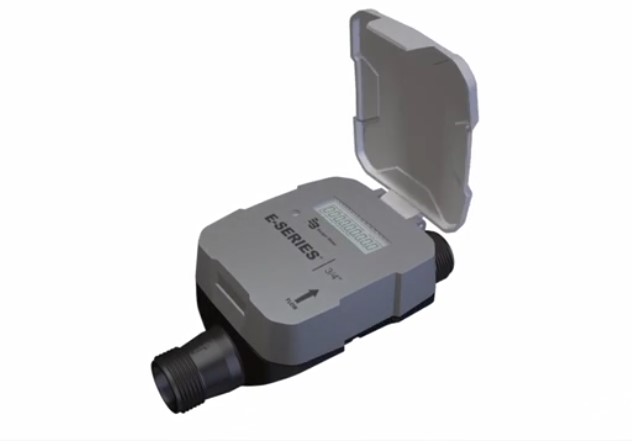
Council authorized the city manager to execute an agreement with Katy-based company Accurate Meter and Supply, which will help to replace the town’s aging analog water meters by providing more than 3,300 technologically advanced meters and modules.
Local officials said the new infrastructure will provide the city with more accurate, granular data on water use, more quickly. The new devices will also help the city to react to water leaks and other systemic problems, and engage customers, faster.
Additionally, council authorized the city manager to execute an agreement with DB Utility, a company that will install the new water meters and modules, and perform an inventory of water system pipes. DB Utility offers similar services nationwide.
According to city representatives, it will cost an estimated $2.39 million to replace Alamo Heights’ water metering infrastructure.
The dollar figure includes the contracts with DB Utility, Accurate Meter and Supply, and the rest of the existing pact with VASS Solutions, a firm that is managing the systemwide update.
City officials expect physical work to replace the water meters to last from late May through this August. System testing and training of staff will continue from September through next April.
In a separate move, council authorized the city manager to execute an agreement with Abelar Inc. to improve the amount of space separating water and sewer lines.
The city must meet a 2030 deadline set by the Texas Commission on Environmental Quality, which wants local governments to shore up separation of sewer and water lines.
The city is targeting the Sylvan Hills and Bluebonnet Hills neighborhoods for the water line relocation project, which is slated to start this summer and take four months to complete.
The water line relocation effort is estimated to cost a maximum of $3.11 million. The city plans to issue $8 million in certificates of obligation, which will fund the water line relocation, water meter replacements, and other projects meant to improve local water and sewer infrastructure.
Railroad crossings
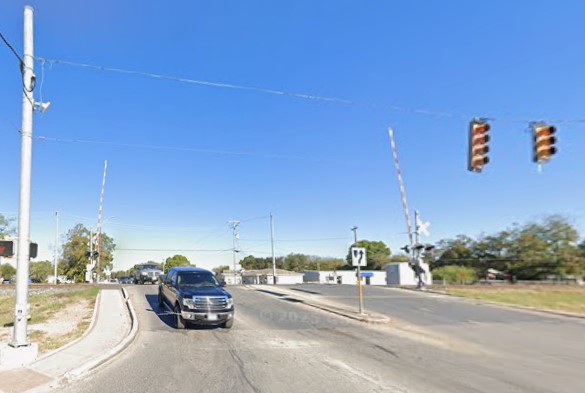
Cibolo, Schertz and Universal City are working together to offer matching funds and apply for federal grants that could support improvements at railroad crossings in each town.
Local officials in each city have increased efforts to secure funds to enhance safety and mobility at their respective crossings at the Union Pacific railroad that runs parallel to Farm Road 78.
Schertz has recorded two train/18-wheeler collisions at the FM 78 and Schertz Parkway crossing in the past seven months.
Universal City City Council voted May 19 to authorize grant applications to the Federal Railroad Administration under the Consolidated Rail Infrastructure and Safety Improvements program, and the Crossing Safety Program/Railroad Crossing Elimination program.
The grants require 20% from each participating city toward the total amount of awarded funding, Universal City City Manager Kim Turner said.
If approved, Cibolo could be awarded $600,000, so it is committing $120,000 as a match. Schertz could get $800,000, so it will put up $160,000. Universal City is pledging $40,000 toward a $200,000 grant.
Turner said each city should have an interlocal agreement in place in June to accommodate their collectively applying for the federal rail crossing grants.
Selma
Selma City Council voted May 14 to go forward on two street improvement efforts. Council awarded a $174,775 to Austin-based company Stripe It Up, which will head a citywide street striping and crack sealing construction project.
Council also awarded a $336,565 bid to Wimberley-based firm Lone Star Sitework, which will handle stormwater drainage, concrete riprap and guardrail improvements on Old Austin Road.
Hollywood Park
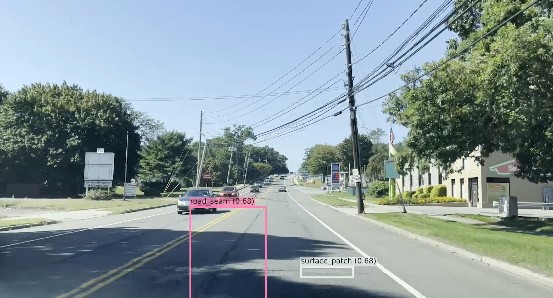
Hollywood Park will be getting some digital help to stay ahead of needed street maintenance. City Council voted May 19 to authorize Mayor Chester Drash to accept a proposal from Vialytics, a New Jersey-based company whose software enables local governments to automatically record the condition of their road infrastructure. This allows cities to quickly plan repairs based on up-to-date data, and centrally manage all street maintenance tasks.
Drash said Vialytics can serve as an extension and an enhancement of the traditional ways that public works staff and the town’s engineer record city road conditions.
Drash added that the data will assist local officials with developing a schedule for both priority improvements and preventative maintenance.
“This data from this is going to be much better, and we can build a database that will also help us determine maintenance,” he said.
The city will pay Vialytics $4,000 annually for three years for the software, plus $3,500 for program training.
Cibolo
Cibolo City Council voted May 12 to pass two pacts with engineering firm Kimley-Horn, which will take part in separate local infrastructure projects.
Council adopted an agreement with Kimley-Horn to provide preliminary engineering and a schematic design of an expanded Wiedner Road from Town Creek/Bentwood Pass to Farm Road 1103. Kimley-Horn will be paid up to $1.39 million to do the engineering and design.
The firm’s work will be funded by certificates of obligation that the city is issuing in order to support Cibolo’s five-year capital improvements program, which the council endorsed last fall.
The Cibolo council also approved a $249,094 pact with Kimley-Horn, which will conduct a citywide pavement condition index study. Some of the aforementioned CIP certificates of obligation will fund the study, which city officials said will help them to prioritize future street improvements.