By Jason Peña Olivarri
Students who want to lead aerospace research can now pursue a doctorate at UT San Antonio, giving them a local path into work on aircraft, rockets and space systems.
The new aerospace engineering doctoral degree is the fourth program of its kind in Texas. It expands the state’s capacity to train researchers, though its effect on San Antonio’s workforce will depend on enrollment and where graduates find jobs.
A name for work already underway
UT San Antonio announced the program Sept. 11 through the Klesse College of Engineering and Integrated Design. Texas A&M University, UT Austin and UT Arlington also offer aerospace engineering doctoral programs.
Chris Combs, who directs UT San Antonio’s aerospace engineering program, said the degree has been about eight years in the making. The university already had professors, laboratories and students conducting aerospace research. Before the aerospace doctorate was available, some students earned doctorates in mechanical engineering.
“It’s not something that happens overnight,” Combs said.
What a doctoral student would do
Doctoral students take advanced classes, but much of their work centers on research. They ask questions without established answers, test possible solutions and explain their findings in a dissertation.
Many aerospace careers do not require a doctorate. Local employers also hire engineers, mechanics and technicians through other education and training paths. The doctoral degree is designed for people who want to lead research or solve difficult technical problems.
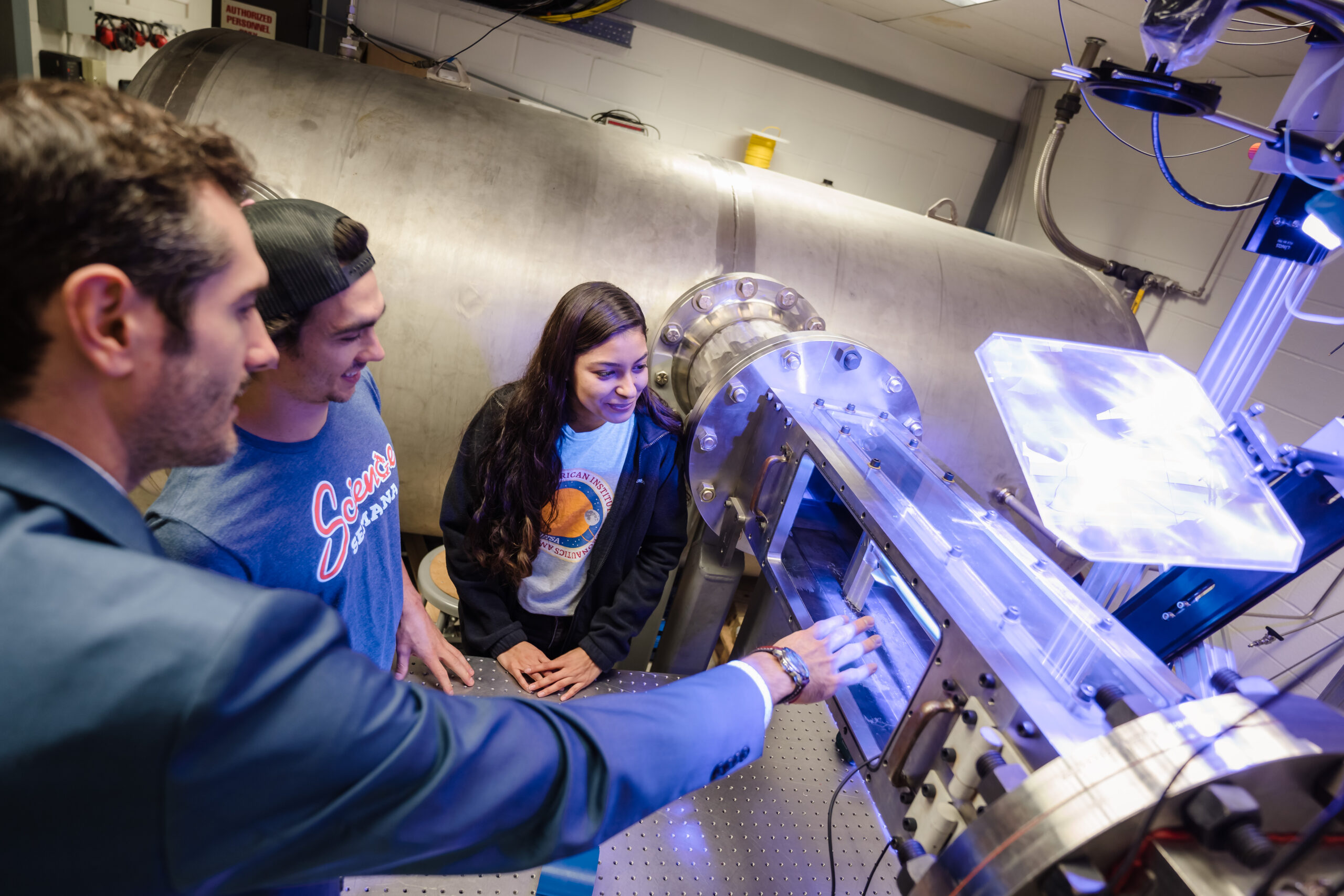
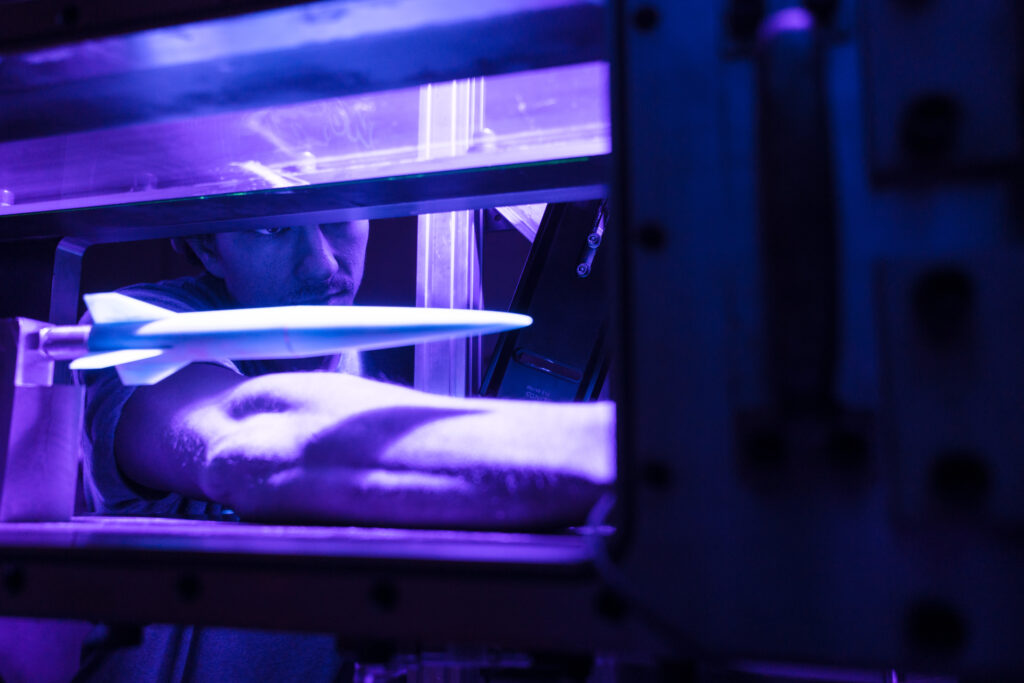
Students may use UT San Antonio’s high-speed wind tunnel to study how air moves around a vehicle at several times the speed of sound. Others could study how engines produce thrust, how spacecraft systems operate or how materials hold up in extreme flight conditions. Combs said the larger goal is to teach students to manage long projects and keep working when an experiment fails.
“Your employer is going to know they can just give you something to deal with that nobody’s been able to figure out before, and you’re going to go and figure it out,” Combs said. “That’s what a Ph.D. is — a technical leader and somebody that can get things done.”
A path for new students
The university said current doctoral students may switch into the new program. Combs said five to 10 students would make a strong first group, though no enrollment target has been set. Students may apply with a bachelor’s degree; the program takes an estimated five years from that point or three years for those entering with a master’s. Some doctoral students may qualify for funded research or teaching positions. The university’s program page lists admission requirements and deadlines.
Why San Antonio matters
San Antonio’s aviation and aerospace sectors, anchored by Boeing Co., StandardAero and Chromalloy, helped to inform the development of UTSA’s aerospace doctorate program. San Antonio’s aviation and aerospace history stretches from civilian work at the Kelly Air Force Base to today’s operations at Port San Antonio. Nearly 18,000 people work at the former base across aerospace, defense, cybersecurity, manufacturing and other fields, according to the Port’s 2024 economic impact study.
Not every Port job requires an aerospace degree. StandardAero’s San Antonio site runs an in-house 12-week aviation mechanic training program combining classroom and hands-on work; the company describes the training as paid. That pathway prepares workers for mechanic roles. The UT San Antonio doctorate serves a different purpose: training researchers to solve advanced technical problems.
Dan Gonzales, vice president of business development at StandardAero in San Antonio, described that career range: “Our industry’s workforce pipeline runs from the shop floor to the research lab, and San Antonio has been envisioning and building every piece of it. UT San Antonio’s aerospace Ph.D adds the top rung of that ladder.”
Port San Antonio is also a hub for research into advanced air mobility, the use of electric or hybrid-electric aircraft that take off and land vertically. Port officials said site work is underway on a vertiport at Kelly Field, intended as a test site for the aircraft. It has proposed routes to explore potential uses such as connecting academic and industry partners, moving cargo and supporting emergency response.
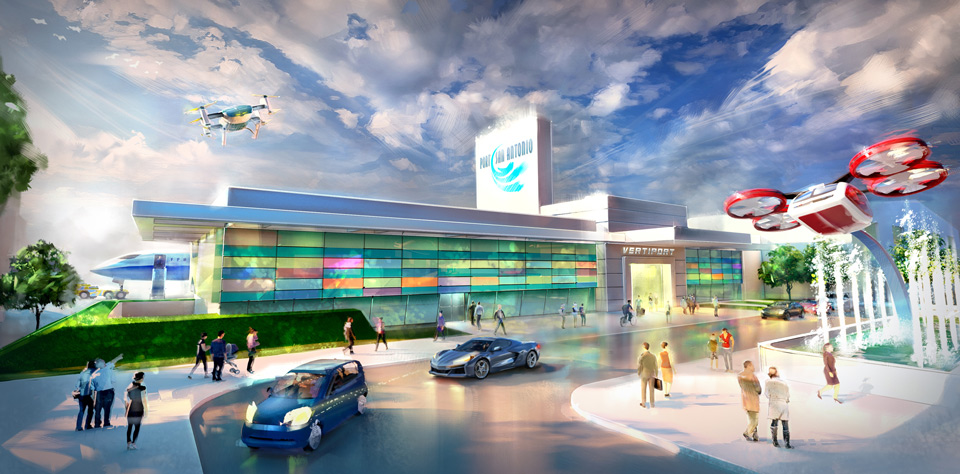
Texas Department of Transportation’s Project Nexus, part of the federal government’s eVTOL (electric vertical takeoff and landing) and advanced air mobility integration pilot program, will proceed in phases. TxDOT officials said early work will validate routes, with later testing focused on medical and cargo transport.
Separately, Port San Antonio and Austin-based SkyGrid have agreed to study airspace design, routing, surveillance and cybersecurity systems to support advanced aircraft at the joint-use airfield. The Port’s effort is part of a broader aviation initiative; no direct role for the new UT San Antonio doctorate has been announced.
Southwest Research Institute (SwRI) is another nearby research partner. NASA selected SwRI and UT San Antonio to test technology that could help produce fuel, oxygen and other supplies on the Moon or Mars. That project is separate from the new degree, but it shows aerospace-related research already taking place here.
Combs said the university works with Boeing and described SwRI as an important partner and an employer of engineering graduates. Those relationships could connect students with local projects and employers, but they do not guarantee graduates will stay. Doctorate holders may also work for universities, NASA, national laboratories, defense companies and research organizations elsewhere.
These employers and projects show students where aerospace skills are used locally. They do not establish how many graduates of the new program will find jobs here.
Why the university sees a need
In their program announcement, UT San Antonio officials said an analysis identified about 200 Texas positions requiring an aerospace engineering doctorate, while the state’s three existing programs produce about 40 graduates a year. It sees the new degree as one way to train more researchers.
The university did not release the analysis, so its comparison could not be independently checked. The time period covered by the job figures and the number of positions in San Antonio are unclear. The figures also do not show how many graduates the new program will produce.
A federal outlook projects growth for aerospace engineers nationally, but it does not measure demand for doctorate holders in San Antonio.
What comes next
The degree expands Texas’ capacity to train aerospace researchers. Its effect on the local workforce will become clearer as students complete the program and choose where to work.
For local students, the doctorate adds another step to an education path that includes an undergraduate aerospace certificate and a master’s degree at UT San Antonio, Combs said. The city’s challenge will be connecting its established aviation workforce with research jobs in emerging flight and space technologies.
“I think San Antonio really should view itself as an aerospace hub and a city that’s right in the middle of all of this stuff going on in space and aerospace,” Combs said. “This is a viable career path for you.”