By Edmond Ortiz
Alamo Heights leaders are backing a local company’s plan to redevelop a 1970s apartment complex site as a multistory apartment community.
What is happening
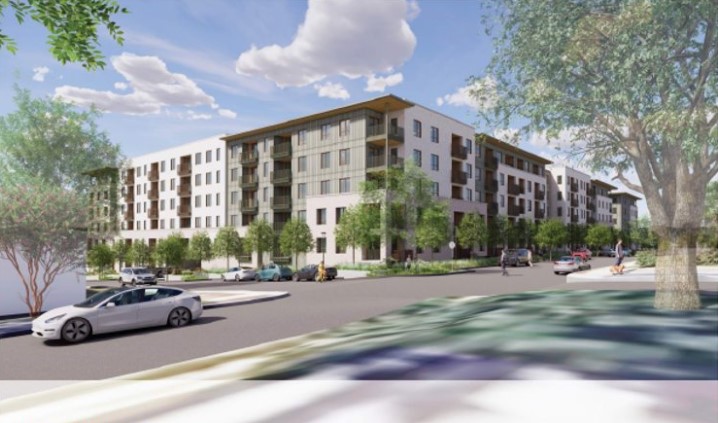
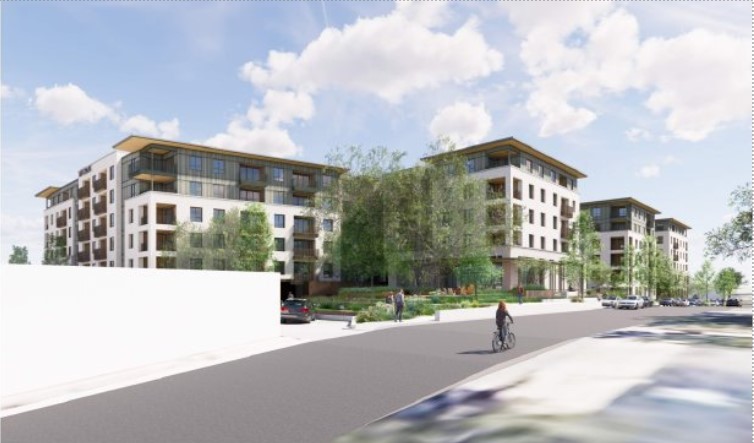
Alamo Heights City Council unanimously voted Sept. 14 to approve development firm Embrey’s request for a special use permit, which grants the company several variances to replace the Treehouse Apartments with a 296-unit multifamily complex on properties bound by Arcadia and Grove places and Cleveland Court.
Embrey is working with the current Treehouse Apartments property owner, Ridgement Properties, to redevelop the multifamily residential community.
The new apartment complex will feature a courtyard, a swimming pool, clubroom, fitness center, parking garage, pet park, and an outdoor kitchen with gas grills and benches.
Embrey sought multiple variances, most notably the number of apartments, a maximum height of six stories, a larger front yard setback, the exact placement of sidewalk paths, and streetside trees.
Embrey also plans to develop nearly 500 parking spaces, but sought flexibility to accommodate a certain number of public parallel and head-in parking spaces in certain areas around the new apartment complex.
The city’s planning and zoning commission unanimously approved Embrey’s SUP request, and the architectural review board voted 3-1 to approve Lake Flato Architects’ final design of the new apartment complex.
What they are saying
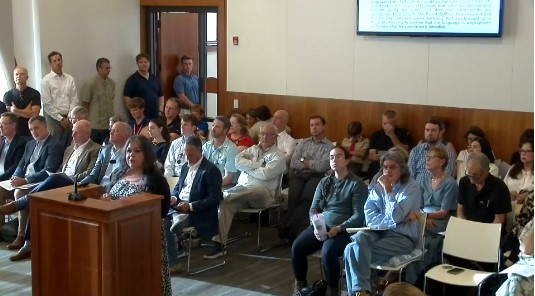
While Embrey’s project proceeded through the city’s vetting process, the envisioned development received criticism from some neighbors, who expressed their worries on a range of issues, from building height to whether the city adequately informed residents about the project.
When it came to the city alerting property owners about the SUP request, 14 residents showed support for the project, and five others opposed it.
Embrey’s plan to develop the Treehouse Apartments site is unfolding during a busy period of redevelopment happening across Alamo Heights.
Ridgemont is building The Katherine, a multifamily residential community on Katherine Court. The company is also repurposing the former medical building at 5307 Broadway St. for dining/retail use.
The Alamo Heights Independent School District recently finished enhancing the Alamo Heights High School campus, where the district is now building a new central office and a community center.
Also, Embrey itself is responsible for building 7600 Broadway, the mixed-use development at the corner of Broadway and Austin Highway, where the project once drew sharp opposition from residents years ago.
Brad Knolle, Embrey’s executive vice president of development, said he and his colleagues have spent months talking with city officials and community stakeholders to come up with a financially viable and a structurally and aesthetically pleasing apartment project.
According to Knolle, the new apartments will appeal to young professionals, empty nesters, and compete with projects at Pearl and in the Lincoln Heights neighborhood. He added that the new development will complement retail and dining ventures along the Broadway corridor.
“Redevelopment is tough, and that’s what this project is. Economic hardships are not a reason for approval or denial, but I can assure you that Embrey has gone to great lengths to try to fit the financial model in a development proposal for you that is both financially feasible and is executable, and that the city of Alamo Heights will be proud of,” Knolle said.
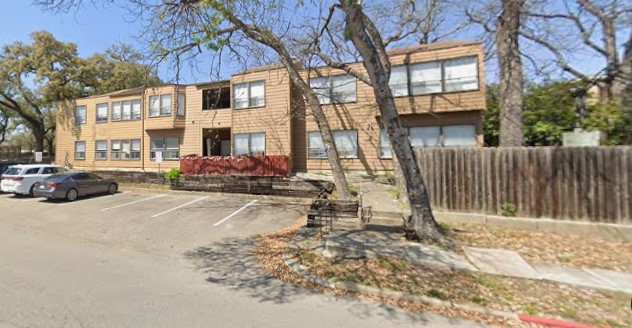
Some residents said the proposed building height was their biggest problem, and that its size or design looked incompatible with the surrounding neighborhood.
“Because the new building will face one- and two-story single-family homes, I strongly request that the ordinance include explicit language, limiting the building to four stories along Arcadia and Cleveland between the two garages,” homeowner Cassidy Luitjen said.
Another neighbor, Claudia Carlos, urged council members to keep in mind consistency of neighborhood character when considering the addition of a large-scale project such as Embrey’s multifamily development.
“Upon reading the city’s master plan, I do not believe that that is the case,” Carlos said of the new apartment complex.
Knolle said Embrey has offered several concessions, but that limiting the apartment development height to three or four stories would render the project monetarily infeasible.
In the end, council members agreed on what they called reasonable requests of Embrey toward advancing a major development.
Council approved the SUP, which limits the number of apartments to 296, and lowers the maximum structural height from 65 feet to 55 feet at the corner of Arcadia and Cleveland, among other stipulations.
Additionally, the city is addressing water impact concerns by requiring the property owners to buy up to 30 acre-feet of Edwards Aquifer water pumping rights and convey those rights to the city’s water permit in order to accommodate the new multifamily residential development.
If the property owners cannot acquire and deliver the water pumping rights to the city before the city issues a final certificate of occupancy, they would have to pay the city $27,000 per acre-foot to purchase the pumping rights.
Councilmember Trey Jacobson lauded the development team, city staff and community members who contributed to public engagement about the new apartment project, which he added could transform the former Treehouse Apartments property.
“A lot of effort has been put into it because, in some ways, it is really a monumental project that’s under consideration tonight because of the change and the influence that it would have,” Jacobson said.