By Edmond Ortiz
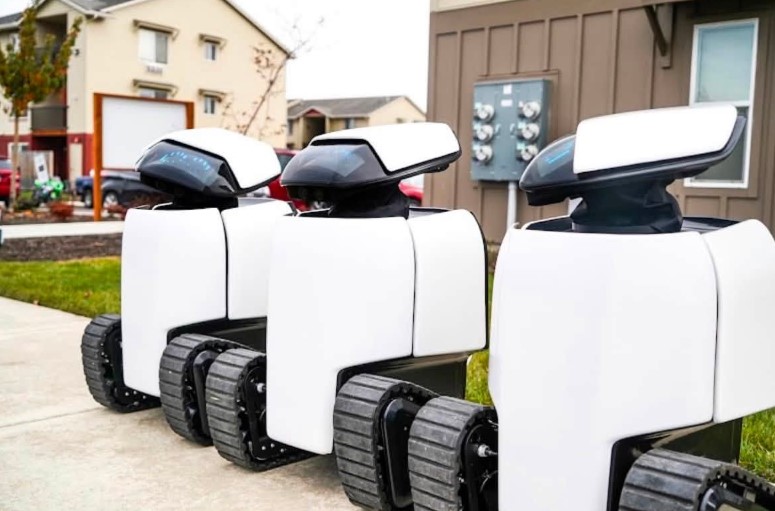
Universal City is deploying a squad of robots built and programmed to patrol key corridors to help upkeep safe pedestrian pathways.
What is happening
According to a city announcement, the city is partnering with Oregon-based company Daxbot, which creates what it calls “people-centric autonomous robots” that enhance communities.
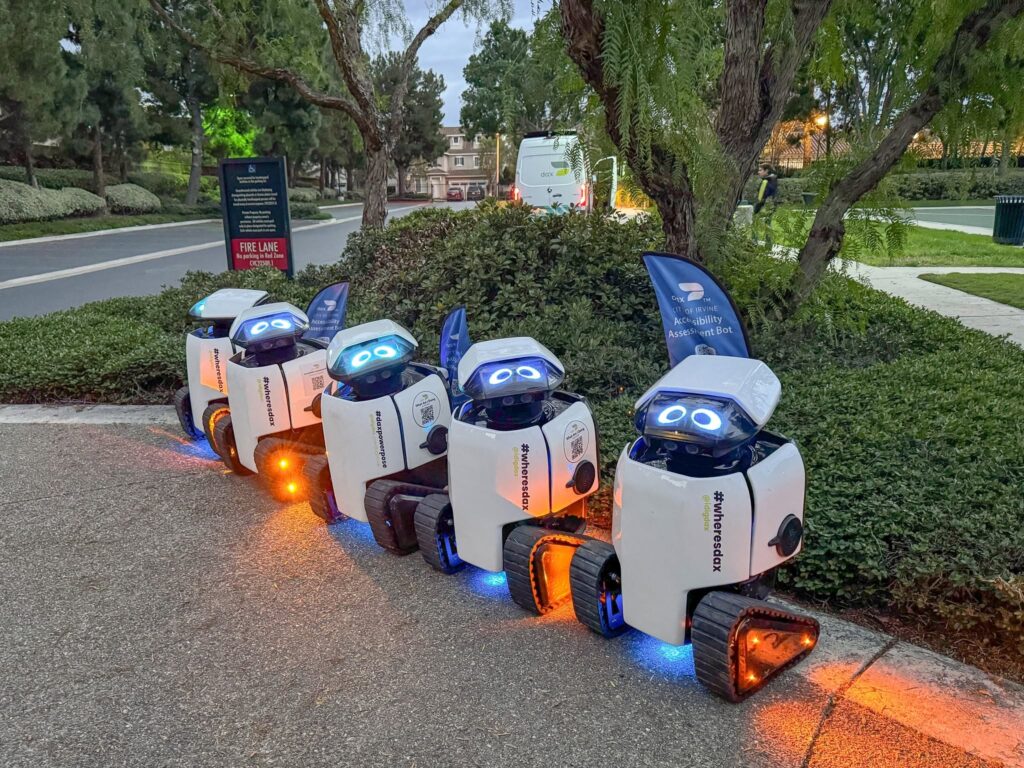
Daxbot offers two kinds of robots, one for security, the other for maintaining compliance with the Americans with Disabilities Act, the latter of which is being used in Universal City.
Daxbot’s ADA robots will travel 12 miles of what city officials call high priority sidewalk corridors:
- Universal City Boulevard from Mount Helicon to Northlake Pass
- Kitty Hawk Road from Lone Shadow Trail to Pat Booker Road
- Old Cimarron Trail from Kitty Hawk Road to Farm Road 1976
- East Aviation Boulevard from Travis Drive to Aztec Way
- Athenian Drive from Forum Road to Phoenix Drive
The robots use lasers to generate inventories of such things as sidewalk width, running slopes and cross-slopes, curb-ramp geometry, and surface conditions and potential hazards.
The city can use the collected data to formulate a detailed, accurate record of the physical pedestrian infrastructure, local officials said. In turn, the information shows engineers and planners what type of pedestrian improvements are needed and where.
How did this come to be
The local deployment of the Daxbot ADA rovers originates to Universal City’s effort to capitalize on the U.S. Department of Transportation’s Safe Streets and Roads for All program, which has made available $5 billion in competitive grants to help communities find ways to prevent roadway fatalities and serious injuries.
According to City Manager Kim Turner, Kimley-Horn, Universal City’s consulting engineering firm, referred local officials to Daxbot’s use of semi-autonomous rovers in checking walkways for slip, trip and fall hazards, inclines and other points of interest on pedestrian paths.
“The rovers give us an accurate assessment for where improvements can be made,” Turner said. “They’re noting dips in the road, cracks in sidewalks, things like that.”
Kimley-Horn studied areas in Universal City where vehicular accidents frequently occur, and where mobility for motorists, pedestrians and bicyclists can be improved.
The city applied for Safe Streets and Roads for All funding, and was awarded a $470,000 grant. The city was required to match the grant with $94,000. The awarded money covers the cost of the traffic study, and now the robots’ assessment of the identified sidewalk corridors for ADA compliance.
Once the city concludes what types of upgrades are needed and where, local officials will seek more grant money to fund those improvements, Turner said.
Answering the public’s response
Daxbot robots have appeared recently in communities such as Tyler, Texas, Hoboken, New Jersey, and Bangor, Maine.
Universal City’s announcement about the rovers on the city’s social media channels has been greeted with hundreds of comments from residents and non-residents, with many people voicing skepticism about the use of robots to note deficiencies along high-traffic city roadways and sidewalks.
Some people have wondered whether the Daxbot rovers are self-operating actually surveillance devices recording images and information of passing vehicles and humans. Others have asked why the city is not using humans to do the job.
Turner said a trained human controls each robot, and ensures that a rover will not collide with a passing human or vehicle. She also said the robots are not surveillance devices of any kind.
“They are not recording anything or anybody or storing images. There is no interaction with people,” Turner added.
Turner also explained that the rovers can more safely and effectively obtain objective and precise data of the sidewalk corridors identified for assessment.
“First, it’s hot out there. But a human being, even on a good day, could walk 2 miles (in the targeted areas),” Turner added. “The rovers can do six to 12 miles at the same time, and they can go and get a deeper perspective.”