By Edmond Ortiz
Fresh off a contentious budget cycle, San Antonio’s top leaders now look to 2027 when voters could face a bond focused on drainage improvements, and when San Antonio Water System customers may see delayed rate hikes.
A preview of a potential bond issue
City Council was briefed by city staff in a Sept. 30 special meeting about planning for a 2027 bond package, which would go before voters in a May election.
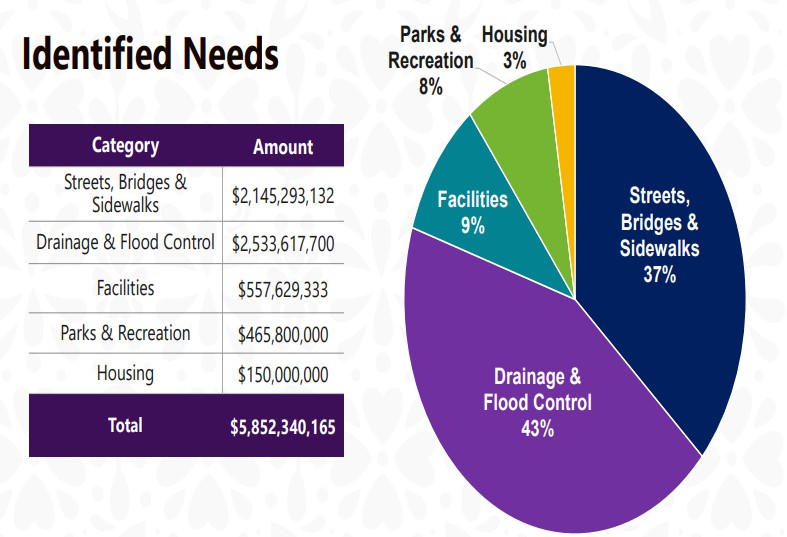
According to city staff, 304 potential projects estimated to cost a total of $5.8 billion have been identified by council members, staff, public agencies, city boards and community members.
But facing economic uncertainty, inflation and stagnating revenue sources, the city is poised to float a bond that is much smaller than the $1.2 billion package that voters approved in 2022, as city officials have warned for months.
One possible scenario has the city proposing a $442 million bond to cover street infrastructure, parks, facilities and housing, and leaning on a separate stormwater fee hike to support $175 million for drainage-related projects.
Approximately 43% of those potential bond projects, totaling $2.53 billion, are envisioned drainage improvements and flood control initiatives, many of which are classified as shovel-ready measures that are also part of the state’s flood plan, among ongoing or multi-phased projects, or designed to mitigate flooding hazards.
Some of the larger requested drainage projects include:
- Underground stormwater drain for the Aldrich Drive/Parallel Drive area between Joint Base San Antonio-Lackland and Port San Antonio ($46.5 million)
- Concepcion Creek upgrades to address major flooding between South General McMullen and the San Antonio River ($332.5 million)
- Building storm drain systems and reconstruction of roadway in the Heath Road area ($67.4 million)
- Addressing flooding issues in the Kampmann Boulevard area near Woodlawn Lake ($113 million)
- Construction of channel and associated improvements at Leon Creek and Grissom Road ($95 million)
- Continuation of 2022 bond-funded drainage upgrades on North New Braunfels Avenue from Austin Highway to Casana Avenue ($166.2 million)
- Drainage upgrades south of Overbrook Drive to address 100-year storm event rainfalls ($185 million)
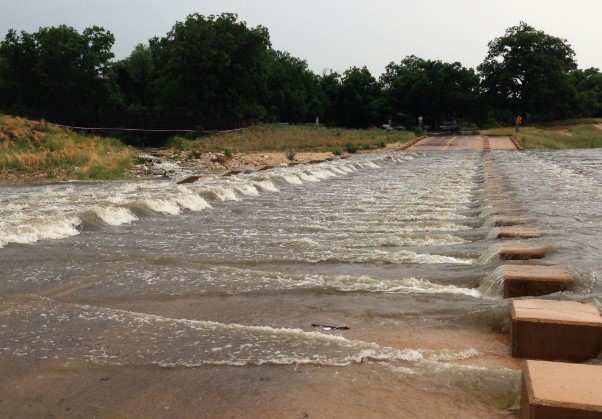
Calls for better flood control have increased in recent years, especially after major multiple-fatality flash-flooding events have occurred between San Antonio and the Hill Country in the past two years.
Another 37% of the prospective bond projects cover street, bridge and sidewalk improvements, totaling $2.14 billion. The remaining currently identified potential bond projects include facilities ($556 million), parks and recreation ($465.8 million), and affordable housing ($150 million).
While requested drainage upgrades and flood control initiatives make up a narrow majority of potential 2027 bond projects, city officials said it is important to prioritize the nearly 10% of total city streets that are considered failing roadways, many of which exist in older parts of town inside Loop 410.
City officials must also consider the infrastructural needs of the proposed Project Marvel sports and entertainment district.
According to the Sept. 30 briefing, the amounts of potential infrastructure enhancements sought to support the downtown sports and entertainment district are significantly smaller than what local leaders such as Mayor Gina Ortiz Jones had publicly assumed.
City staffers presently estimate $35 million in required infrastructure upgrades, assuming that the Texas Department of Transportation will cover 80% of costs with the city providing 20% matching funds.
Identified Project Marvel-area projects include an extension of Nueva Street, improvements to Durango Boulevard from Alamo Street to Interstate 37, and measures to upgrade motorist, pedestrian and bicyclist access at I-37 between Hemisfair/Project Marvel and the Alamodome. Several other area projects have been pulled off the table.
What’s next for bond development?
The rest of this year will be dominated by appointments to bond committees, which will hold public sessions to gather public input toward paring down the prospective project list. Council is also slated to get another staff briefing Oct. 15.
Council is scheduled to approve final bond projects in January, and call for a bond election in February.
Water rate plan
City Council was briefed in a separate Sept. 30 meeting about SAWS’ long-awaited water and wastewater rate increase plan.
Council voted last June to postpone action on SAWS’ proposed rate changes, voicing concerns that many SAWS customers would be unable to take on higher rates amid inflation, escalating costs of living, and even job instability for some ratepayers.
Some council members have also criticized SAWS leadership, asking the utility to emphasize cost efficiencies and cutting expenses were possible before seeking support from customers to back rate hikes, which originally were supposed to take effect this summer.
But this week, SAWS officials said they would be willing to put off implementing proposed rate hikes for a few more months.
According to SAWS’ revised four-year rate plan, the utility’s envisioned rate increases of 6.9% the first year and 6.5% the second year remain in place, but are now proposed for implementation in January 2027 and January 2028, respectively.
The proposed maximum rate percentages for the third and fourth years – 7.0% and 6.6% respectively – also are unchanged, but would be implemented in 2029 and 2030.
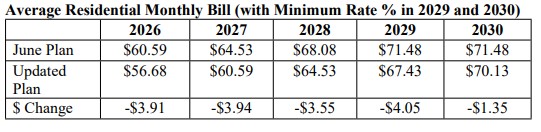
According to SAWS officials, the average monthly residential water bill – currently at $56.68 – would reach a range between $70.13 and $73.61 in 2030 if council were to adopt the revised rate plan.
Any proposed rate changes for non-residential customers will also wait until 2027 for implementation. As originally proposed, SAWS will not increase rates for Uplift program customers, and plans to expand program eligibility for low-income customers, and boost assistance funding by $550,000.
Additionally, SAWS officials have presented council with the findings of an initial phase of a study meant to help the utility improve cost efficiency and effectiveness of administrative and capital operations.
SAWS leaders also said they remain committed to replacing 77 miles of deteriorating water mains across the service area.
The SAWS board will have an Oct. 6 hearing on the revised rate plan. Council plans to take action Oct. 8 on the plan.