By Edmond Ortiz
Leaders of four Hill Country cities are striving to address escalating needs of their growing populations while confronting increasing budgetary headwinds.
Officials in Boerne, Bulverde, Fair Oaks Ranch and New Braunfels share economic and other concerns that are dogging numerous local governments that have adopted an operating budget for Fiscal Year 2027, which begins Oct. 1.
Many cities and counties have reluctantly turned to raising property tax rates to offset losses in different revenue sources, including taxable property values, rising numbers of taxpayers who are protesting their latest valuations, and those capitalizing on tax exemptions.
Other communities are seeing the consequences of changes in consumer spending that affect sales tax revenues, and the expiration of federal pandemic relief funds that had padded significant public expenses in recent years.
Boerne
A $1.27 million drop in sales tax, permit fee and interest revenues over last year, and what City Manager Ben Thatcher called a “moderation” of local property value growth prompted Boerne officials to reduce and defer recurring expenditures to the tune of $600,000 while building the town’s new FY 2027 budget.
Boerne officials also allowed $1.56 million in prior-year one-time costs to expire, creating $2.16 million capacity in the new budget, which contains a $68.2 million general fund, or daily operations, budget – a decrease from $75.3 million.
Boerne is one of the local governments that opted to increase its property tax rate, from 47.1 cents per $100 valuation to 47.9 cents.
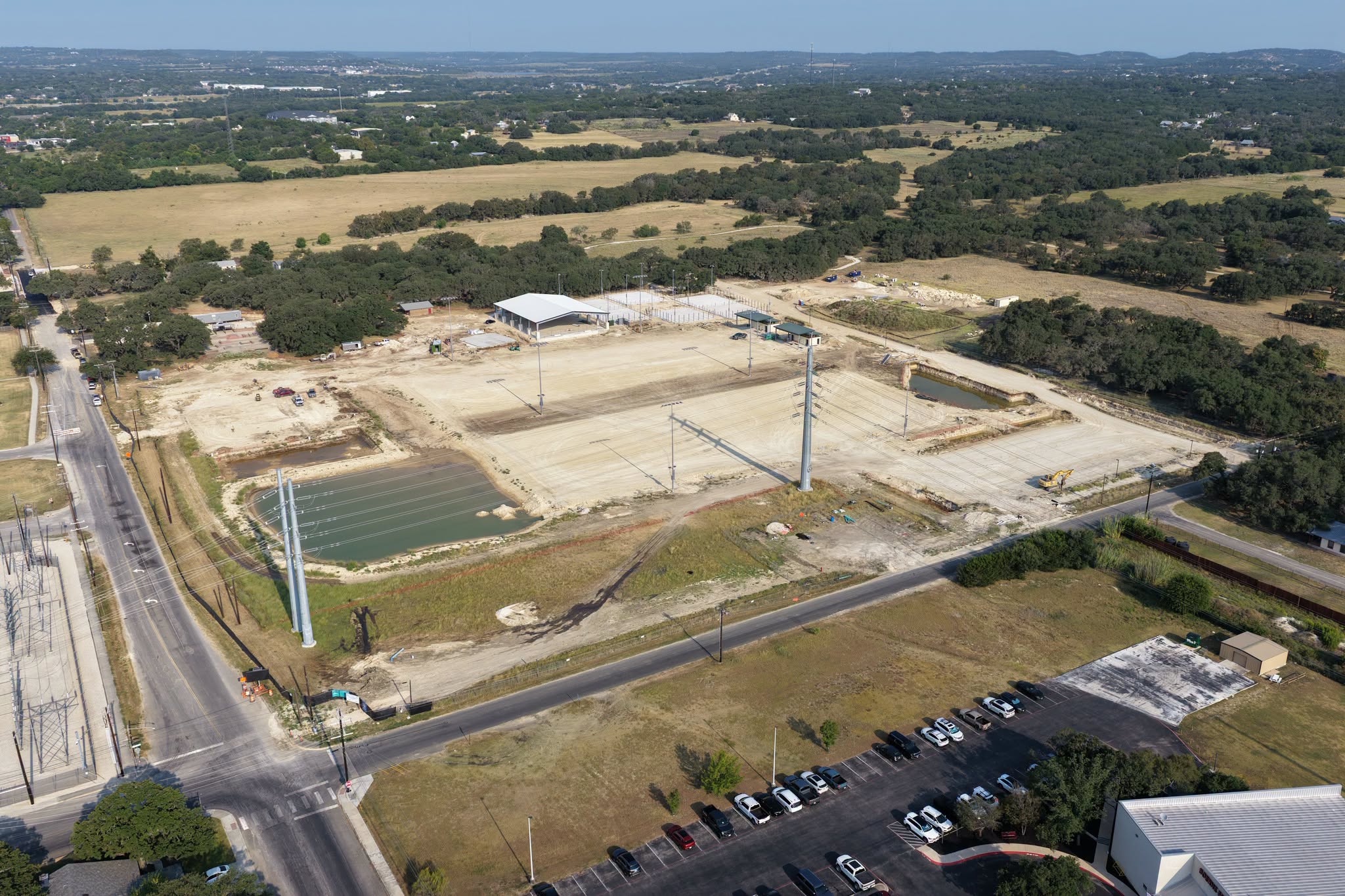
Boerne officials said the tax hike will help to support adequate levels of core town services, and cover expenses tied to the completion and scheduled wrap-up of 2022 city bond projects, such as anticipated opening of Boerne Heritage Volkspark, an evolution of Northside Community Park at 524 Adler Road.
Those related expenses include the addition of nearly five full-time positions to maintain the Heritage Volkspark, which joins Boerne’s ever-rising amount of public recreational areas, including a creekside green space that the city recently opened in the 600 block of River Road.
According to Boerne leaders, tax increase revenues will also permit the city to add one patrol officer, and meet employee compensation and benefit obligations, such as a 3% cost-of-living adjustment (COLA).
With Boerne’s population hovering around 25,000, city officials said it is important to keep pace with mounting infrastructure and other community needs. The town is looking at boosting water, wastewater and stormwater rates a total of 7%, based on a long-term rate plan adopted after the completion of a 2025 utility rate study.
Boerne officials also recommended increasing the stormwater equivalent residential unit charge from $4 to $8 a month to advance priority drainage investments, and future debt service associated with the Menger Creek bridge project. Any rate adjustments would take effect Jan. 1.
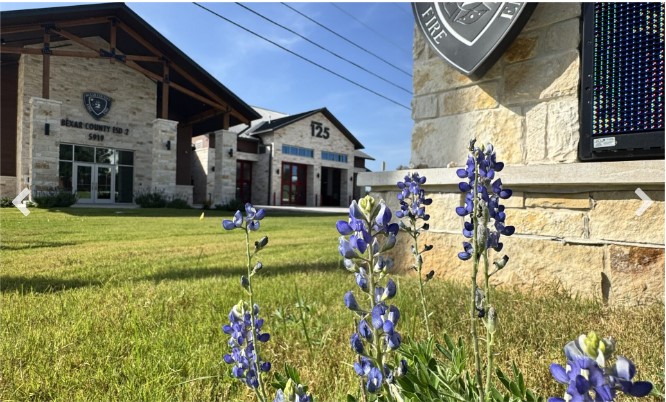
Additionally, Boerne’s new budget anticipates passage of $20 million in certificates of obligation for construction of a second fire station.
“Boerne remains a growing and an economically resilient community, but the pace and composition of revenue growth are changing,” Thatcher said in his budgetary summary. “Boerne continues to grow, but growth does not eliminate the need for disciplined choices.”
Bulverde
The growing western Comal County community, too, is raising its property tax rate from 25.9 cents to 29.5 cents. The town’s median homestead valued at $543,481 can expect to receive a tax bill of $1,605.
Citing reductions in sales tax and interest revenues, Bulverde officials re-emphasized public safety and public works in their new budget, which includes a $10.32 million in basic service spending, slightly lower than last year.
Bulverde’s new budget also covers a citywide street intersection assessment, a wastewater treatment analysis, police vehicles, courtroom technology and security upgrades, a 3% COLA, as well as 2% merit hikes for eligible staffers.
Fair Oaks Ranch
The property tax rate in Fair Oaks Ranch is going up 28.5 cents to 31.1 cents, resulting in an additional $209 on the average local household tax bill.
The strong residential property value growth that Fair Oaks Ranch experienced between 2022 and 2024 fell off in the past year, yielding a drop in the town’s total taxable valuation and a sharp increase in new tax exemptions.
Still, local officials project steady increases in sales tax income, franchise fees with new homes added to tax rolls, and permits with more developments entering the construction phase.
Fair Oaks Ranch’s FY 27 budget features $12.1 million in general fund expenditures, a rise from the $11.3 million budgeted last year. The city approved a 2.5% COLA for all employees, and a 2.5% merit increase for qualifying workers.
The new budget covers numerous capital projects, such as the reconstruction of Dietz Elkhorn and Ammann roads,public safety equipment and vehicle replacement, and the introduction of a Citizens’ Leadership Academy, which is designed to offer residents more insight on city operations, and ways to engage city staff. The new budget also addresses rising costs of a contract between the city and Bexar County Emergency Services District No. 4.
New Braunfels
New Braunfels admitted battling fiscal hurdles in crafting a FY 27 budget that contains a $120 million general fund, a jump from $115.4 million in daily operational money featured in last year’s amended budget.
Features in the new budget include a 2.5% COLA for staff, merit increases for eligible uniformed police and fire personnel, the conversion of the Westside Community Center’s community room into a multi-use exercise space, and the implementation of the downtown parking reinvestment zone plan.
The new budget also covers multiple street infrastructure measures, adds two emergency dispatchers and one police detective, and provides money for 12 firefighter positions that had been funded by a now-expiring grant.
New Braunfels is keeping its property tax rate at 40.8 cents. Given slight decreases in median homestead values across Comal and Guadalupe counties, the average New Braunfels homeowners can expect to see a small drop in their respective tax bill in 2027. For the first time in over a decade, the town saw a decline in the taxable value of existing properties.
“While New Braunfels continues to benefit from new construction and overall growth in its tax base, this (revenue) shift serves as an important reminder that revenue growth cannot be assumed indefinitely and reinforces the importance of conservative forecasting and budgeting,” he added in his budget summary.