By Jason P. Olivarri
University of Texas at San Antonio researchers are developing a mobile app designed to help parents of children with autism practice communication strategies at home.
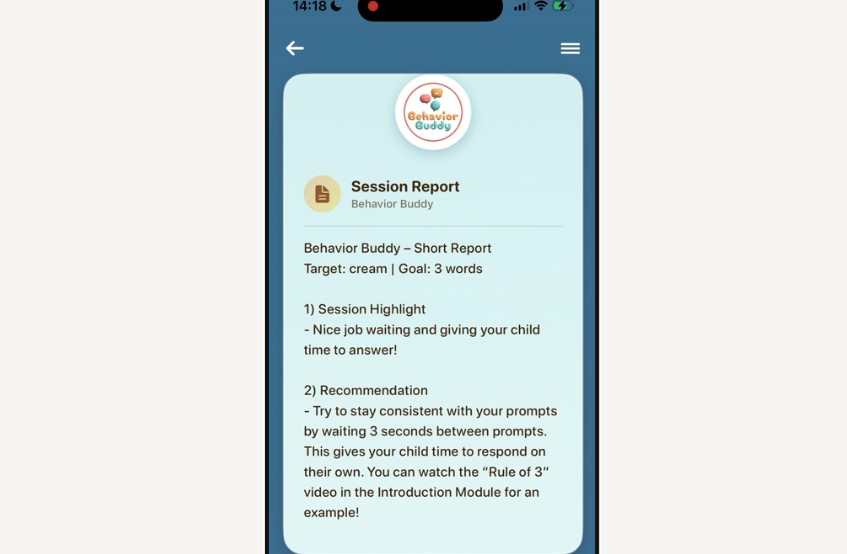
The app, called Behavior Buddy, uses artificial intelligence to analyze conversations between parents and children and provide immediate feedback aimed at strengthening communication skills outside traditional therapy sessions.
The project is part of UTSA’s Brain Health Consortium, a multidisciplinary research initiative that brings together scientists studying brain development, learning and neurological disorders.
The research is led by Leslie Neely, a professor in the UTSA’s educational psychology and neuroscience programs. She also directs UTSA’s Applied Behavior Analysis program, which has supported more than 1,800 families of children with autism and other developmental conditions.
How the app works
Neely said the app was created to address a recurring challenge she has observed both in clinical practice and while working with families. The goal, she said, is to help caregivers translate the skills that children learn in the clinic into the home environment using natural language processing.
“The computer essentially has ears,” Neely said. “It listens to the conversation between the caregiver and the child and provides feedback on what they did and what they can do next.”
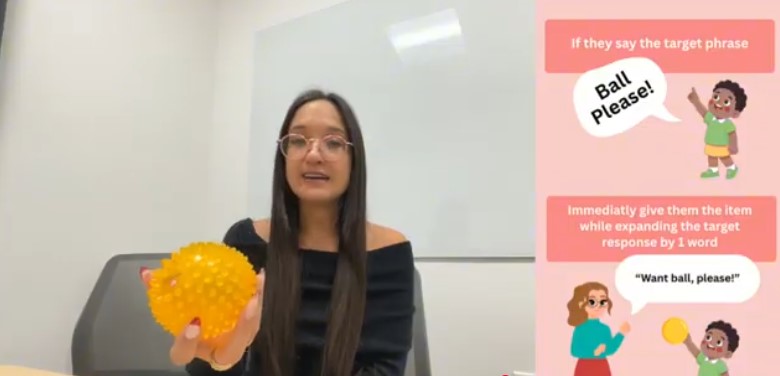
Behavior Buddy is built around incidental teaching, an evidence-based therapy method that encourages parents to create learning opportunities during everyday activities such as playtime, meals and daily routines.
The app also incorporates behavioral skills training to help caregivers practice communication techniques. Parents can set communication goals for their child — such as encouraging two-word requests — while the app listens to conversations and provides guidance.
Early results and family experiences
Early testing of the app has produced promising results, researchers said.
According to UTSA researchers, caregivers using Behavior Buddy implemented communication strategies about 50% more effectively than those who did not have access to the technology.
Researchers also reported early improvements in children’s communication skills.
Elvira Pedraza, a parent from the Rio Grande Valley who participated in early testing, said the technology helped her practice communication techniques with her 6-year-old son. Before using the app, Pedraza said her son often communicated using short phrases.
“Before, he would say things like ‘Mom macaroni please,’ just short phrases,” Pedraza said. “Now he’s using nine- or 10-word sentences.”
Pedraza said accessing therapy services can be difficult for families outside major metropolitan areas.
“I had been wanting to get him into ABA (Applied Behavior Analysis) therapy since his diagnosis, but locally I have to drive 30 minutes to get there and 30 minutes to come back,” she said.
Instead, the app allowed her to practice communication strategies with her son confidently at home.
“They told me, ‘I just need you to do 10 minutes,’ and it turned into something my son actually liked to do,” Pedraza said.
Addressing a shortage of specialists
Tools like Behavior Buddy could also help address a growing shortage of autism behavioral specialists, Neely said.
“Demand for trained behavioral analysts already exceeds the number of available professionals,” Neely said. “Nationwide, there are roughly 130,000 job postings for behavioral analysts, with only about one qualified candidate for every two positions.”
In Texas, about 250,000 residents with autism rely on roughly 5,600 board-certified behavior analysts, leaving many families without consistent access to therapy, particularly in rural communities, according to the UTSA communications team.
Marie-Jocelyn Conant, a board-certified behavior analyst and special research associate at UTSA, works with families participating in the Behavior Buddy research. She said the technology was designed to help families practice communication strategies between therapy sessions, when many parents are unsure where to begin.
“It supports therapy between sessions and collects data that can help therapists make better decisions,” she said.
What’s next
The project is currently in its third phase of development and undergoing randomized controlled trials to further evaluate the app’s effectiveness. The trial is expected to conclude March 31, according to UTSA researchers.
If results remain positive, researchers estimate the app could move toward commercialized launch within about six months, launching first through Apple’s App Store followed by an Android version.
Neely said the goal is to give families practical tools they can use during everyday interactions.
“Kids spend most of their time with their families,” she said. “So we want caregivers to be able to implement these interventions at home as well.”
She added that technology, however, should complement — not replace — human support.
“In some cases, the simplest solutions — like a three-way phone call with a therapist, caregiver and child — can still be incredibly effective,” Neely said. “Technology should support those connections, not replace them.”