By Edmond Ortiz
A prospective bar owner’s rezoning request in a South Side neighborhood is failing with the city, but neighbors say crime in the area in question needs more attention from local authorities in order to promote positive redevelopment.
What is happening
The San Antonio Zoning Commission voted June 16 to reject Mark Anthony Garcia’s request to rezone a quarter-acre lot at 1301 Roosevelt Ave. to accommodate a bar at the existing structure there.
The commission’s recommendation, which now goes to the City Council, comes after city zoning staff recommended approval.
City staffers said they did not find evidence of likely adverse impacts on neighboring lands connected to this rezoning request. They added that the proposed use was consistent with the established development pattern of the surrounding area.
What neighbors are saying
Garcia once worked at the renowned Cadillac Bar downtown before its closure. He said he intends to market his proposed bar to mostly professionals, much like the patrons who used to frequent the Cadillac Bar, which was located next to the Bexar County Courthouse and near City Hall.
“I’m trying to build this place, a little mom-and-pop type of business, nothing major,” Garcia said. “We’ve never had a business before. I’ve been a bail bondsman for 24 years, and this is the only thing that I have worked in the past. I have worked at a few bars and I kind of have a little bit of experience in it.”
While many friends and loved ones have asked him about opening a bar, Garcia said other people are skeptical that professional types would visit a neighborhood bar in what he acknowledged is an area that has public safety challenges.
“Once I mentioned this to some certain people, they told me, people from the courthouse would never come to a trash like this. I don’t call it little trash,” Garcia said of the prospective bar site. He also pledged to hire a security guard and have surveillance cameras around the property.
But Garcia’s promises did little to sway neighborhood residents, who oppose the rezoning request not wholly because of Garcia but out of fear that something like a bar could help to increase crime in the area.
Some residents complained that several bars already exist in the immediate area. A few critics of the rezoning proposal said homebound bar patrons trespass their property and leave trash, and that the neighborhood has other challenges with unhoused individuals, prostitution, as well as what they call suspect people and activity at a budget motel across the road.
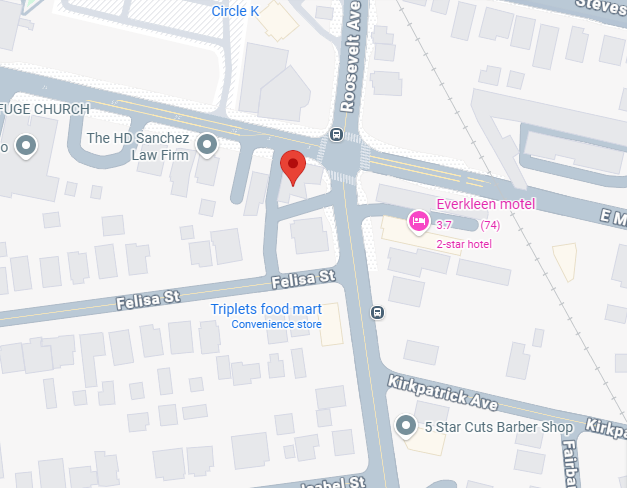
“The community has complained about the Everkleen Motel, vacant properties and the criminal activity of drug dealers and prostitutes,” resident Armando Santiago told zoning commissioners. “The property owners requesting the rezoning to open the bar will continue to influence the negative activity that our community wants to clean up. A bar would not improve our community in that area.”
Santiago is one of several residents at the June 16 meeting who expressed a wish for the city to improve public safety in the immediate area, which lies north of the historic Spanish colonial missions, and accommodate the development of more complementary small businesses.
“When will the city clean up this area and support businesses that aren’t detrimental to our community’s quality of life?” Santiago added.
Neighbor Denise Valentine echoed Santiago’s comments.
“We routinely have to pick up trash left behind by people, and we are often awake late at night by loud noise, raised voices, music, and drunken conversations as patrons leave,” Valentine said.
“Parking is also a constant issue with over-filling residential streets and limiting access for residents. These are ongoing quality of life concerns, not occasional inconveniences.”
Vanessa Reveles said a bar previously occupied 1301 Roosevelt for years before closing in 2020. A house of worship then took over the property, and then ceased operations.
Because the property has since sat vacant for more than 12 months, according to the city’s unified development code, the site’s high-intensity zoning that once permitted alcohol sales had expired.
Such zoning tools, Reveles added, help to protect the neighborhood’s fabric, especially given the protections that come with the UNESCO World Heritage designation given to the nearby missions. With that said, Reveles was puzzled by the city staff’s recommendation to approve the rezoning request.
“From a residential standpoint, it puts us back from the progress that we need. Bringing a late night bar back to this specific location introduces noise, late night traffic and parking disruptions directly into the residential corridor,” Reveles said.
“We’re not anti-development. We want a vibrant growth on Roosevelt Avenue. However, it must be growth that is compatible with the neighborhood and respects the buffer zone. A late night tavern fundamentally is incompatible with the vision established on the corridor.”
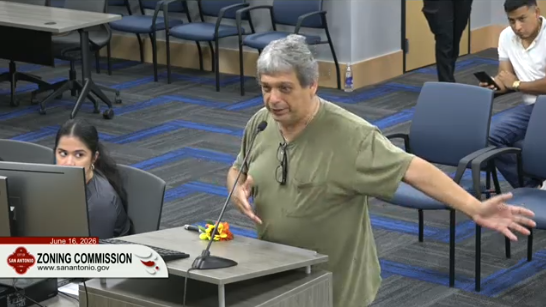
Aside from a few friends and associates speaking in support of Garcia, his rezoning proposal faced additional opposition from several other residents in the adjacent Riverside neighborhood, and questions from commission members.
Garcia continued trying to assuage detractors’ fears, saying that he would keep a close eye on clientele, and that he and his wife wanted to be a community asset.
What commissioners are saying
Commission members such as Moses Leib Duewel voiced worry over spillover effects of people staying at Everkleen Motel visiting Garcia’s bar and then returning to the motel, which is already under constant scrutiny by law enforcement and community members.
“I’m not as concerned about what’s going to happen at the bar as what’s going to happen back at the motel once patrons go back to the motel. Alcohol is always an accelerant for crime and in an area that doesn’t have as good ownership and management as the applicant, it can make a bad situation even worse,” he added.
When the City Council will consider the zoning commission’s recommendation of denial of Garcia’s rezoning request is currently unknown.