By Jason Olivarri
A 20-minute morning dog walk shouldn’t feel like a workout.
But as San Antonio settles into another summer of triple-digit temperatures and heavy humidity, UT San Antonio researcher Jeffrey Howard says the health risks associated with extreme heat are increasing.
A research team led by Howard, a public health professor, found that 21,518 Americans died from heat-related underlying or contributing causes between 1999 and 2023.
His findings suggest heat has quietly become America’s deadliest weather-related hazard.
More than just Texas heat
South Texans are used to hearing the same refrain every year.
“It’s Texas. It’s always hot.”
Howard isn’t suggesting residents suddenly discovered summer.
“We do live in a fairly hot climate,” he said.
What concerns him is what the data shows.
“It was fairly stable until about 2015 or so,” Howard said of heat-related deaths nationwide. “And then there was a steep increase in the heat-related mortality rate since then. It’s really gone off the chart.”
In 1999, the United States recorded 1,069 deaths directly related to extreme heat. By 2023, that number had climbed to 2,325 — the highest total in Howard’s study. That was the same year with the warmest average temperature recorded since 1850.
Nationwide, emergency room visits related to extreme heat have also increased.
“With more exposure, you’re going to have more illnesses, more fatalities,” Howard said.
San Antonio Metro Health’s Heat-Related Illness Dashboard suggests San Antonio’s experience reflects the broader trends Howard identified. While weekly case counts fluctuate from year to year, the city continues to report dozens of heat-related illnesses during the hottest months of June through September.
The dashboard shows 2024 experienced some of the highest weekly spikes in recent years, while 2025 appeared somewhat lower. Early 2026 data also tracked below previous years, though the summer season is still underway. Officials update the dashboard weekly, underscoring that even as yearly totals vary, heat-related illness remains a recurring public health concern locally.
Heat isn’t just changing in Texas
Howard recently discussed highlights from his study during an episode of UT San Antonio’s Launchpad podcast, expanding on how extreme heat is affecting communities beyond traditionally hot regions.
He said prolonged heat events are increasingly impacting places that historically experienced milder summers and were never designed to handle sustained periods of extreme temperatures.
During a recent trip to Germany, Howard saw firsthand how residents struggled through unusually hot conditions without widespread access to air conditioning because it simply had not been necessary before.
The concern, he said, isn’t just hotter temperatures, it’s preparedness.
Communities without cooling infrastructure, public awareness campaigns or established heat-response plans may find themselves scrambling to adapt as prolonged heat events become more common.
Why humidity matters
Many people check the temperature before heading outside. Howard said humidity deserves just as much attention.
The body cools itself through evaporation. As sweat evaporates from the skin, it removes heat. But when the air is already saturated with moisture, that process becomes less effective.
“Your body stops being able to cool itself effectively,” Howard said.
That can make everyday activities – walking the dog, mowing the lawn, watching a Little League game, working an outdoor shift – more physically demanding than people expect.
It isn’t always the record-breaking days that catch people off guard, but sometimes, the ordinary ones, Howard added.
Who faces the greatest risk?
Extreme heat can affect anyone, but some groups are more vulnerable. Howard said those at greater risk include:
- Older adults
- Young children
- Outdoor workers
- People experiencing homelessness
- People with heart disease and other chronic illnesses
- People exercising outdoors
- Pets and the people who care for them
“Yes, all of those groups that you just mentioned are at higher risk,” he said.
For San Antonio-area families, that may mean checking on aging relatives, making sure children stay hydrated during outdoor activities, and remembering that pets need relief from the heat, too.
How communities are responding
Howard noted that San Antonio already has resources designed to help residents stay safe.
Heat advisories appear regularly in weather forecasts. Fan donation drives return each summer. Public cooling centers and hydration stations offer relief during dangerous stretches of heat.
Still, he said, communities may need to continue expanding those efforts.
“The more things we can do to help people protect themselves, the better it’s going to be,” Howard said.
He also noted that determining whether heat caused or contributed to a person’s death isn’t always straightforward.

Howard pointed to Maricopa County, Arizona, as one of the few jurisdictions with a detailed protocol for investigating suspected heat-related fatalities. Without similar standards elsewhere, deaths in which heat contributes to heart complications, respiratory distress or other medical emergencies may not be consistently documented.
That inconsistency may mean the true toll of extreme heat is underestimated, he added.
Residents looking for local heat safety resources can visit the city of San Antonio’s website for information on cooling centers and assistance programs, and monitor National Weather Service forecasts for heat advisories and safety guidance. City libraries, senior centers and community centers often serve as public cooling destinations during the summer.
Additionally, the city’s Under 1 Roof program offers energy-efficient cool roof shingle replacements at no cost to eligible homeowners. Howard also noted that communities may need to continue investing in other protective measures, including expanded hydration stations and additional shelter resources for vulnerable populations.
Learning to listen to your body
For all the statistics and studies, Howard’s advice comes down to awareness. It’s all about paying attention to how you feel.
“It’s one thing to feel hot,” he said. “But if you really start feeling very fatigued, dizzy, nauseous, headache … those are all signs that you really need to get out of the heat.”
Warning signs of heat exhaustion include:
- Fatigue
- Dizziness
- Weakness
- Nausea
- Headaches
- Lightheadedness
- Shallow breathing
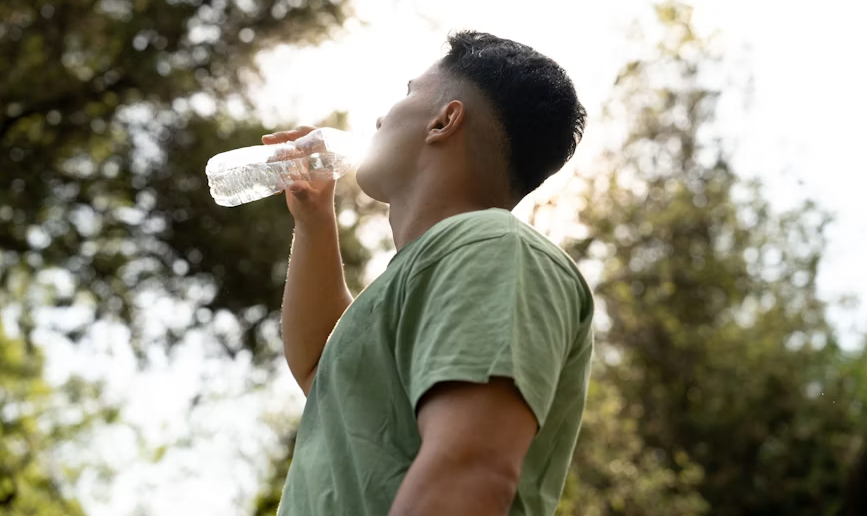
Those symptoms are not something to push through, Howard said. He recommends carrying water, taking breaks in cool environments and using personal cooling devices when possible.
For San Antonians, adapting to summer has always been part of life. What’s changing is recognizing when familiar heat becomes something more dangerous.
“The heat isn’t going to go away,” Howard said. “There’s nothing I’m going to be able to do about that except take precautions to protect myself.”