By Edmond Ortiz
Mayor Gina Ortiz Jones continues to press the federal government for more details on its plan to convert a vacant industrial building in east San Antonio into a detention center for undocumented immigrants.
What ICE is saying
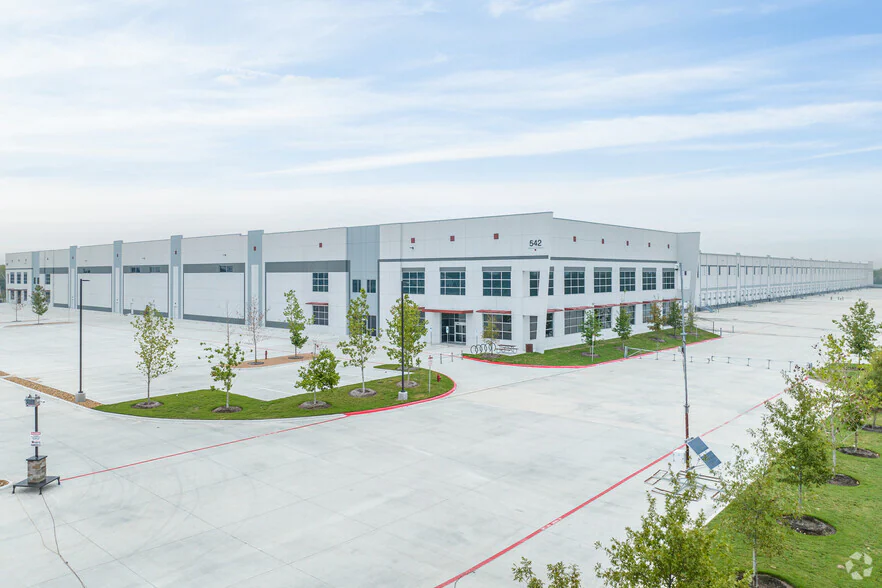
Jones dispatched a letter July 2 to U.S. Immigration and Customs Enforcement, doubling down on opposition and seeking clarification on what she called two major sticking points in ICE’s acquisition of and plan for Oakmont 410, an empty, nearly 640,000-square-foot warehouse at 542 S.E. Loop 410.
ICE’s purchase of the East Side structure and the agency’s expanding presence in the San Antonio area have prompted many local leaders, immigration advocates, and neighborhood residents to voice concerns about having a detention facility in their midst.
Jones wrote to ICE in February and March, expressing those worries to agency officials. David Venturella, interim ICE director, responded in June, confirming that the East Side facility will be retrofitted to accommodate a daily population of 1,000 to 1,500 detainees. ICE aims to begin operations there in early 2027, Venturella wrote.
However, Venturella said, the procurement process involving the property is ongoing, and that the federal agency will still have to select a detention services vendor and coordinate with the ICE field office before collaborating with the city and local utility providers.
Venturella also pledged that the East Side facility would be renovated according to an array of building codes, as well as architectural and detention center standards, executive orders and federal laws.
“Please note, ICE plans to renovate these facilities to safely, securely and humanely house detainees,” Venturella said, referencing the agency’s effort to acquire and turn non-traditional structures such as industrial warehouses to help address what he called “rising operational tempo and increasing arrests.”
Venturella also said ICE will communicate with federal, state and local lawmakers, as well as area law enforcement and emergency service providers, with more information at a later time.
“ICE continues to evaluate bedspace requirements and availability, and is committed to strategically using existing detention beds in a fiscally responsible manner as well as ensuring the safety and security of detainees in its custody.”
The city’s response
Still, many local residents, including critics of ICE and its tactics, remain worried about the agency operating a detention center inside San Antonio, the well-being of detainees, and its impact on the surrounding community. Some of those concerns stem from protests that continue to take place regarding ICE’s operating a detention facility in Dilley, south of town.
Jones, in her responding letter, reiterated her opposition to ICE’s plans for Oakmont 410. She requested clarification on two points. The first is to ensure that the federal agency conducts a thorough environmental impact analysis as requested by the National Environmental Policy Act.
“Compliance with NEPA and the department’s own procedures is critical to provide the city and its residents with the critical information they need to understand the project’s impact on the human environment, and to provide them the opportunity to participate meaningfully through the public comment process to make their voices heard,” Jones wrote.
Jones also urged ICE to go through the city’s permitting process so that local officials can review design and engineering plans.”
“Utilizing this process allows for appropriate vetting and consideration in accordance with established standards, protocols and timelines,” she added.