By Edmond Ortiz
Officials in five north San Antonio-area cities have approved a budget for Fiscal Year 2026, which started Oct. 1.
Here’s a rundown of how those new budgets will affect governmental operations and taxpayers in those suburbs in the new fiscal year:
Hollywood Park
City Council on Sept. 16 passed a $7.37 million general fund budget for Fiscal Year 2026, a number that exceeds the town’s projected general fund revenue of $7.23 million.
Local leaders said Hollywood Park, like neighboring suburbs, is not immune to a range of budgetary obstacles, such as uncertainties about the inflation, changing state and federal rules and funding allocations, an increase in property tax protests, and slower business growth.
“(Property) valuations have not gone up as much as they have in previous years,” city Treasurer Fred Timmons said on Aug. 19.
City officials have scheduled a number of reserve purchases in the upcoming fiscal year, including a replacement police vehicle, a replacement fire vehicle, and mold remediation and remodeling of the fire station.
Hollywood Park is raising its property tax rate from 46.1 cents per $100 valuation to 47.8 cents, a hike that will cause a $112.55 monthly tax increase on the average local homestead. That calculates to a total annual tax bill of $2,587 on the average local homestead, a rise from $2,474 last year.
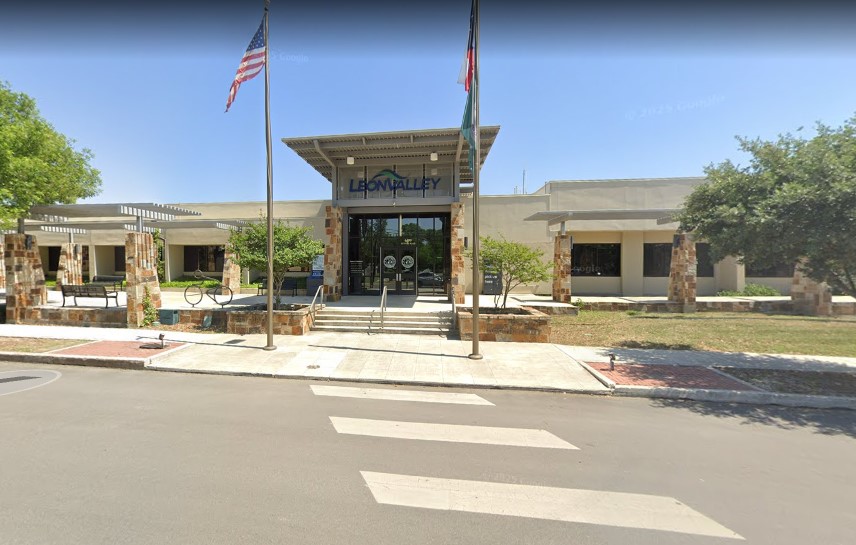
Leon Valley
City Council on Sept. 16 passed a $17.8 million general fund budget, an increase over the $15.6 million budget that local officials approved for Fiscal Year 2025.
Key budgetary goals for Leon Valley in 2025-2026 include: replacing an existing ambulance, fixing erosion damage along Huebner Creek and low water crossings, completing the Christian Village drainage upgrades, continue building Segment 2 of the Huebner Creek Greenway rail, remodeling the Forest Oaks community pool, and forming a stormwater maintenance program for public parking areas.
Leon Valley taxpayers will see a higher bill next year after the council approved raising the property tax rate from 48.4 cents per $100 valuation to 54.5 cents.
City Manager Crystal Caldera suggested the tax hike after some residents voiced worry over adequately staffing the town’s police and fire departments. The city could add three firefighters with this tax hike, she added.
Caldera on Sept. 9 said it was important for Leon Valley to prepare for a potentially lower cap on annual property tax increases, an issue that has not yet been settled by state legislators.
Leon Valley’s 54.5-cent tax rate falls short of a 56.8-cent rate, which Caldera and her team studied in preliminary calculations. The city would have needed voter approval, under state law, to impose a 56.8-cent rate.
Staying at the existing property tax rate or trying to hike it 1 or 2 cents would give the city little if any flexibility to address essential issues, such as ensuring an adequately staffed fire department, according to Caldera.
Council members agreed to proceed with a 54.5-cent rate, which will lead to a monthly increase of $169.30 on the average Leon Valley home, according to city officials. This comes out to an average total property tax bill of $1,256 in 2025-2026, compared with $1,087 in 2024-2025.
“It’s not what every Leon Valley taxpayer wants, but it’s what we need,” Councilmember Beth Mursch said. “It’s a bitter pill to swallow.”
Shavano Park
City Council voted Sept. 15 approved a balanced $15.9 million total budget, including a $7.15 million general fund budget, which is a slight rise from the $6.97 million operational budget that local leaders adopted last year.
Shavano Park’s new budget supports the purchase of two thermal imaging cameras for the fire department, new wireless digital message boards at the City Hall campus, replacement of aging street signs, and a 2% cost-of-living adjustment for city employees, among other key expenses.
Council voted to keep the city’s property tax rate the same at 31.2 cents per $100 valuation.
Castle Hills
City Council voted on Sept. 9 to approve an $8.57 million general fund budget for FY 2026, a $205,699 increase from the FY 2025 budget. The overall new budget is unbalanced, with the city due to collect $8.53 million in general fund revenue in the upcoming fiscal year, leading to a $41,129 deficit.
Castle Hills’ budgetary goals in FY 2026 include: finishing road and drainage improvements on North Manton Lane and Carolwood Drive; completing 2023 infrastructure bond projects; buying a new streets department truck and a new garbage truck; and implementing a new in-police car camera system.
Castle Hills is raising its property tax rate from 54 cents per $100 valuation to 57.8 cents, with city officials citing a decline in taxable property values, no significant movement in sales tax income, inflationary effects on city expenses, and a need to reduce the budget deficit.
The new tax rate will cause a monthly increase of $174 on the average Castle Hills homestead, resulting in a yearly total tax bill from $2,376 in FY 2025 to $2,550 in FY 2026. Local officials are also weighing a possible increase in the sanitation collection fee; over the past four fiscal years, garage service expenditures have exceeded garbage fee revenue.
Mayor J.R. Trevino said neither he nor his council colleagues take lightly the act of raising taxes.
“It’s not a popular decision to increase taxes, but given the fact that property values have gone lower, and we have obligations to the city of Castle Hills, these are difficult decisions that we need to make as taxpayers up here to support our departments and make sure that they have tools and the salaries that they need to do the job,” he added.
Hill Country Village
City Council voted on Aug. 21 to adopt a $2.19 million general fund budget for FY 2026, with general fund income projected at $2.20 million.
While Hill Country Village officials budgeted for slightly higher overall expenditures compared with Fiscal Year 2025, they said they do not anticipate any major expenses or other budgetary moves in the new fiscal year.
The town’s property tax rate will stay the same at 14.5 cents per $100 valuation.