By Edmond Ortiz
San Antonio voters went to the polls Nov. 3 to support extending funding for an early childhood education program.
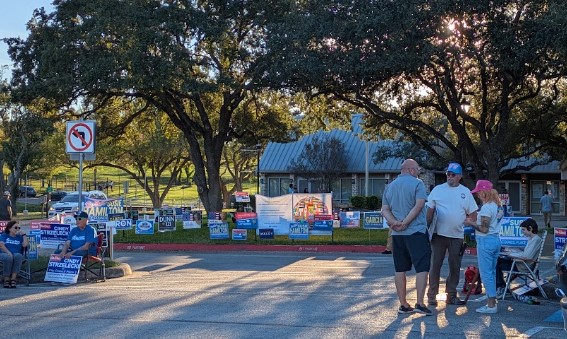
Meanwhile, voters in suburbs such as Converse and Hollywood Park mulled special ballot measures, and made their preferences known in city council elections in four cities.
SAN ANTONIO
Approximately 72.5% of San Antonio voters chose to reauthorize a sales tax of one-eighth of 1% to continue funding the Pre-K 4 SA early childhood education program for a maximum 20-year period, starting in 2029.
Local voters first acted in 2012 to approve using a sales tax to begin funding Pre-K 4 SA, which extends prekindergarten services to 4-year-olds as a means of improving overall education outcomes.
According to an assessment of Pre-K 4 SA at its 12th year of operations, children who had participated in one or two years in the program were outperforming their peers statewide across categories such as cognitive, physical and social-emotional development, literacy, math and oral language skills.
CONVERSE
Converse voters faced a full slate of city council contests and a proposal to discontinue VIA Metropolitan Transit service inside city limits.
The latter proposition failed with a 78.7% disapproval rate. Supporters of ending VIA service, including some city leaders, said the mass transit agency serves a disproportionate number of Converse residents, and that the local sales tax revenue that goes to VIA would be put to better use on essential city operations, such as street maintenance.
But opponents of the VIA proposal, including a grassroots group, Keep Converse Linked, argued that the city would still have to pay millions owed to VIA if voters were to approve discontinuing the service. Detractors also said many more residents, including local students, depend on VIA than what the city acknowledges.
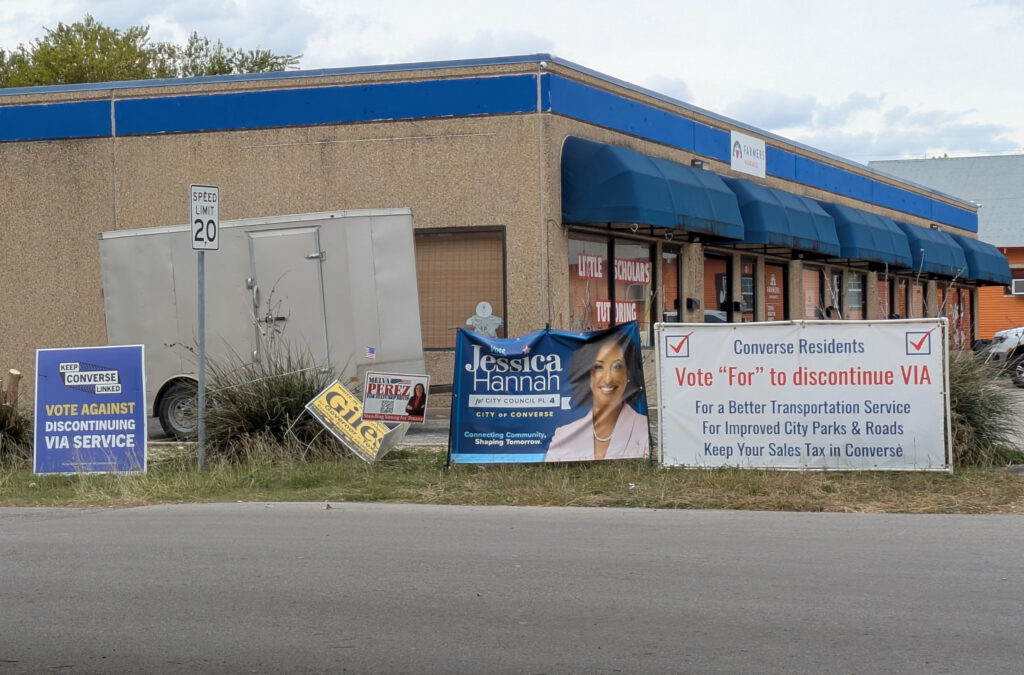
Converse voters did approve a separate ballot initiative, which reauthorizes a local sales tax rate to continue funding regular city road repairs.
Additionally, Converse voters tapped Place 2 Councilmember Renee Paschall and Place 4 Councilmember Jessica Hannah for full council terms.
Paschall, a former councilor, and Hannah, a nonprofit development director, were each appointed to fill vacant council seats earlier this year.
But Converse’s Place 6 contest will be decided in a Dec. 12 runoff election after no candidates reached the 50% threshold to avoid a runoff.
The runoff will involve incumbent Nancy Droneburg, who finished Nov. 3 balloting with 43.8% of the vote, and former councilor Marc Gilbert, who wound up with 33.6%. Nawid Zazai finished with 22.5%.
HOLLYWOOD PARK
Approximately 87.5% of Hollywood Park voters endorsed terminating the town’s economic development corporation, and redirect the sales tax that funds the EDC toward helping to support regular city road repairs and maintenance.
City leaders argued that, given Hollywood Park’s landlocked existence and limited avenues toward furthering economic development money, the North Side town could be better off shifting part of its local sales tax from operating an EDC to something that impacts all residents – maintaining quality streets.
LIVE OAK
Jasmine Johnson, a licensed professional counselor, behavioral health professional, community advocate/facilitator, and small-business owner, won a special election to fill the Place 5 council vacancy.
Receiving 58.5% over Michael Llamas, vice chair of the city’s planning and zoning commission, Johnson replaces the late Aaron Dahl, who died over the summer. She will fill out a term that ends next May.
Live Oak voters also passed five of six city charter amendments. The lone failed proposal called for extending council terms in office from two to three years, starting with the May 2027 municipal election.
SCHERTZ
Schertz voters returned two council members back to City Hall but tossed a third incumbent.
The incumbent in question, Place 4 Councilor Benjamin Guerrero, lost his bid to secure a full three-year term after being appointed to council in early 2025.
Kenneth Ratcliff, a former Schertz-Cibolo-Universal City Independent School District board president, upset Guerrero with 51.7% of the vote. While Guerrero won over Schertz voters living in Bexar County, Ratcliff prevailed with Schertz voters residing in Guadalupe County.
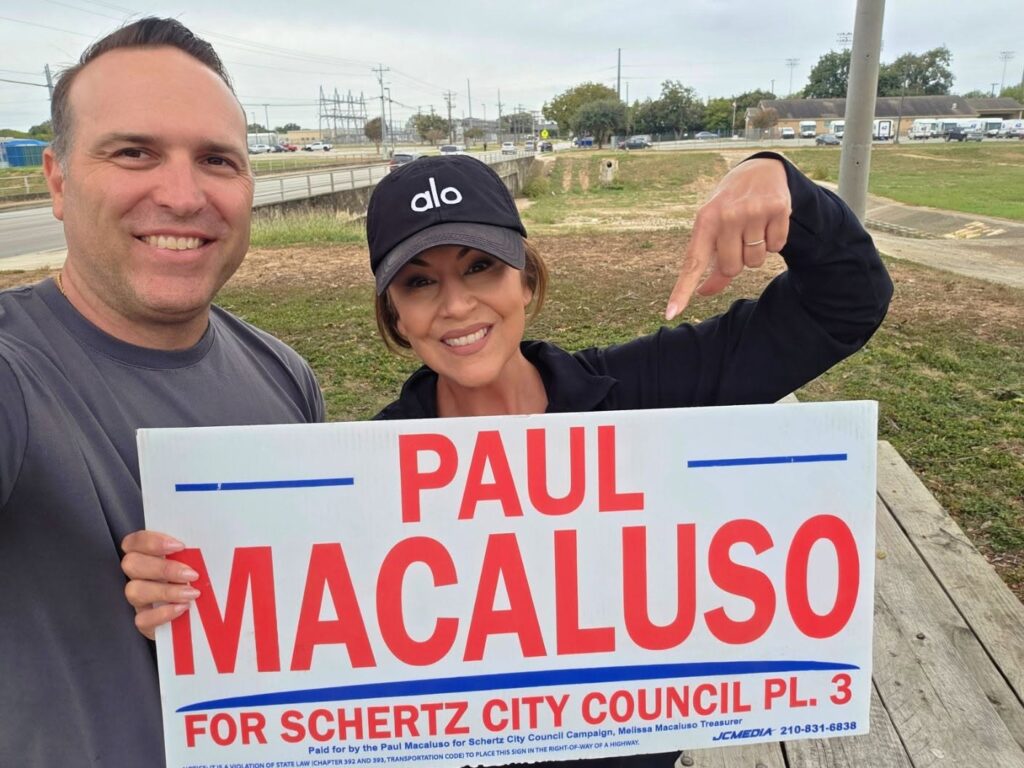
Place 3 Councilmember Paul Macaluso won a second three-year term, foiling a challenge from Billie Langhus, while voters rewarded Place 5 Councilmember Robert Westbrook with a second three-year term. He held off opponent Jonathon Marquez.
WINDCREST
Windcrest voters re-elected two council incumbents, but a third council contest will be determined in a Dec. 12 runoff election because no candidates in that race surpassed a 50% threshold needed to avoid a runoff.
The runoff for the Place 1 position will involve first-term Councilmember Susie Hamilton, and Narquiz Cervantes, a previous council candidate and a retired teacher.
Hamilton finished Nov. 3 balloting with 49.1% of the vote, while Cervantes had 34.7%. Former Councilmember Joan Pedrotti collected 16.1%.
Place 2 incumbent Cindy Strzelecki, a retired registered nurse, won a fifth two-year term with 57% over Sue Alexander, who serves with the Bexar County Water Control and Improvement District No. 10 board.
Place 3 Councilmember Greg Turner tallied 62% to beat challenger Robert Maloy, a finance professional who mounted an unsuccessful bid for Windcrest mayor last fall.
Bexar County had a voter turnout of more than 49%.