By Edmond Ortiz
While Fiscal Year 2027 budgets have been adopted in Comal, Guadalupe and Kendall counties, officials in these growing counties have voiced concerns about tough fiscal decisions that lie ahead, especially when it comes to rising expenses.
Comal County
Commissioners unanimously approved a total $214 million budget Sept. 17 that contains a $150 million general fund budget for daily maintenance and operations. That marks an increase from the $123.6 million general fund budget featured in the county’s adopted Fiscal Year 2026 budget.
Taking effect Oct 1, the new FY 2027 budget includes a 4% cost of living adjustment (COLA) for all county employees, an additional 2% pay adjustment for law enforcement positions, and a 3% COLA for retired county workers.
Comal County will also add 33 law enforcement, judicial and administrative positions, buy or replace 29 law enforcement and other county fleet vehicles, and tap $20.2 million in reserve funds to help support the county tax office remodel, and the designs of the Precinct 4 Justice of the Peace building, and for an expanded jail facility.
Tapping more into reserves and special-use funds by Comal County is becoming a frequent tactic among local governments grappling with tight budgets.
A few residents said Comal County leaders should have done more to cut spending and the county’s property tax rate, which will stay at 30.5 cents per $100 valuation.
Comal County Judge Kristen Hoyt and her colleagues said, despite its continued population growth and increasing demands on services, the county remains to conservative fiscal practices.
Hoyt added, however, that Comal County must also contend with various rising costs and a turbulent economy.
“Comal County is very conservative. Comal County for years has been good stewards of tax dollars, and you can see that over time” Hoyt said.
“All elected officials do the best they can with what they have. It’s not always a fancy building. It’s not always the newest staff, and we’re losing folks to the private sector. Those are just some of the things that, as a county government, we have to deal with and adapt to.”
Guadalupe County
Commissioners spent nearly 12 hours Sept. 1 to adopt a total $197.3 million budget in what County Judge Kyle Kutscher called in his budget executive summary “one of the most challenging financial environments.”
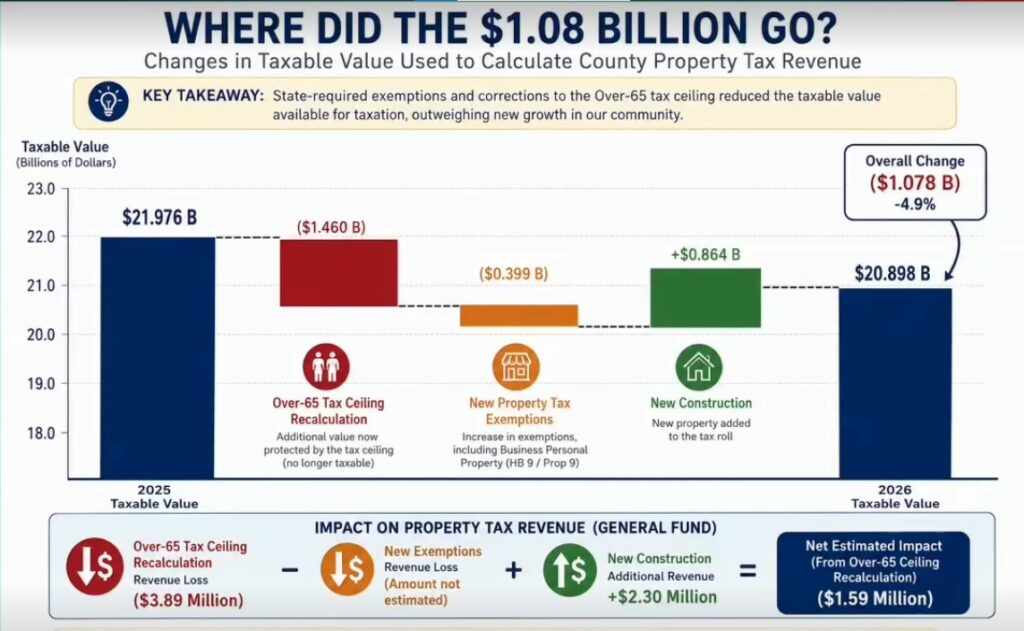
The loss of more than $1 billion in taxable property value, among other declining revenues, forced Guadalupe County leaders to entertain unpopular measures, such as a slight property tax hike, holding the line at pay increases, and dipping into the county’s fund balance to offset some budget cuts.
Several employees appealed to commissioners, hoping for a larger cost-of-living adjustment and the return of a longevity incentive that had been eliminated.
Elsewhere, a handful of first-responders said the county is underfunding its emergency public safety departments to the potential detriment of an expanding population.
In addition to adopting a $110.2 million general fund budget, commissioners eventually approved a 3% COLA for county employees, authorized 16 new positions, and nixed an originally proposed $2 million allocation for future land purchases.
Commissioners also used $2.15 million in reserves to address last-minute requests for three sheriff’s patrol deputies, more firefighters for Guadalupe County Fire Rescue, emergency money for volunteer fire departments, among other public safety resources.
Additionally, Commissioners Court finalized a property tax rate of 34.9 cents per $100 valuation, a 5.65% increase over the FY 2026 tax rate of 33 cents.
But the new rate is lower than the 35.4-cent-rate that county officials initially proposed at the start of the budget development process. Commissioners agreed to use some of the fund balance to help arrive at a smaller tax increase.
Commissioners also did, on Sept. 1, approve offering longevity compensation to employees who have worked six months or longer.
However, the county’s top elected leaders voted 3-2 Sept. 15 to rescind the longevity measure, with the narrow majority expressing support to maintain consistent rules across the board.
Kutcher said Guadalupe County will still have to find the balance between meeting the needs of growing communities, keeping taxes low, maintaining healthy reserves, and adhering to conservative fiscal practices.
“This was the biggest challenge this year in our county, and it’s still the biggest challenge we’re going to have to face today, to talk about risk mitigation and about our risk tolerance on our amount of funding,” he added.
Kendall County
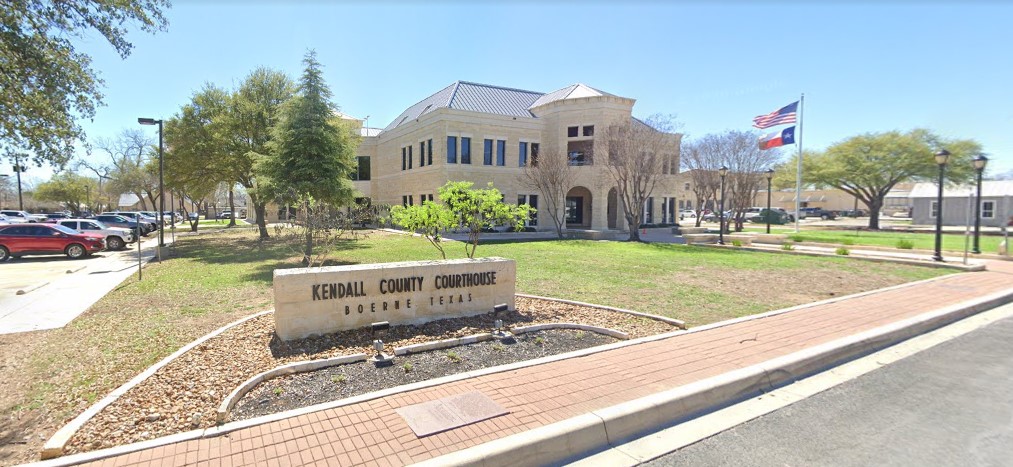
Commissioners Court voted 3-2 Sept. 8 to adopt an $86.4 million total budget, which includes a $58.6 million general fund budget for daily maintenance and operations. That’s a slight rise from the $57.9 million general fund budget adopted for FY 2026.
Commissioner Richard Chapman and outgoing County Judge Shane Stolarczyk cast dissenting votes on a budget that includes the use of $2.5 million in reserve funds to match state and federal grants which, if approved in totality, could yield up to $15 million for the county.
Commissioners Court also agreed to drop the total property tax rate from 37.7 cents per $100 valuation to 37.3 cents. This move will result in an estimated tax bill of $1,950 on the median valued Kendall County homestead, which is $522,820, county officials said.
A 4% cost-of-living adjustment (COLA) for Kendall County employees sparked larger discussions about inflation, increases in living costs, numbers of county residents and employees, population influx, and efforts to contain property taxes and growing property valuation.
Some residents and county employees claimed there was a rumor that commissioners sought to cut the proposed cost-of-living adjustment to 3%. Former County Judge Darrel Lux said it would set bad precedent if the court were to proceed with a lower than proposed COLA..
“Inflation is a real thing. Cost of living is a real thing,” Lux said.
Additionally, 158 of 345 county employees are receiving scheduled step increases under the county’s existing pay system. Nearly all of those employees are receiving a total 6% increase, while a few others are getting a slightly higher increase based on individual factors.
Also, 11 of Kendall County’s 18 elected officials are receiving their scheduled step pay advances this year – a number that combines that 4% COLA and their step increase.
Commissioner Chad Carpenter warned against comparing county employee salaries and benefits with compensation packages offered in the private sector. He also urged fellow county leaders to get a grip on employee pay issues, which called unsustainable.
“If we have a program that’s not sustainable going into the future, don’t you think we need to figure that out right now and not continue going down this road?” Chad Carpenter said about the step pay program. “We won’t be talking about not giving COLAs. We’ll be talking about cutting jobs.”