By Edmond Ortiz
The city of San Antonio will raise its property tax rate for the first time in more than 30 years as a divided City Council adopted a new budget that contains many spending cuts, but not the severe decreases that some local leaders and constituents had feared.
What you should know
Council voted 7-4 Sept. 17 to approve a total $4.4 billion Fiscal Year 2027 budget, which contains a $1.76 billion general fund budget to support basic city services – a 4.1% increase over Fiscal Year 2026, which ends Sept. 30.
The new budget was calculated on an increase to the maintenance and operations side of the total property tax rate from 33 cents per $100 valuation to 35.1 cents. The interest and sinking, or debt service, portion of the tax rate will stay the same.
As a result, the total tax rate is rising from 54.1 cents to 56.2 cents, adding $36 to the total property tax bill on the average San Antonio home, which is valued at $231,356. Approximately 47% of 257,396 San Antonio homesteads are frozen and would not be affected by the tax hike.
City officials were reluctant to propose a property tax rate increase, but some saw it as necessary towards helping to address an originally estimated $158 million budget shortfall driven mostly by declining property tax revenue and other income sources.
Local leaders also had dreaded proposals calling for cuts that, among other things, would have resulted in defunding three senior nutrition centers and several nonprofits and delegate agencies, and the elimination of 100-plus civilian positions.
Council members spent weeks weighing a tax increase against stronger decreases in spending while advocating for city services they say are critical for a variety of residents.
The adopted budget involves $90 million in cuts over the next two fiscal years, including the cutting of several positions and hiring freezes, and the use of reserve funds to close some gaps.
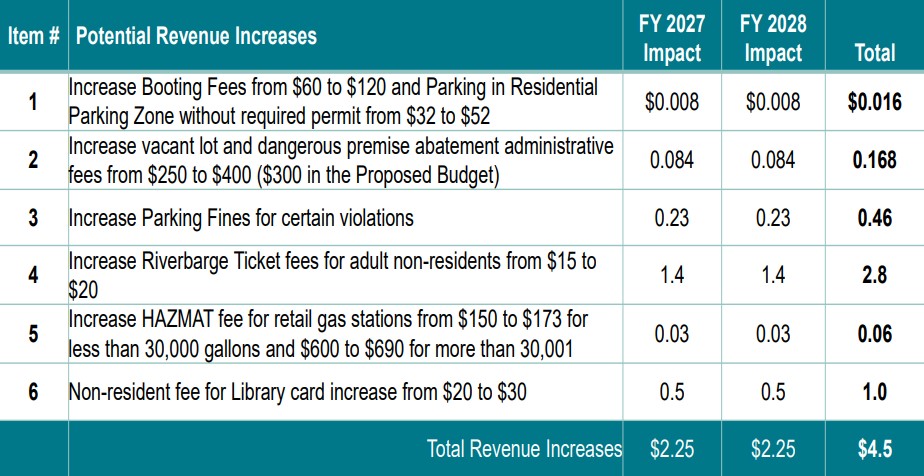
The final budget contains new or increased city fees affecting such things as ambulance emergency rides, garage sale permits, and non-residential access to the San Antonio Public Library system.
But many council members balked at initial proposals to slash city funding to delegate agencies and nonprofits such as the UT San Antonio Health and the San Antonio Botanical Garden, and another idea to make Fiesta event organizers to cover their share of police security and support expenses.
The Conservation Society of San Antonio acknowledged the latter proposal was something that spurred the organization to open a wider conversation about the future of its Fiesta fundraiser party, A Night In Old San Antonio. The society said Sept. 16 it was cancelling 2027 NIOSA.
The Sept. 17 council vote also affected final amendments to use some increased city fees to restore monies to budget items targeted for spending cuts, including a part-time nutrition site at the Darner Senior Nutrition Center, San Antonio Education Partnership scholarships for San Antonio residents, and the retention of five public health positions.
Some council members also directed city staff to use some restricted funds to continue support of the city’s reproductive justice fund. In another final amendment, council agreed to use some capital budget money to boost capital improvements spending in each council district.
What they are saying
A few audience members, including supporters of Americans for Prosperity, a conservative group, urged council to not support a tax rate increase, saying many residents are already financially burdened by inflation, rising living and healthcare costs and, in many cases, job underemployment.
Other residents have pushed council to refrain from making significant cuts to popular public programs, such as senior nutrition centers and libraries, and nonprofits and agencies reliant on city funding.
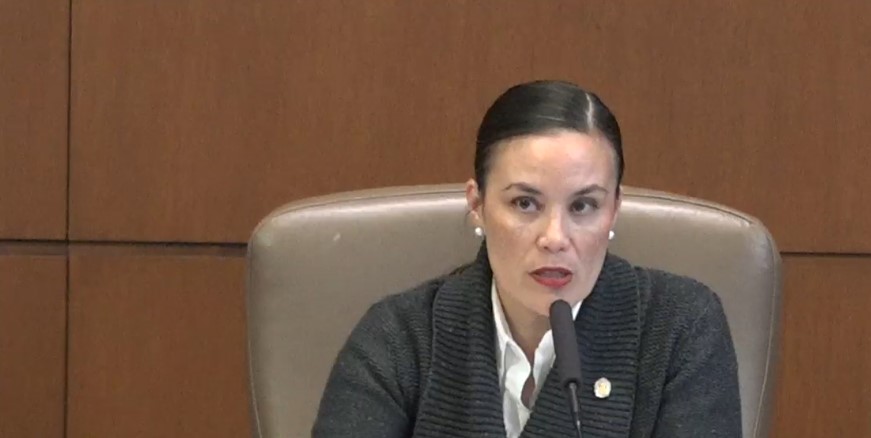
Echoing District 2 Councilmember Jalen McKee-Rodriguez’s description of the now-finished budget season as “tumultuous,” four of his colleagues – Mayor Gina Ortiz Jones, Marina Aldrete Gavito, Misty Spears and Marc Whyte – voted against the budget and the tax rate hike.
McKee-Rodriguez and other council members agreed the new budget was less than ideal, and that nobody has an appetite to raise taxes. But, he added, passing larger, across-the-board cuts would negatively impact residents, especially socioeconomically disadvantaged populations.
“No, I don’t want a tax increase, but if it’s going to ensure that my neighbors don’t lose their services. I understand,” McKee-Rodriguez said.
District 6 Councilmember Ric Galvan said the state limiting revenue increases and property tax rates in growing Texas cities has forced communities such as San Antonio to consider unpopular moves such as a tax hike and broader spending cuts.
“But we’re finding ways to generate enough revenue to continue delivering quality services for the sixth largest city in America. I appreciate all my colleagues that have looked at cutting inefficiencies and non-essential services beyond what city staff recommended,” Galvan added.
Whyte and Spears voiced frustration with the tax increase and their inability to get council to agree to add new police officer positions in the budget.
The council’s two conservatives also advocated saving more money for future essential uses, and more consideration of spending cuts outside of public safety or infrastructure. Additionally, they asked fellow councilors to focus more on economic development going forward.
“I asked for one thing, because that’s what’s important to my district, and I was just told no,” Spears said of additional police officers. “I asked for core services. This is the only thing (District 9 residents) asked me for. I don’t know how to go back to my constituents and say that I’m going to vote for a budget that doesn’t have anything that they asked for in it.”
Jones said she tried to be creative in avoiding a tax hike by exhausting options and offering ideas to make budget cuts in some areas, and redirect monies from specific-use sources, such as tax increment reinvestment zones and hotel occupancy taxes, to shore up some popular programs.
The mayor said she now worries the city has less financial wiggle room, as local officials will next have to see how much bonding capacity they have left to possibly propose a bond package to voters next May.
“The reviews I’ve asked for have shown us we had an opportunity to reduce spending by at least $18 million over two years, spend in a smarter way and break the spending habits that contributed to this $158 million deficit,” Jones said. “We owed it to our neighbors to make the tough cuts, and unfortunately, this budget shows we punted.”