By Edmond Ortiz
Cibolo is one of the many Texas communities to recently try adopting regulations for data centers, whose proliferation nationwide has sparked neighbors’ worries about environmental impacts.
But as the number of data centers increases, local governments, grassroots groups and concerned residents wonder whether they have any true, significant authority to stop such facilities from popping up in their community.
Legacy’s plan for Cibolo
Cibolo City Council’s July 28 meeting includes a discussion about a data center being proposed for development at 1000 Bolton Road, west of Santa Clara Road, near Marion. The meeting at City Hall, 200 S. Main St. begins at 6:30 p.m.
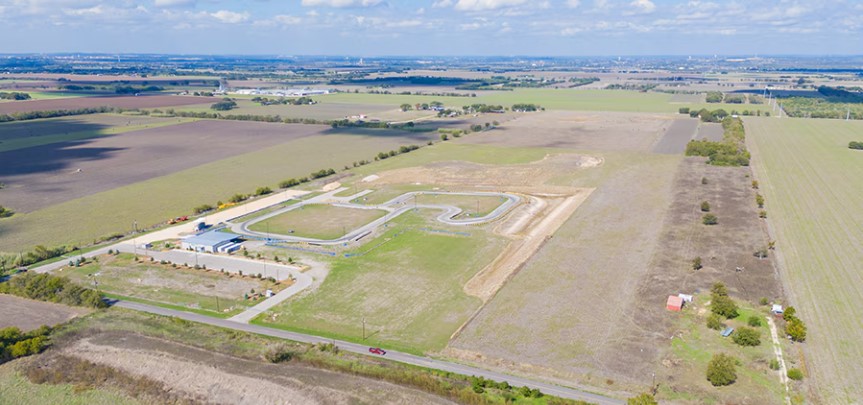
Cibolo’s planning department last April administratively approved a site plan from Legacy Investing, a Virginia-based real estate investment firm that aims to build a 50 MW (megawatt), 243,000-square-foot data center on the former San Antonio Karting Complex kart racing site.
Representatives for the kart racing complex said on their website last winter they were open to outright selling the facility or taking on a partner to possibly relocate it. But when Legacy Investing made a purchase offer, the company wanted the karting complex to immediately close upon acquisition.
“The facility is being developed to support AI (artificial intelligence) inference workloads with direct-to-chip cooling, closed chilled water loops, and flexible infrastructure configurable to meet tenant density, cooling, and redundancy requirements,” Legacy said in a June 1 statement.
“We’re excited to share this project with our partners and the broader market, and look forward to continuing to advance the future of digital infrastructure in Texas.”
Legacy representatives said the Cibolo site could be built to accommodate a future expansion to 150 MW. The current proposal calls for the data center to go online in late 2027 supported by 50 megawatts of electricity, which would power 15,000 to 35,000 homes at any given time.
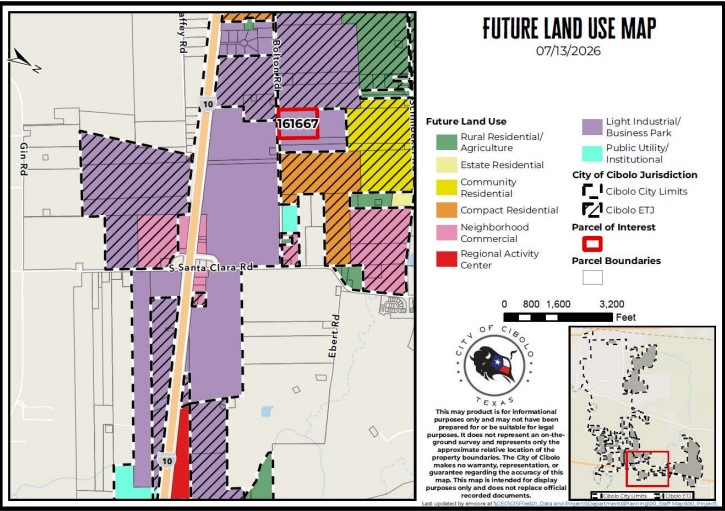
The 39-acre property in question sits in land zoned for light industrial/business park use on the northern side of Bolton Road. According to Cibolo’s land use map, the proposed data center would lie in between properties presently inside Cibolo’s extraterritorial jurisdiction and zoned for for light industrial/business park and compact residential use, as well as neighborhood commercial use inside current city limits south of Bolton Road and closer to Interstate 10.
Legacy Investing presently owns facilities in six other states hosting data centers, logistics, life sciences and other high technological ventures.
What is a data center anyways?
The first data center was created at the end of World War II to house the Electronic Numerical Integrator and Computer (ENIAC), the world’s first electronic digital programmable general-purpose computer.
Back then, as primitive data centers housed early computers for U.S. military and intelligence agencies, federal officials had to keep in mind airflow and cooling for such facilities. With the growth of computing and the Internet, the number of United States-based data centers has risen to more than 5,400 with another 1,500-plus similar facilities under construction or in the works.
Data centers now house computers, servers, and network systems to store, process and share data on everything from emails and streaming meetings to cloud storage. But increasing demands and reliance on cloud computing and AI is sparking a surge in data centers.
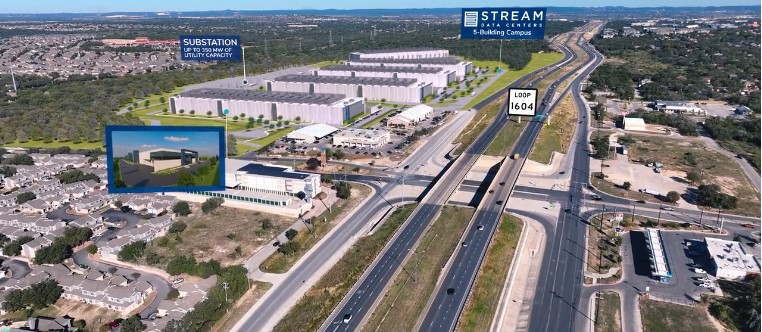
Such massive structures feature the main server hall, a cooling system, a mechanical plan, networking and communications devices, and site infrastructure and support systems, including the electrical substation, backup generators, security systems, environmental monitoring, and employee parking.
The reaction in Cibolo
District 4 City Councilmember Katie Cunningham has been among local officials being proactive with informing area residents about the proposed data center.
When Cunningham used her Facebook profile July 11 to begin talking with constituents, she said council was informed in 2025 that a company showed potential interest in building a data center in the area.
However, according to Cunningham, utility providers at the time said they lacked adequate electricity or water capacity to support a data center. It was not until early July that reports about Legacy’s data center site plan started circulating, and got the attention of city leaders such as Cunningham.
City staff administratively approved Legacy’s site plan for use by right because the property is zoned industrial, which permits such things as warehouses and data centers.
Cunningham said city staffers added that Legacy plans to use a closed-loop cooling system for its proposed data center. The company has maintained the environmental and other impacts of its data center would be lower than those yielded by traditional data centers.
This data center would be supported with electricity provided by the Guadalupe Valley Electric Cooperative, and with water available through the Green Valley Special Utility District. GVEC said it has more than enough electricity to power the site. The data center’s proposed water demand is equal to 33 single-family homes.
Regardless, Cunningham has expressed opposition to the project, and is frustrated that the city was not more forthcoming about the potential for a data center to be developed in town.
“I’m angry about the process. Whether or not it was legally permissible to approve this administratively, the community and council should have known this was a real possibility, especially after being told it wasn’t feasible,” Cunningham said on her Facebook page.
Cunningham added a town hall on the issue is being scheduled for 6:30 p.m. Aug. 17 at Steele High School, 1300 FM 1103.
Can locals regulate data centers?
Cibolo officials are about to see whether a local government can enact laws to stop the development of data centers or at least regulate the operation of such a facility.
The City Council’s Ordinance Subcommittee discussed the topic July 20, recommending that the full council review the town’s approval process, and development standards involving water and energy consumption, pollution and noise.
Few legislative tools are available to the city. A new state law, Senate Bill 6, requires data centers and other other large load electric customers drawing 75 MW or more from the state power electric grid to offset the costs that local utilities incur to connect them to the grid.
SB6 also requires electric cooperatives and city-owned utilities that have not adopted customer choice to pass through costs to interconnect such large loads.
While 15 states are currently mulling prohibiting new data centers, Texas and other states are struggling with how best to balance a developer’s plan against public local concerns.
Plans for two data centers in the Central Texas town of Taylor sparked outrage among local residents. Locals were further enraged when city leaders said their petitions seeking an amendment to Taylor’s land development code and the creation of an ordinance banning data centers could not go forward.
Some Texas communities are using their planning and zoning regulations to impose moratoriums on data centers. But some developers are pushing back. Such is the case with RCM Hill, a company that filed a $100 million lawsuit in May in response to Hill County imposing a one-year moratorium on data centers.
Hill County Commissioners voted in mid-July to repeal the moratorium, pay up to $100,000 in the plaintiff’s attorney’s fees, and revise its industrial development policy.
Residents in communities questioning data center plans are also voicing worries about economic incentives that local governments float in order to support such projects.
Amid a political backlash against data centers, a Texas Senate committee is exploring potential tweaks to a 12-year-old law that allows significant tax breaks for data centers. The state comptroller’s office is projecting a loss of $3.3 billion in tax revenue on 138 tax-exempt data centers in Texas.
According to state officials, Texas local governments have approved nearly 60 data centers to date in 2026, with most receiving 20-year exemptions from state and local sales taxes.
Guadalupe County Commissioners last April approved a $500 million tax abatement agreement with CloudBurst, one of two firms that have recently filed plans to build a data center in the county. CloudBurst aims to spend $14 billion to build 10-12 data center structures across 3 million square feet on a land tract that also stretches into Hays County.
Several Guadalupe County residents attended local public meetings to rail against the two separate data center plan. The environmental group Save Our Springs Alliance has filed a lawsuit against Guadalupe County, claiming that county leaders failed to properly inform their constituents about those projects.
Although Comal County has no data centers or prospective projects, county commissioners last May passed a resolution asking state lawmakers to repeal state sales tax exemptions for data centers. County leaders also cited a lack of regulatory power, especially regarding protection of water resources.
What comes next?
While Cibolo officials grapple with their data center proposal, 50-plus data centers are already in operation in the San Antonio area, with many stationed around the Westover Hills neighborhood on the city’s Far West Side, and others extending westward into Medina County.
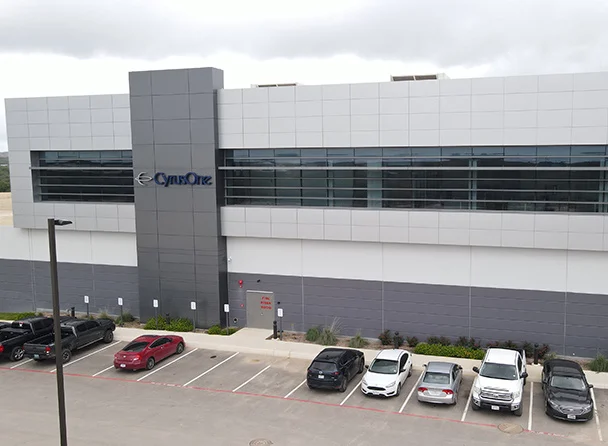
CyrusOne, which runs three data centers in Bexar County, recently filed a plan with the state to build a $500 million, 460,000-square-foot data center campus in Castroville west of San Antonio, with completion of construction slated for summer 2027.
Communities such as San Antonio are striving to find a middle ground between more high-tech investments, such as data centers, and concerned local stakeholders.
Last March, San Antonio City Councilmember Marc Whyte called on the city to adopt a policy framework that welcomes data centers, but also bolsters protections for the Edwards Aquifer, surrounding residential neighborhoods, and ratepayers of utilities that would be supplying those facilities with water, wastewater and electrical service.
“Data centers are critical infrastructure for healthcare, finance, military operations, and the daily digital lives of our residents. San Antonio has a real opportunity to position itself for the next decade of economic growth—and that is an opportunity we should seize,” Whyte said.
“San Antonio can be open for business and protective of its residents at the same time. We must find a balanced approach that positions our city for economic growth while ensuring our neighborhoods, natural resources, and property rights are protected.”