By Edmond Ortiz
City Council members are feeling squeamish about the possibility of a property tax increase and cutting deep into various expenses as local officials struggle to chip away at a budget deficit ahead of the next fiscal year.
What you should know
Like many governmental taxing entities, San Antonio is facing a blend of unfavorable financial conditions heading towards decade’s end.
Escalating operational costs, inflation, a slowdown in sales tax and other revenues such as CPS Energy payments, dropping base valuations on residential properties, and a rising amount of property taxes under protest all are contributing to projected budget deficits.
City Council got a full dose of the bad news June 18 when city staff presented its first trial budget for Fiscal Year 2027, which begins Oct. 1.
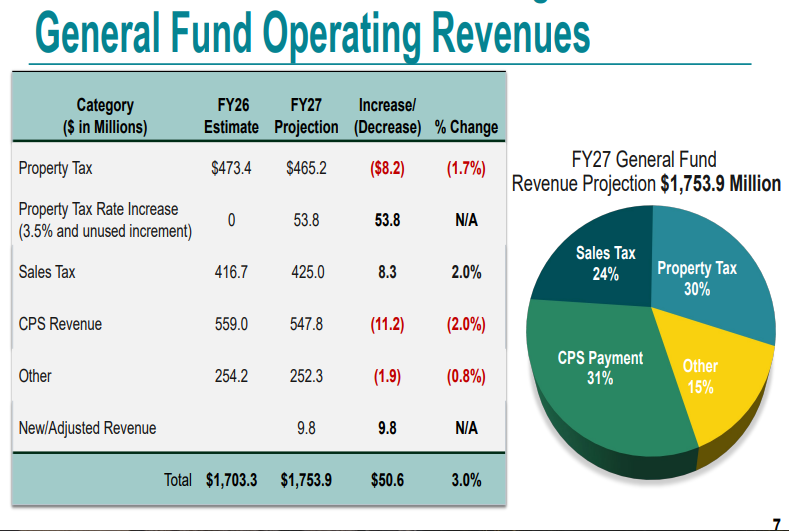
The city is projecting a decrease in property tax income from $473.4 million in the current Fiscal Year 2026 to $465.2 million in Fiscal Year 27. The state’s implementation of Senate Bill 9, which caps property tax revenue growth for local governments save for voter-authorized tax increases, is not helping matters in growing cities such as San Antonio.
As such, city staff is recommending a property tax hike that would amount to a $6.75 monthly increase on the average homestead. Approximately 46% of homesteads will not be affected because of a tax freeze on disabled taxpayers or those aged 65 and older.
City staff is also recommending reductions to lower priority services, while maintaining priority services, such as public safety, all in an effort to keep upcoming budgets balanced.
Some of those possible budget reductions could include foregoing civilian compensation increases, and the elimination of several staff position vacancies. Still, city staff project a $105.7 million increase in general fund operational budget spending in FY 2027.
Additionally, city officials are exploring adjusting certain city fees and other income sources to help kickstart revenue sources.
On the whole, the city is looking at a possible $1.80 billion general fund budget in FY 27, an increase over the current $1.69 billion GF budget, including an $80 million boost for fire, EMS and police departments.
If all – a property tax hike, some spending cuts, other adjustments – work out well, the city could cut a projected $264 million budget shortfall in 2030-2031 to $156 million.
What they are saying
City Manager Erik Walsh said, all things considered, a growing city’s expenses are rising faster than its revenues.
“We need to decrease our expenses and increase revenue where we have an opportunity,” Walsh added.
Some council members such as District 3’s Phyllis Viagran backed the tax hike idea so long as other budgetary moves can help to prevent cuts in city staff and services.
“With everything going up in price, we can ask (residents) to increase their property tax to maintain the quality of service that they have, and to ask our civilian (staff) to take on more responsibility, but we were not going to give you just a simple living wage increase, that’s problematic,” Viagran added.
A suggested property tax hike is a non-starter for the council’s two conservatives, North Side representatives Marc Whyte and Misty Spears, both of whom pushed for more cuts except for public safety and infrastructure.
“We’re living in tough economic times right now. Certainly raising the costs of living for people is unacceptable, particularly when I don’t believe that we’ve done everything that we can as a city government to eliminate all the waste, the redundant spending, and frankly made some of the hard decisions.” Whyte said.
District 5’s Teri Castillo said she is open to a proposed tax increase, but she is also advocating raising fees and creatively finding ways to generate more revenue. Decreasing services and staff, Castillo added, is a tough pill to swallow.
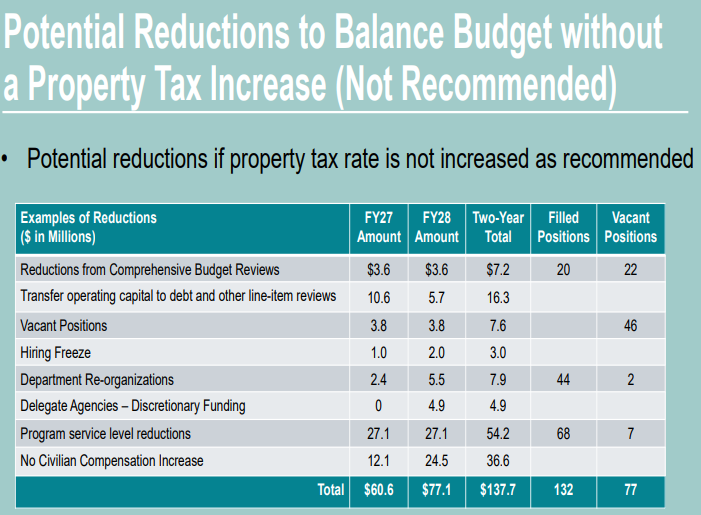
“Austerity is not a realistic budget plan when coming up with budget priorities, particularly in an economically segregated city,” Castillo said.
Some council members said they understand a call for a property tax hike. But they acknowledged their constituents will likely not support it when they are experiencing their own increases in daily living expenses, a proposed San Antonio Water System rate boost, and tax increases that are forecast or planned in public educational districts such as the one recently adopted in the countywide Alamo Colleges District.
“I’m fully aware that this was tough and uncomfortable exercise to go through,” District 7 Councilmember Marina Aldrete Gavito said, referring to the city’s FY 27 trial budget. “I know that we’re probably going to have to go through some more iterations, but we have to make tough choices right now.”
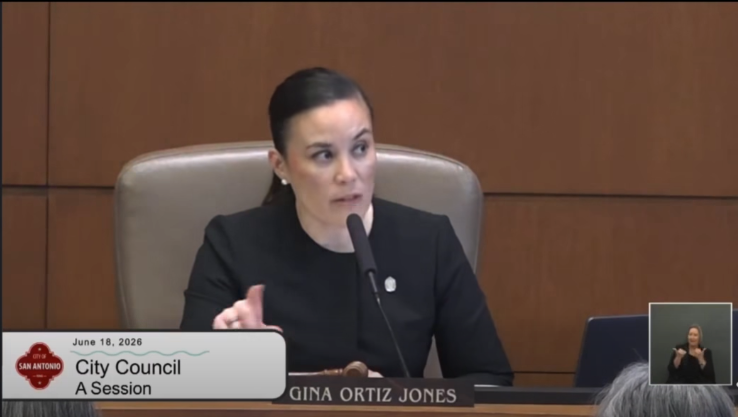
Mayor Gina Ortiz Jones does not present back the tax hike idea, but would rather shift the scope of possible cuts towards organizations that receive funding from the city. She added that philanthropies and other private sector members could help to supplant funding on which some local organizations may happen to rely.
“If we’re talking about eliminating nutrition centers, we shouldn’t be subsidizing (the San Antonio Botanical Garden),” Jones said as a budgetary item example.