By Edmond Ortiz
Shavano Park is enacting a new fee designed to help shore up the town’s water supply.
Elsewhere in the San Antonio-area, a handful of local governments and water supply agencies along the Interstate 35 corridor recently secured more than $140 million to support various initiatives meant to protect or improve their water supplies, sources and systems.
Shavano Park’s new water fee
City Council unanimously voted July 27 to create a water supply fee to allow the city to buy 150 acre-feet of Edwards Aquifer water rights, which are currently estimated to cost $1.65 million.
Shavano Park currently owns little more than 948 acre-feet of Edwards water rights; the city uses more than 900-acre-feet of water annually.
Town officials are worried that with ongoing regional growth, rising demands on water resources, and pumping limits prompted by EAA water restrictions in times of drought, the costs of leasing or buying water rights will increase, and it will become harder to keep pace with local water consumption.
“What we’re really trying to do is protect our water rights for the long term,” City Manager Bill Hill said.
The city’s water advisory committee explored multiple options for establishing and imposing a new water supply fee on nearly 700 customers, recommending two options to the council. Several residents also attended a recent town hall to learn more about the new charge.
Council agreed to go with city staff’s recommendation of a hybrid model, which entails a $30 flat fee for all customers plus an escalating fee on monthly water bills that reach one of four tiers based on use. All fees will be discontinued as soon as the city’s water purchase loan is paid off.
The new fee goes into effect Aug. 1, and begins showing up on customers’ bills in September. The new charge does not apply to residents in the Shavano Creek, Bentley Manor, Willow Wood, Pond Hill and Huntington neighborhoods, all of which are serviced by the San Antonio Water System.
Water plant expansion
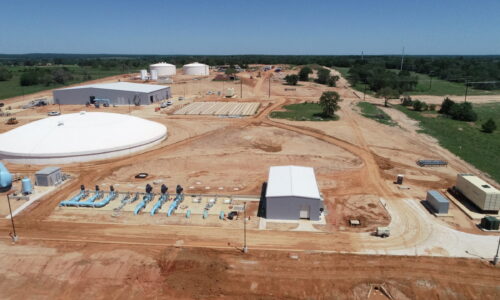
The Texas Water Development Board in July authorized $110 million in financial assistance requested by Alliance Regional Water Authority (ARWA) and the Guadalupe-Blanco River Authority (GBRA) to continue the expansion of their joint project, Carrizo Water Treatment Plant, to a full design capacity of 38.19 million gallons per day.
Officials with ARWA and GBRA said the plant expansion is needed because of increased construction costs, and an unexpected water demand from many of the communities represented by both water agencies.
GBRA originally began working with the ARWA in 2018 to jointly develop their long-range water supply projects, including the Carrizo plant, which was initially designed and permitted to meet future regional water needs through 2070. Populations in Comal, Hays, Caldwell and Guadalupe counties are projected to rise past 232,000 by 2032.
The plant produces, treats, and delivers Carrizo Aquifer water from eastern Caldwell County to distribution points in Caldwell, Guadalupe, and Hays counties.
GBRA and ARWA are 90% finished developing this initial, multi-year phase of project work, including activation of a wellfield in eastern Caldwell County, the aforementioned water treatment plant, and two transmission lines with eight connection points to link participating communities.
Construction on the physical plant expansion begins this August, and will be completed in January 2029. The money for the plant expansion is coming from the State Water Implementation Fund for Texas (SWIFT) program.
Comal County aims to protect lands
TWDB in July granted Comal County’s request for $30 million in financial assistance to create a water quality protection lands program, where the county can buy properties within recharge and contributing zones of the Trinity and Edwards aquifers, the watersheds of the Guadalupe and Comal rivers, and Dry Comal, Cibolo, and Alligator creeks.
This, county officials said, will help to reduce source pollution in surface waters, aquifers or stormwater events for threatened or endangered species, and remove existing impervious cover.
Additionally, further protection of land above recharge and contributing zones will maintain spring flows that feed these creeks and rivers, according to county officials.
Comal County wants to complete all land acquisitions by July 2029, and will craft a plan to manage its newly bought properties. The money for the land purchases will come from the state’s Clean Water State Revolving Fund.
Grants for water management
TWDB in June awarded more than $7 million to 43 Texas groundwater conservation districts to support eligible research and data initiatives towards effective groundwater management and planning.
Two San Antonio-area GCD’s received TWDB grants:
- $80,000 to the Comal Trinity Groundwater Conservation District to quantify recharge to the Middle Trinity aquifer from the Guadalupe River in western Comal County to address a key data gap in current groundwater analysis;
- $101,241 to the Trinity-Glen Rose Groundwater Conservation District to upgrade and expand groundwater monitoring for the Trinity Aquifer in northern Bexar County.