By Edmond Ortiz
Recent significant investments will bolster scientific research and engineering studies at San Antonio’s two public universities.
UT San Antonio
The University of Texas Board of Regents acted in May to provide nearly $175 million in additional Permanent University Fund money to UT San Antonio to support UTSA’s research capabilities, technology infrastructure and long-term institutional capacity.
According to a press release, the latest infusion of funds is in addition to more than $471 million that UT San Antonio has received from the UT System in the past year toward supporting physical capital expansion and improvements, and other infrastructure to buoy an array of research initiatives including:
- $186 million in PUF support over three years for deferred maintenance and infrastructure modernization projects across the academic and health campuses;
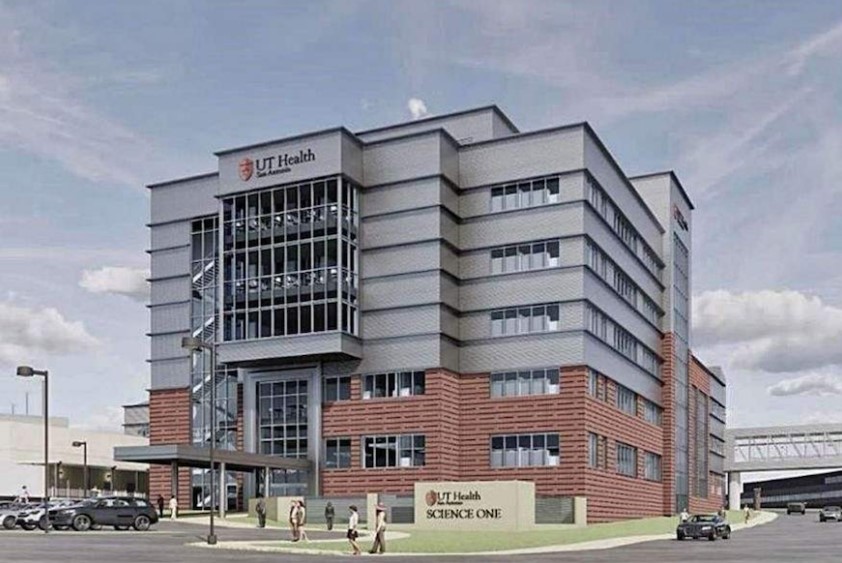
- $135 million in PUF support for Science One, the UTSA’s next-generation biomedical research facility where construction on a 95,000-square-foot Medical Center facility is scheduled for completion late this summer;
- $25 million in PUF support to finish the build-out of San Pedro II downtown academic building for the College of AI, Cyber and Computing;
- $14.3 million in PUF support for enterprise technology infrastructure modernization;
- $22 million in revenue financing system (RFS) support for academic and research renovations;
- $24 million in RFS support for clinical renovations and patient care environments; and
- $55 million to support the definition phase of the Nexus Initiative, a research effort aimed at advancing integrated computing, artificial intelligence and biomedical research capabilities across the university.
Specifically, the new PUF money will go toward the full build-out of the Science One complex, which will house wet laboratories, advanced core research technologies and collaborative research environments supporting discoveries in cancer biology, neuroscience, aging biology and age-associated diseases. Substantial completion of construction is expected in 2028.
The new money will also fund the completion of the sixth- and seventh-floor build-out of the San Pedro II facility, which UTSA unveiled in April.
Additionally, the new PUF money will fund technology infrastructure investments to modernize servers, storage, networking and enterprise systems that support cybersecurity, resiliency and institutional operations, according to UTSA officials.
UT San Antonio officials said such investments are emblematic of UT System leaders’ enthusiasm for the growing amount of research initiatives taking place at UTSA and UT Health San Antonio.
“These initial investments are transformational. They are absolutely commensurate with our ambitions to become a top 20 public university by 2036,” UTSA President Taylor Eighmy said in a statement.
Dr. Francisco Cigarroa, senior executive vice president for health affairs and health system, said the investments go beyond supporting physical capital, and help to reinforce research, education, innovations and patient care services that all are designed to advance science, technology and medicine.
“As UT San Antonio continues to integrate the strengths of a leading public research university and an academic health center, we are creating a model for how education, research, innovation and patient care can come together to drive transformative impact,” Cigarroa said in a statement.
Texas A&M University-San Antonio
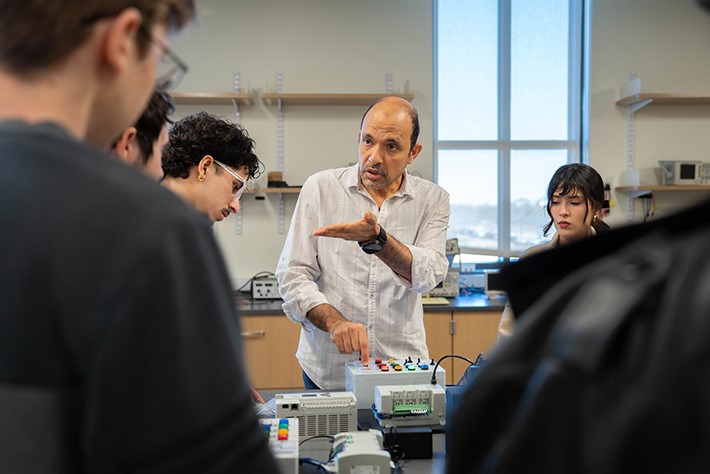
Toyota Motor North America recently gifted $25,000 to Texas A&M-San Antonio, which will use the money to support the development of a new state-of-the-art laboratory for TAMUSA’s Electronic Systems Engineering Technology (ESET) program.
According to university representatives, the ESET program readies students who are interested in pursuing a career in manufacturing, avionics, medical electronics, energy industries, and infrastructure support services. Graduates work as engineering technologists, technicians, and specialists in product development, manufacturing, and program management, a press release stated.
ESET is part of an increasing slate of Science Technology Engineering and Mathematics (STEM) program offerings at the South Side university, which is located a short distance from Toyota’s local assembly plant.
The new ESET facility, a Programmable Logic Controller (PLC) lab, is under construction and slated for completion in fall 2027 inside A&M San Antonio’s science and technology building.
University representatives said the lab will offer hands-on training with equipment like the industrial computers that are used to automate manufacturing and production processes, including controlling machinery on factory assembly lines. Similar processes are utilized at the South Side Toyota plant, which is undergoing expansion.
Wael Deabes, associate professor and ESET program coordinator, said the partnership that has blossomed between TAMUSA and Toyota benefits both students and local workforce development.
“We talked about the importance of the ESET program and how we are working to bridge the gap between theory and practice,” Deabes said in a press release. “Our goal is to develop a pipeline of skilled workers and technicians who can fill in-demand jobs in industries like manufacturing. It was a great experience, and Toyota agreed to provide funds to help develop the new lab.”
Melinda Higgins Louden, Toyota’s manager of corporate communications, said the automaker sees many advantages in partnering with A&M San Antonio.
“We got really excited about the curriculum and saw the potential, especially when it comes to equipping students with skills for the real world,” Louden said in the release. “This contribution is about elevating STEM in our community and helping prepare students for growing industries.”