By Edmond Ortiz
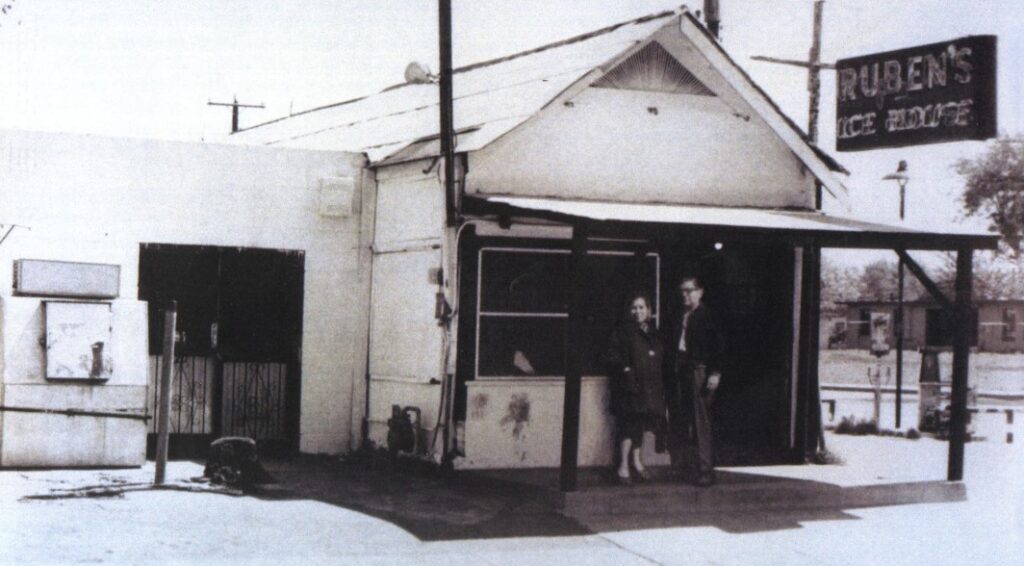
Manuel and Elida Reyes opened M&E Groceries and Market in 1957 in the heart of San Antonio’s traditional West Side. According to the Reyes’ loved ones and friends who remember the grocery store, the owners treated the marketplace more than just a business.
For many community members, M&E Groceries and Market, which became Ruben’s Ice House – named after one of the Reyes children – was a gathering spot that offered affordable essentials and friendly service to everyone.
Elida Huron, one of the Reyes children, remembered how her father drove a blue truck and had a small box filled with index cards, which contained the names of customers who received credit at his business.
“(Customers) would get paid maybe once a month. He would give them credit and he would deliver to their homes in that little blue truck,” Elida Huron recalled in a story shared with the Bullock Texas State History Museum.
The same story offers a recollection from George Huron, Manuel’s son-in-law, about Ruben’s Ice House: “I remember it as a meeting place, for people to go and talk about situations and enjoy a beer.”
Ruben’s Ice House closed in 1987, but not before the Reyes had left a lasting impact on the community – so much so that in its place now stands a museum dedicated to preserving the history and culture of the West Side.
What happened
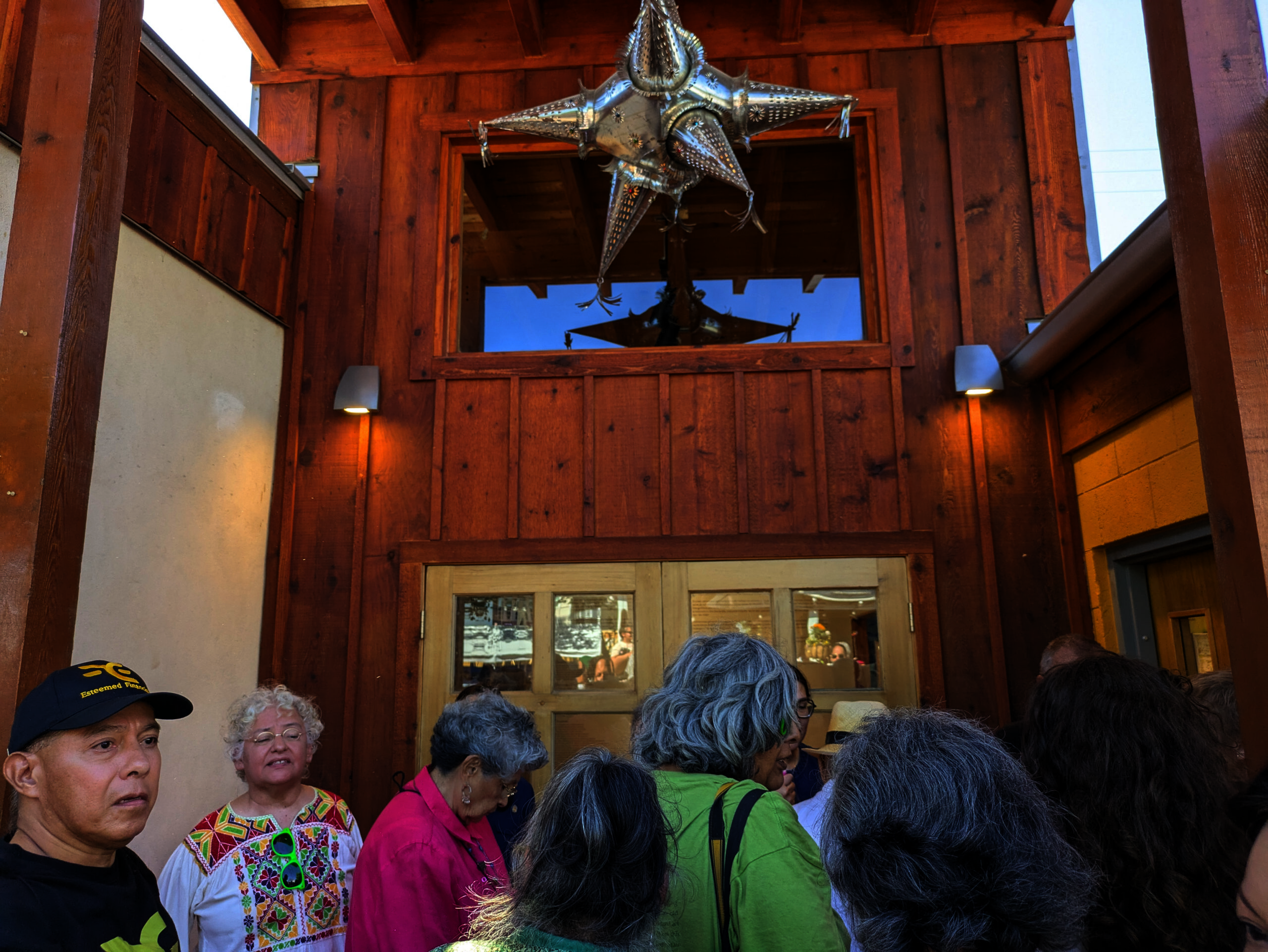
A grand opening was held Oct. 18 for Museo del Westside (Museum of the West Side) at the corner of Guadalupe and South Colorado streets.
The Esperanza Peace and Justice Center led a multi-year campaign to save and restore Ruben’s Ice House and turn it into a long-envisioned brick-and-mortar museum, which contains photos, maps and artifacts that chronicle the people who have lived and worked in the traditional West Side.
When La Gloria, a beloved but abandoned 74-year-old West Side dance hall was razed in 2002, leaders at Esperanza Center committed to preserving neighborhood landmarks, such as Ruben’s Ice House.
In the mid-2000s, concerned community members created Corazones del Westside, a grassroots group that has supported such preservation efforts. As they gathered stories, photos, documents and other artifacts showcasing West Side history and heritage, community advocates sought a physical place to permanently house and interpret the collection.
That dream started to become a reality in 2008 when the Esperanza Center acquired the former Ruben’s Ice House site, which sits next to Rinconcito de Esperanza, where the nonprofit offers various programming, such as MujerArtes Women’s Clay Cooperative.
The Esperanza used a variety of funding, including a $1.6 million Humanities In Place grant from the Mellon Foundation, to support the restoration of the Ruben’s Ice House structure and further development of Museo del Westside. Construction materials included earthen-based plaster fortified by cactus fibers. The plaster was applied to the new museum’s adobe brick wall as a means to symbolize how many West Side homes were built decades ago.
What they’re saying
Graciela Sanchez, the Esperanza Center’s executive director, said opening the Museo del Westside is an important occasion, especially in a time dominated by an ultra-conservative presidential regime and where immigrants, particularly Mexican-Americans, are vilified.
“We hope that others in this community and in other communities throughout this country also think about creating their own community museum because if no one else is telling our histories, they’re erasing our history,” Sanchez said.
According to Sanchez, the individuals and groups that banded together to preserve Ruben’s Ice House and other West Side landmarks, such as the former Lerma’s Nite Club, are collaborating without relying much on city leaders or resources because community members are more worried about saving critical neighborhood landmarks and sharing their histories.
Sanchez added that when former homes, businesses and gathering spots around older parts of the West Side fall into disrepair, abandonment and ultimately demolition, community members lose cherished connections with each other and their senses of place and history.
“We’re going to save the history of the West Side of San Antonio. We’re going to save the built environment to save the casitas,” Sanchez said. “El Museo del Westside has grown from the love, determination and hard work of West Side residents.”
One of Manuel and Elida’s children, Patricia Reyes Zepeda, and Patricia’s daughter Alexandra Reyes Zepeda, spoke on their family’s behalf at the museum’s grand opening, which included live music, poetry readings and refreshments.
Patricia Zepeda recalled that her parents migrated from Mexico to the United States in the mid-1940s in search of a better life. All 10 of the Reyes’ children had opportunities to work at M&E Groceries and Market, developing traits such as hard work and responsibility in the process.
According to Patricia Zepeda, her father’s decision to evolve the grocery store into a panaderia, a restaurant and an ice house was important because the Reyes’ establishment became a hub of community activity, and all people were welcomed.
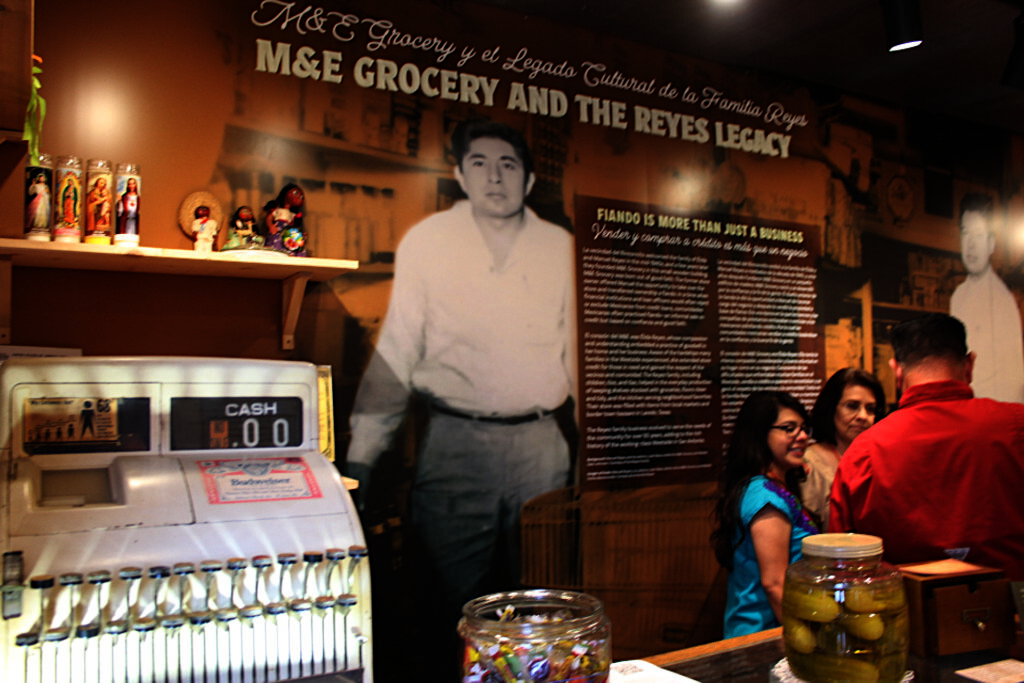
The museum features photos of such social gatherings, as well as reproductions of what the business looked like in its heyday, including a cash register atop a glass display containing vintage merchandise that was popular in the postwar years.
Additional exhibits inside the museum show through images and other artifacts how West Siders strived to create a better life for themselves by opening small but essential businesses, such as barbershops, blacksmiths and tire shops.
Patricia Zepeda explained that a group of men would regularly come to Ruben’s Ice House after work to unwind and socialize before taking home dinner made by her mother.
“Immigrants were making their mark in the West Side. This included midwives, artists, pecan shellers, candy makers, and restaurant owners,” Patricia Zepeda recounted. “Families and other Hispanic households didn’t realize that they were creating history. It was beautiful to see everyone unite, and our heritage blossom. My parents really built something amazing here and years later, it is reopening to continue its purpose.”
Alexandra Zepeda never got to meet her grandparents, but she said she feels connected to them thanks to stories passed down by her parents and other community members. She added that by saving and restoring the ice house and turning it into a museum, the stories, successes and struggles of West Side residents will be preserved for generations to come.
“Because of Esperanza (Center), I am able to stand where my grandmother stood to cook, where my grandfather spent his days running a business, and where families gathered to have a meal together,” Alexandra Zepeda said. “It is a blessing to now walk inside the ice house and see what my grandparents built to give our family a better life filled with opportunities.”
What’s next
The Esperanza Center continues to develop Rinconcito de Esperanza, as the nonprofit plans to unveil a cafe, a research center, a space for curanderas, and an oral history recording studio by late 2026 – all meant to complement the museum.