By Edmond Ortiz
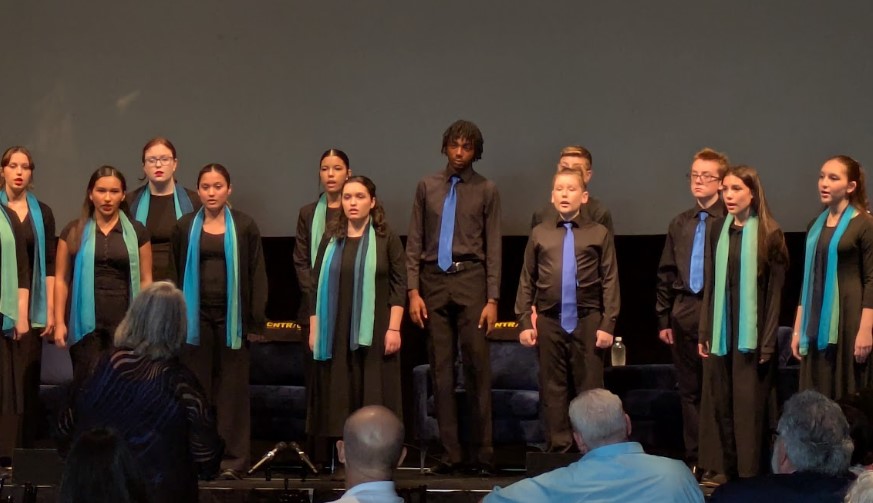
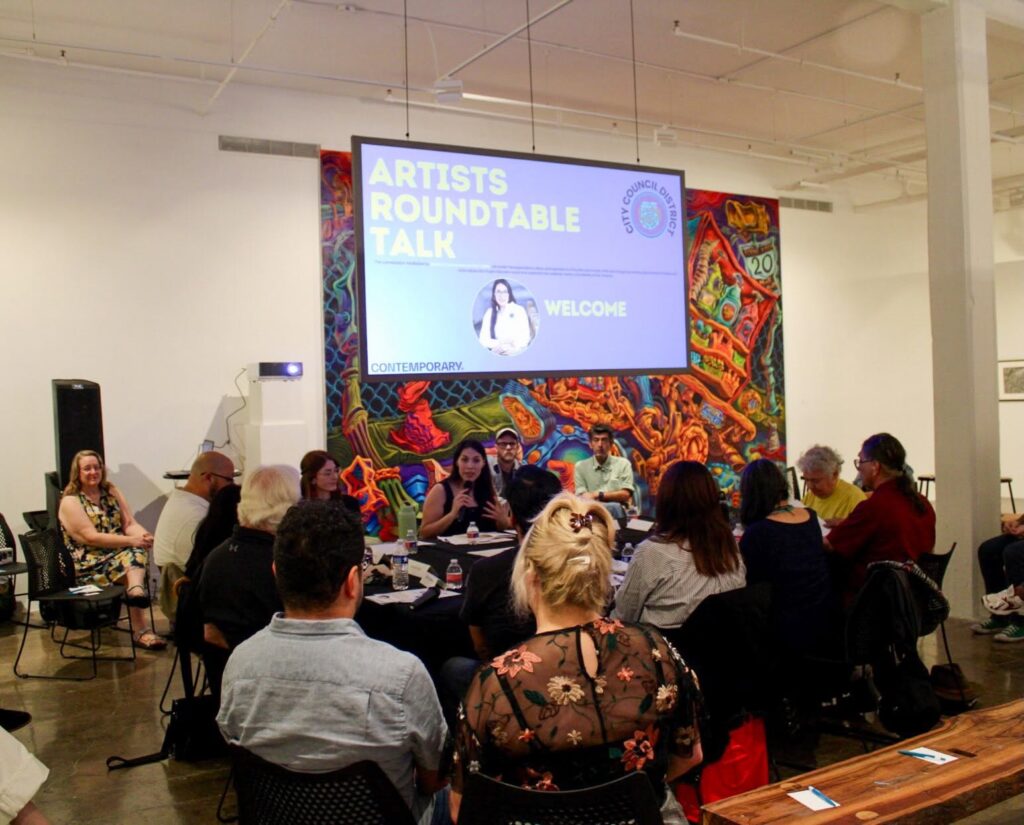
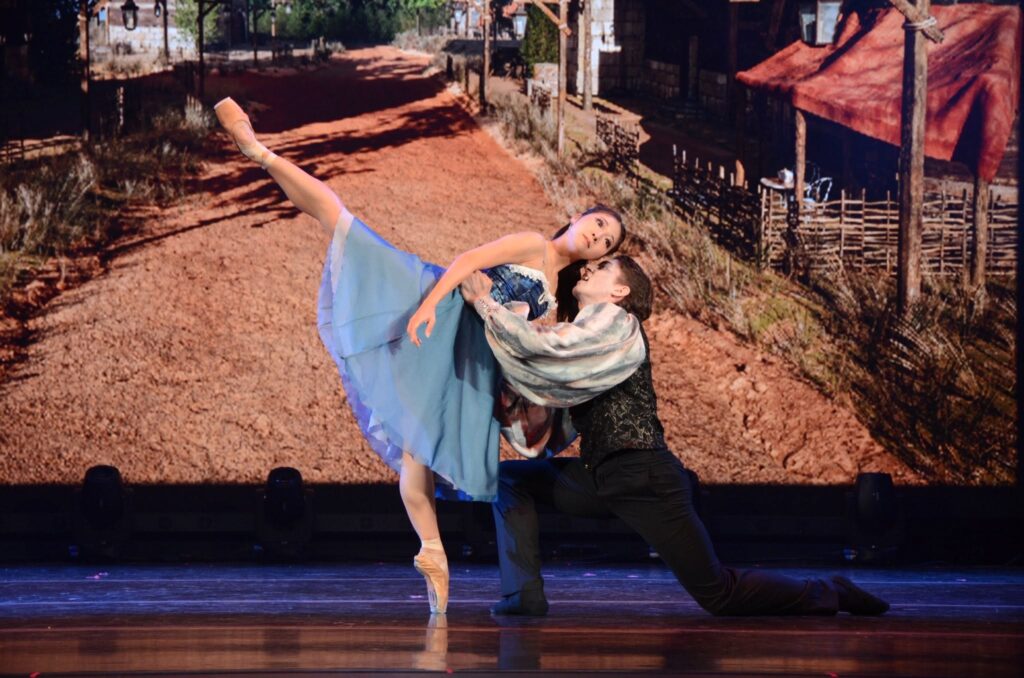
The power of art and art education was front and center of a July 29 CNTR/CTY panel discussion at the Tobin Center for the Performing Arts where Alyssa Avenatti, executive director of the Children’s Chorus of San Antonio, shared the value of supporting the arts.
According to Avenatti, a presentation from the likes of the Children’s Chorus is not just a performance. It is the culmination of offering accessible art education, building formative relationships among individual artists and artistic groups and their supporters, and providing platforms by which creative people apply their talents to enhance the aesthetics of a community and even contribute to a local economy.
Artists such as members of CCSA also find belonging through art and art education.
“Most of us have experienced that feeling at one time in our lives or another. The arts have brought that feeling to us – the confidence, discipline, resilience, and the courage to contribute their creativity and their voice,” Avenatti said.
And while the city of San Antonio recognizes the key role of art in the public sector during a milestone anniversary this year, smaller yet vibrant communities such as New Braunfels and Castle Hills are realizing the value of investing in arts and culture.
Celebrating public art in San Antonio
Local leaders and artists continue to observe the 30th anniversary of City Council’s adoption of the city’s public art ordinance, which allocates 1% of the city’s capital improvement project funds for the creation of public art.
When voters approved the city’s 2022 bond, they also backed raising the percent-for-art policy allocation from 1% to 1.5%. The city’s annual operating budget
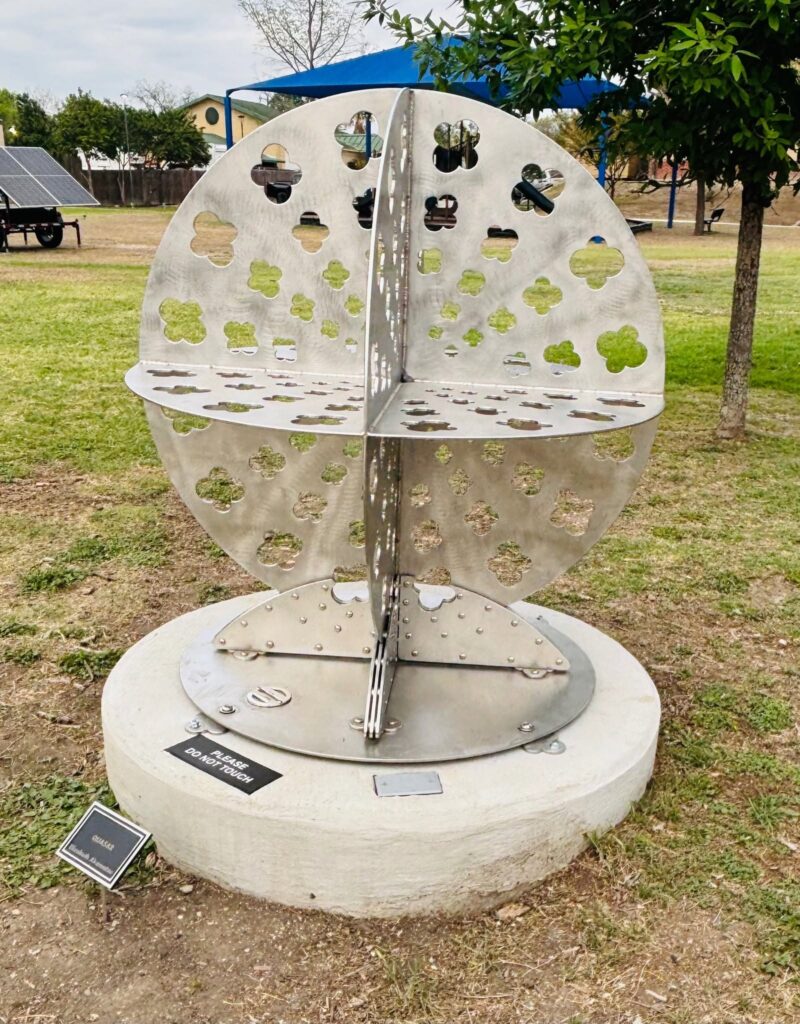
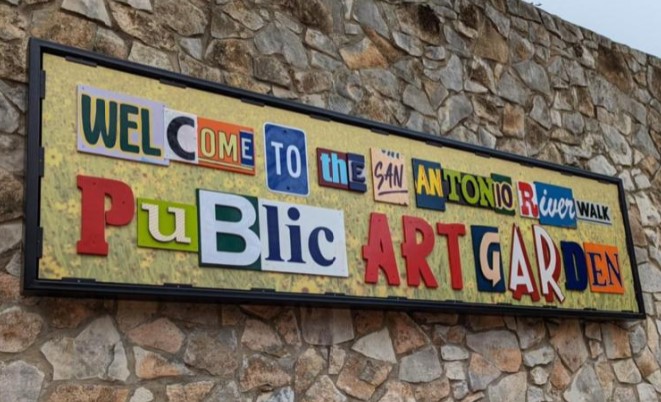
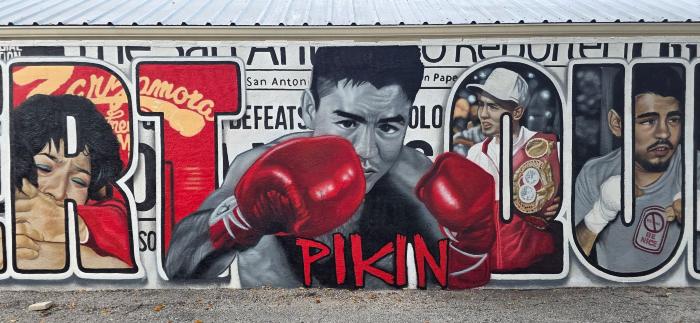
Public art can be seen in murals, sculptures, and site-specific installations that are integrated into various capital improvement projects, such as libraries, parks, greenway trails, roadways, community centers and the River Walk.
Upon marking the original passage of San Antonio’s public art ordinance, the city’s arts and culture department launched an online portal to share with residents the range of public art pieces that exist around town, as well as stories behind the creators of those art works. The web portal contains images of nearly 800 city-commissioned public art works.
Funded by the city’s hotel occupancy tax, the San Antonio Department of Arts and Culture, remains a critical hub of support in the local sphere of public art.
Over the past three fiscal years, the department has increased grant dollars awarded to nonprofits offering arts programming, such as the Children’s Chorus, and to individual artists for the creation of new public art projects.
That dollar amount has risen from $6.88 million in Fiscal Year 2024 to $7.48 million in Fiscal Year 2026. Approximately 65% of the arts and culture department’s funding is used for grants.
Krystal Jones, arts and culture department director, called the hotel occupancy tax a powerful funding tool for public art, which in turn drives cultural tourism. That is where people travel to a community mainly to explore its history, heritage, arts and lifestyles. .
“The cultural traveler on average spends much more than the average traveler, and figures have shown that about one in four visitors in Texas is the cultural traveler,” Jones explained. “They usually stay longer and spend more money. It’s really beneficial to have those folks who are coming, spending time in hotels, and a portion of their hotel bill supports the generation of programming through funding that we provide.”
Jones, who also moderated the July 31 arts education panel, said aside from a local government, private philanthropic interests and individual donors, too, play vital roles in helping to support both the arts and arts education, and making them accessible to all community members.
Jones said the city is always exploring ways to advance public-private sector partnerships in other avenues, such as the military and healthcare industry, to plug into more potential outlets of support for public art.
“For example, it might be a healthcare foundation that is interested in learning how there are so many physical healing assets that the arts bring,” Jones said. “And the arts being incorporated into recovery for brain injuries or PTSD or stress, mental health issues, is definitely an avenue that I could see exploring.”
The creatives’ economy
A 2025 economic impact study showed that the city’s creative industry produced a total economic output of $5.18 billion in 2023. The study also had 2.3% of San Antonians employed in the arts in 2023, whether it be in design or advertising, museums or galleries, performing arts, art school, visual arts, culinary arts, broadcasting, printing or other artistic forms.
The economic impact of the arts might prove an effective instrument of public discourse, especially during city budget time, but Jones said the arts are crucial towards growing a community, and fostering the preservation of local heritage and culture.
“Art builds a community, and everyone who is a part of a community wants to be more involved,” Jones added.
The arts can also be a way to help enhance aesthetics, promote economic development or even raise public safety in a specific area.
To show how valuable public art is, the city is seeking participation from local artists with eyes on how art can be incorporated into the Project Marvel sports and entertainment district that is proposed for downtown. The city and members of the private sector also foster collaboration with elements of the San Antonio Street Art Initiative to draw upon their talents in order to enhance public spaces.
“There are studies that show if a space is activated, there’s less likely to be crime in that area. And there’s also more foot traffic to businesses,” Jones said.
“When you’re talking about public art of all types, the key word is public art. It means it’s for everyone and it puts the public first and foremost.”
These are the principles of public art that local artists such as Diana Kersey and Oscar Alvarado keep in mind when they are commissioned by the city to create an art project.
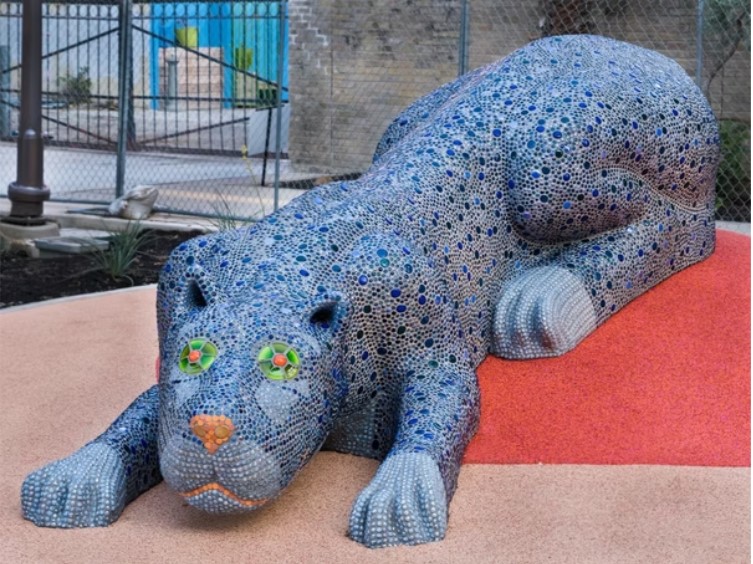
Alvarado has led many such projects across Texas. He is best known for creating a triptych of mosaic benches and sculptures at the center of Hemisfair’s Yanaguana Garden.
Every time, Alvarado involves residents in the community in which he works. Such was the case in 1999 when the Corpus Christi-based Art Museum of South Texas tasked him to create a mosaic mirror during a weeklong residency.
Alvarado taught lessons in making mosaics to children from an impoverished neighborhood of primarily Spanish-speaking residents.
“I walked with them through their neighborhood and ended up picking up stuff that I wanted to put in the mosaic mirror, and encouraging them to pick up trash as well,” Alvarado recalled.
While teaching local children for another Corpus Christi arts organization, during his lunch, Alvarado crafted a sandwich sign bearing the line, “You are the key to public art.” The artist walked around downtown, displaying the sign to passers-by, and even collecting spare keys as part of a future artwork.
“It must have looked pretty crazy, but it was just an idea of how I could engage with the public, get them excited about a project that was up and coming, and get them thinking about public art,” he added.
Collaboration and community engagement was a focus for Alvarado who worked with his then-girlfriend (later, wife), S.T. Shimi, and other artists to forge what became First Friday in Southtown, a monthly neighborhood event involving open art studios, gallery receptions and more activities south of downtown.
“We were part of opening other people’s eyes outside of our community, which made (Southtown) grow even more,” he said.
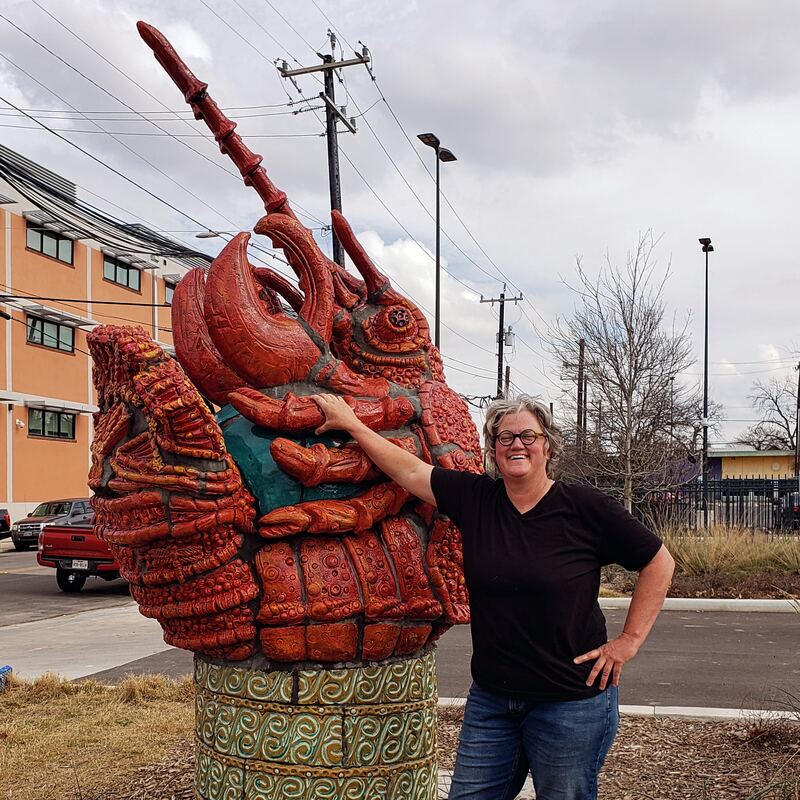
Kersey’s philosophy to public art is rooted in a dedication to teamwork, a reverence for the community in which she works, and a desire to create work that cultivates discussion and consensus.
Kersey’s notable public artworks include “Bridges of Understanding,” a series of ceramic pieces that line that walkway at San Pedro Creek Culture Park.
“Public art is one of the glues that holds our society together. We fund it as a public entity. Everybody owns it, so it doesn’t matter what walk of life you’re in, it’s part of your daily viewscape,” she said.
Kersey said working with clay allows her to shape art that reflects how a modern growing community is always in flux and yet includes a space for everyone and everything, including native plants and animals.
“I try to put little reminders that we’re a part of the ecosystem, not separate from it,” she added. “I also want to pay homage to clay because I just love clay…I want the medium to really be the start of the show.”
The arts in smaller communities
Area towns and suburbs such as New Braunfels and Castle Hills, too, are either ramping up investment in public art or raising engagement with local resident artists for the benefit of the community.
New Braunfels City Council last April adopted a master plan that will guide local arts and cultural development over the next 15 years.
According to town officials, the strategic plan is designed to bolster various parts of New Braunfels’ arts and cultural sector by supporting local artists and cultural organizations, fostering the development of creative spaces, urging collaboration among public, nonprofit, and private partners, and leveraging creatives’ talents to enhance the city’s economy, communal atmosphere, and quality of life.
City leaders said the arts and culture master plan will prioritize four areas:
- Programming and cultural experiences
- Places and spaces
- Visibility and tourism
- Operations and capacity building
The plan’s recommendations include adopting a public art policy, and further capitalizing on the significance of New Braunfels’ history, heritage, and aspects of cultural tourism.
“This arts and culture master plan ensures arts and culture remains a vital part of the community’s identity through future investments, partnerships, and initiatives that celebrate the creative spirit of New Braunfels,” Jeff Jewell, economic and community development director, said in a statement.
“These strategies aim to expand cultural programming, support artists and arts organizations, enhance cultural destinations throughout the city, and strengthen the operational capacity needed to sustain a vibrant arts and heritage ecosystem.”
Castle Hills is inviting its residents to help nurture a local public arts program. Last spring, the city unveiled a sculpture garden in The Commons public space next to City Hall, 209 Lemonwood Drive.
According to Mayor J.R. Trevino, in recent years, a few Castle Hills residents such as veteran restaurateur and artist Moe Lazri have encouraged the city to add public art in The Commons. Lazri offered to place one of his sculptures there.
One thing led to another, and San Antonio artist Bill FitzGibbons got involved, using his contacts with other Texas’ artists to help establish a framework for a Castle Hills public arts program. The city’s parks and projects commission also provides guidance on the matter.
Lana Meador, a San Antonio Museum of Art curator, oversaw the creation of the current sculpture garden, selecting pieces from seven Texas artists, including San Antonio’s Danville Chadbourne. The city used some local hotel occupancy tax revenue to fund the garden’s establishment.
Those sculptures will stay put in The Commons through March 2027. Castle Hills residents are asked to browse the garden and vote for their favorite sculpture via a QR code that is displayed on a board there. The city then will permanently exhibit the winning sculpture.
Trevino is leaving the door open to expanding Castle Hills’ fledgling public arts program to other parts of the North Side suburb. He and other local leaders understand that arts and culture have a place in the public realm.
“My priority as mayor has really been trying to make sure that we can appeal to everybody’s different types of needs and we can move the city forward holistically,” Trevino added. “We want to try and do it across the city so that everybody gets a little bit of something.”