By Edmond Ortiz
New Braunfels officials expect to wrap up their summer by considering potential changes to the city’s downtown parking system, which could expand free parking for residents, and increase parking fees on out-of-towners.
What is happening
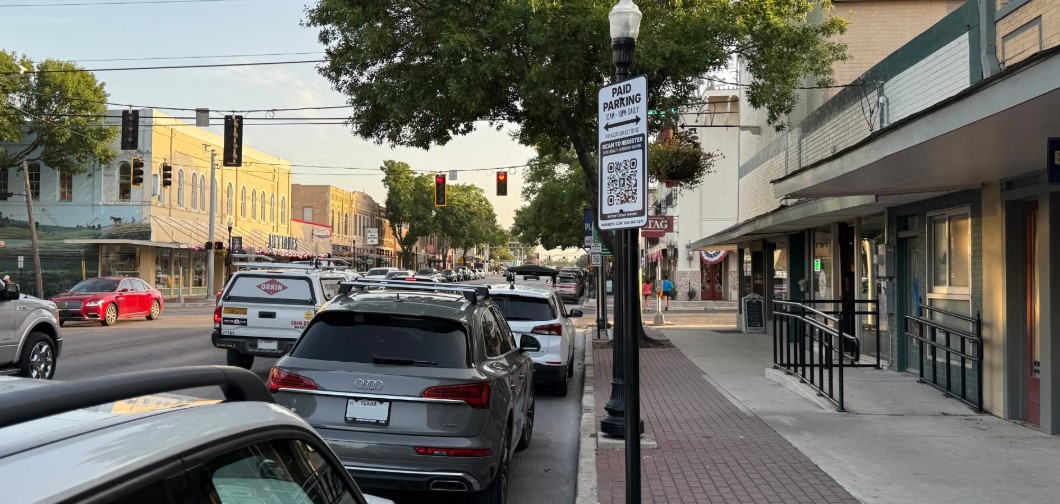
City Council met July 13 to review the 1-year-old managed pay-to-park system. Interstate Parking runs a program that is designed to address the parking situation in downtown New Braunfels, which is both the hub of city government activity and commerce, and a popular recreational destination for locals and visitors alike.
Motorists still have access to more than 1,000 free public parking spaces around downtown New Braunfels, and 250-plus paid spaces.
Newly elected Mayor Michael French came forward with proposed tweaks, which he said would provide New Braunfels residents with a streamlined registration process and more free hours, and a chance to increase revenue for the city.
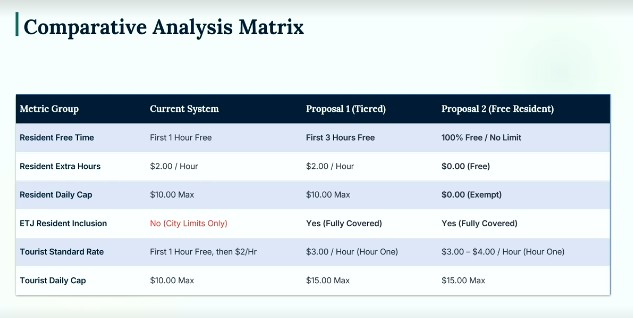
Currently, residents and tourists park for free the first hour, and are charged $2 per hour afterward. They can use their smart phone to scan a QR code on the parking sign, enter their information and length of stay, and submit a payment.
French pitched giving residents three hours of free parking with a $2 hourly surcharge afterward, or offering residents completely free parking with no limit. Residents and visitors presently face a daily $10 maximum for parking downtown.
Under a tiered proposal, residents could park for a $10 maximum per day. Either way, people who also live in New Braunfels’ extraterritorial jurisdiction could receive three hours of free parking or unlimited free parking.
Additionally, French proposed ditching free parking for tourists, and have visitors charged $3 or possibly $4 an hour with a $15 daily cap. Visitors’ payments here, the mayor said, could help to fund river preservation, trash collection, and law enforcement around the downtown and riverfront areas. French’s parking proposals would also affect public riverfront parking sectors.
The city projects collecting $373,833 in pay-to-park revenue for the current Fiscal Year 2026, which ends Sept. 30. Local officials estimate that system revenue will increase to somewhere between $391,300 and nearly $400,000 over the next two fiscal years without significant changes to the program. The mayor estimates the city could reap more than $456,500 in revenue in Fiscal Year 2028 if his tiered proposal were to become policy.
According to French, there is a need for a unified digital system to prevent fraudulent parking, and to ensure seamless vehicle tracking if changes were to go into effect. Here, all drivers would have to log into the city’s online parking portal to bind their license plate to their home address. Proof of residence would be needed via a driver’s license, utility bill or a Comal Appraisal District tax record.
What they are saying
French said he understands that the city implemented pay-to-park primarily to help reduce downtown parking woes. For years, even with a growing population and increasing number of tourists, downtown New Braunfels merchants have complained that customers were turned off by the lack of convenient parking spaces in the city center.
But, French said he feels the parking system can also become a stable source of income, and remain fair to local residents who want to park downtown and easily visit their favorite business.
“In the interest of monetizing everything, I still think that the money we will make will improve the sidewalks, streets, flowers and land area beautification,” he said.
However, some council members and residents questioned whether any changes to the downtown parking program are needed.
Councilmember Lawrence Spradley said the parking system was created after downtown business owners complained that it had become more troublesome for them and their employees to easily find available parking during business hours.
“So, the idea is to generate not money, but to generate revolving (amounts of parking spaces),” Spradley said. “It’s not technically about the money. It’s about moving parking spaces along.
French agreed, but added that discussions surrounding the parking system have evolved to a point where some people wonder if it is making money for the city.
“Now, everyone cares about looking at money. ‘How much money did you make?’ ‘How much money are we going to spend downtown?’ That’s all the reports I see are about the money,” French said.
Spradley said the city needs more data before enacting systemic changes. The city did recently conduct a random survey of people downtown. The survey found that 58% of respondents want to keep the managed paid parking system in place, and another 26% like the program, but would not mind seeing a few modifications, such as different hours, rates or more free hours.
The city also surveyed different types of downtown business owners about the parking program. Most restaurant and bar owners said they have seen more customer turnover and foot traffic.
But other restaurant and bar owners as well as retailers said many customers still avoid downtown or complain about a lack of parking spaces.
Many professional service providers, such as physicians and lawyers, said they have seen little to no change due to the parking system. Lodging providers, meanwhile, said they have seen more of a negative impact from the parking program.
Jennifer Wilson, co-owner of The Mess Around, a downtown cafe, said the pay-to-park program revolved around ensuring a constant turnover of parking spaces around downtown. She explained that in her 20-plus years operating a business in the city center, employees of neighboring businesses constantly park in front of her restaurant, inconveniencing her employees and patrons.
“I have had many groups who have wanted to have their group luncheons or breakfast at our place and have declined to use our facilities because there was never parking available,” Wilson said. “The current managed parking system has been the best solution.”
According to Deputy City Manager Jordan Manley, a standing downtown parking committee is scheduled to convene in August and review one year’s worth of parking program data, as well as the mayor’s proposals and other potential modifications. She added that the committee and city staff will aim to return to the council in September with recommendations.