By Edmond Ortiz
Residents and employees in San Antonio’s centermost school district remain critical of the school board’s decisions this week to close a West Side school, and to let a Colorado-based charter education organization take over three other West Side campuses.
What is happening
The San Antonio Independent School District board voted 5-2 March 23 to shutter Rhodes Middle School after the end of the current academic year. Students from Rhodes, which opened in 1954, will be reassigned to Tafolla Middle School.
The board also voted 5-2 to partner with Colorado-based Third Future Schools to manage Tafolla, as well as Hirsch and Ogden elementary schools. Third Future has a network of free public charter campuses that serve more than 6,000 students in Texas, Colorado and Louisiana.
District administrators said there was not much that could be done to save Rhodes, which has been rated as a failing campus by the Texas Education Agency for three straight years.
Shawn Bird, deputy superintendent of school leadership and partnership services, said trends were pointing toward a fourth consecutive failing grade for Rhodes, which would put SAISD at risk of a state takeover.
Bird said failing academic performance at Rhodes was not the fault of campus faculty or staff, but that there would have to be a dramatic increase in standardized test scores in order for the school to gain a better grade from the state.
What they are saying
Dozens of Rhodes employees, students, parents and supporters urged the board to push back on fears of a state takeover, and invest more resources into the campus. Many of the same audience members also argued against increased charter takeover of SAISD campuses.
Maribel Gardea, SAISD parent and co-founder of local nonprofit MindShiftED, was one of many community members who said closing some campuses and relegating others to the operation of a charter school organization could hurt staff and students, particularly special education pupils.
Some meeting attendees voiced concern that charter campuses lack sports and fine arts programs. Others brought up past alleged financial irregularities at TFS, and worries over the curriculum provided at TFS schools.
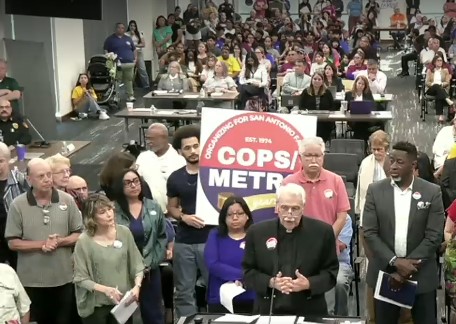
Gardea also criticized SAISD officials for not finding alternatives to a situation in which the inner city school district is still challenged by financial issues, dropping student enrollment and struggling academic performance.
SAISD leaders have in recent years shuttered more than one dozen schools, including Carvajal Elementary School this past January, and converted several others into charter campuses.
Additionally, trustees agreed this week to relocate students and staff from Madison Elementary School, which opened in 1949, to the former Huppertz Elementary campus by the end of this decade. Huppertz was operational for 65 years until its closure in 2024, but now it is undergoing renovations to accommodate the Madison staff and student body.
Officials with Third Future cite successes in their turnaround schools program, pointing to how three Texas K-12 schools that each went from a failing grade to a B grade within their first year of operation under the nonprofit organization.
Third Future officials added that they will spend the rest of the spring and summer communicating with Rhodes staff and students in efforts to have them continue to Tafolla. Still, many meeting attendees are concerned about what the future holds.
“What we are seeing is not new. It’s a pattern, a pattern of decisions made without families and families are paying the price,” Gardea said. “We’re going to be really clear. Schools do not fail on their own. The leadership does today. Our students, especially those in special education, are at risk without clear plans for services, placement, or stability.”
Trustee Stephanie Torres, who represents the Rhodes community, cast dissenting votes on the closure and charter partnership agenda items. She said the board’s decisions will likely prompt her to pull her children out of SAISD and consider enrolling them elsewhere.
Torres added that many employees from Rhodes or the other campuses being taken over by TFS will be hard-pressed to seek work elsewhere. She also hoped to implore fellow district leaders to resist further school closures and consolidations despite the challenges that face SAISD.
“Our hands are getting tied, but at the same time, it takes us to be brave to actually push back,” Torres added.
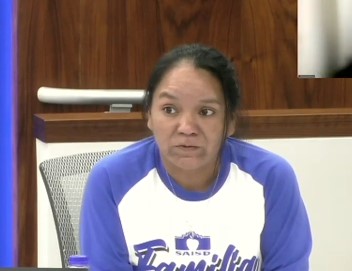
Seconds after trustees voted to close Rhodes, some audience members yelled “Shame!” at the board upon storming out of the meeting room.
In addition to SAISD, Third Future Schools will also take over operations of Edgewood Independent School District’s Brentwood Middle School, following a March 24 vote taken by the EISD board.
The teachers’ union San Antonio Alliance Local 67 issued a statement, accusing SAISD leaders of failing to fulfill their pledge of engaging community members and listening to them regarding major decisions that directly impact parents, students and employees.
“It is discouraging, disheartening and frustrating to see the board abandon this commitment from one month to the next,” the union stated.
“This process has not been transparent, and these actions are indicative more of a board that is ashamed of the unpopular decisions that it seeks to impose on a historically underserved and marginalized community than proud of its purported commitment to service, community engagement and collective decision-making.”