By Edmond Ortiz
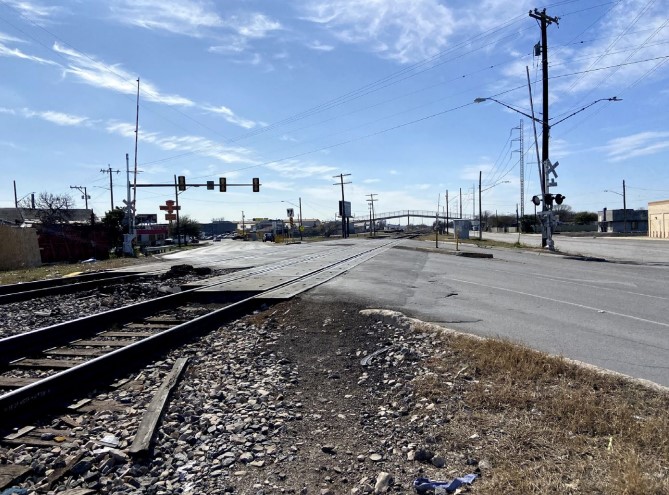
The state recently provided $5 million towards a $65.7 million project designed to reduce congestion at southwest San Antonio railroad crossing.
What you should know
The Texas Transportation Commission voted Feb. 26 to approve five grants, totaling $160.4 million, for five rail crossing separation projects around the state.
The money, sourced from the $250 million Texas Off-System Rail Grade Separation State Fund Program, will go to the Frio City Road/Zarzamora Street railroad crossing initiative, two crossing projects in Amarillo, and two similar projects in Houston and Laredo.
State officials said the program was created to help local governments eliminate at-grade crossings, reduce congestion, improve emergency response times and enhance freight network efficiency.
Locally, the $5 million grant will be used to help support the city of San Antonio’s development of an overpass at the Frio City Road/Zarzamora Street intersection and railroad crossing. The city contributed $31.7 million in local bond, utility and state monies toward the entire project.
Construction on the railroad crossing improvement project recently started at Frio City Road and Zarzamora Street, and is slated for completion in spring 2028.
According to federal data, an average of 35 trains cross the Frio City Road/Zarzamora Street intersection per day. Passing trains slow down to 10-20 mph in the area mainly because of their proximity to Union Pacific’s nearby rail yard. As a result, motorists experience many lengthy delays at the intersection.
Between 2013 and 2018, the Frio City Road/Zarzamora Road intersection was the scene of a rate of vehicular collisions three to five times greater than the statewide average at similar rail crossings.
Pedestrians and cyclists, too, have been involved in several accidents around the same intersection over the years.
What they are saying
While many neighborhood residents and merchants have expressed relief over the construction of an overpass at the railroad crossing, other community members have said they would rather leave the intersection as is because of their concerns about traffic delays and detours caused by the two-year project.
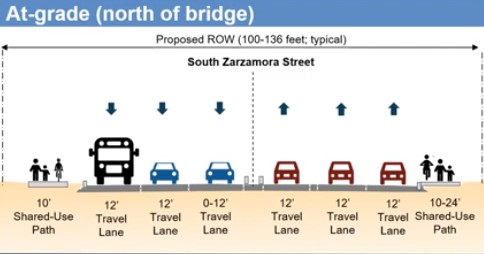
The new overpass will have three travel lanes in each direction, as well as shared use paths for cyclists and pedestrians.
Texas Rail Advocates President Peter LeCody lauded the state for its decision to boost railroad crossing improvement initiatives mainly because of continued population growth around Texas, and projected increase in freight rail traffic over the next few decades.
“This is a good day for rail and road safety and something that Texas Rail Advocates has been working toward ever since the rail division was established in 2009,” LeCody said in a statement.