By Edmond Ortiz
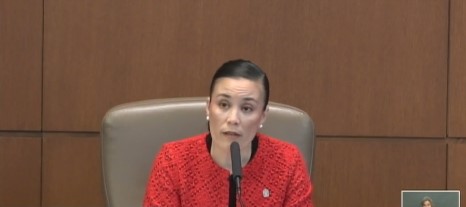
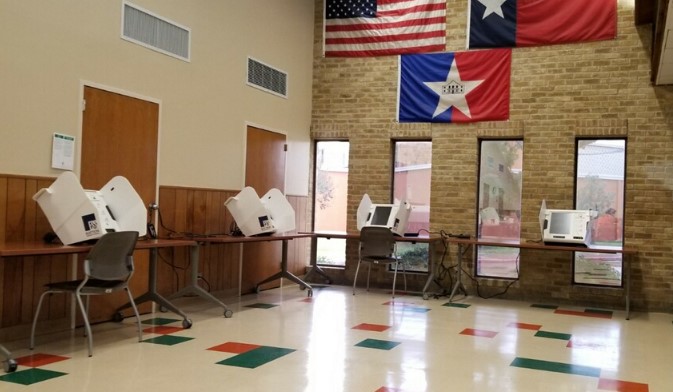
Mayor Gina Ortiz Jones broke a 5-5 tie at the Dec. 18 City Council meeting to approve moving the city’s spring election date, which has usually been the first Saturday of May in odd-numbered years, to the state’s uniform November election date, the first Tuesday of the month.
What you should know
The vote followed more than two hours of residents offering remarks, and then council members discussing the election date move, which was made possible through passage of Senate Bill 1494 in the most recent state legislative session.
Moving the city’s mayoral and council election date had garnered much of the attention of local elected leaders over the past month.
Several council members had expressed concern that shifting the date without voter approval or coordination with local school districts – most of which also have joint elections with the city on the first Saturday every May – would have a more negative effect.
Proponents of the move said that moving local elections from May to November would save the city money because the local government would no longer have to worry about conducting a spring and fall election.
Plus, backers of the move said having a November election, even in an off-year, could spark a larger voter turnout because more people are familiar with going to the polls in autumn when voters might be considering other ballot items, such as state constitutional amendments. Additionally, advocates of an election date shift argued college-aged voters who are preoccupied with finals in May would have time to participate in a November election..
Area governmental entities such as Cibolo, Converse, Schertz, Windcrest, and the Schertz-Cibolo-Universal City Independent School District moved from May to November elections a few years ago.
What residents are saying
While council was divided coming into the meeting, nearly every audience member who addressed the council spoke in favor of pushing the city election date.
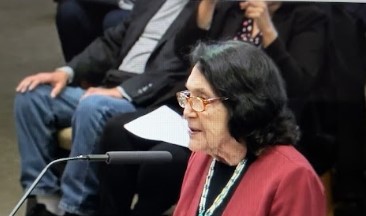
Dolores Huerta, renowned labor leader and civil rights activist, told the council that moving the elections would encourage a higher voter turnout and serve as an act of inclusion, especially for Latino voters, in a time of voter suppression.
“Voting has been a ritual in my family, but it is also a habit like the act of eating nourishes our physical bodies. The act of voting nourishes us and keeps alive our democracy,” Huerta said.
History teacher Andrew McBurney said, more often than not, November elections tend to have a higher turnout than May elections, and having two regular elections in one year – with the possibility of a runoff election if needed – seems to discourage many voters.
“(Moving the election date) is an opportunity to increase participation and engagement,” McBurney said.”People have to be responsible. That’s part of civic engagement. They have to register to vote, they have to inform themselves about issues, and then they have to get out and vote, which is perhaps the most important element of civic engagement.”
Mike Gallagher, a former council member and current Northeast Neighborhood Alliance president, was the lone resident to give an oppositional view. He said voters’ attempts to learn about mayoral and council candidates, maybe even a bond proposition, might get lengthy and exhausting for voters who are already weighing many other ballot items.
The Nov. 4, 2025 election, locally, was highlighted by the controversial proposal to allocate Bexar County venue tax revenues towards efforts to help build a new San Antonio Spurs arena. Many speakers agreed that the Spurs arena proposition election was a rare vote that drew a higher-than-usual turnout of voters who also mulled state constitutional amendments and, in some areas, various proposals from certain school districts.
The November 2026 election will feature Congressional midterms, legislative contests. and many key county races.
“I had people come up to me and say they almost went to sleep trying to vote. Think of all of those state amendments that they had to learn about and go through,’ Gallagher said. “Think about our own (arena propositions) that we had to think about, and think of what our school districts had to put up as far as bond issues go. Let’s keep the process simple.”
What council members are saying
Council members who supported the election date shift, such as District 3’s Phyllis Viagran, studies and political scientists have demonstrated that November elections can get a better voter turnout compared with May elections.
“We instill – and I taught elementary school – from the very beginning that Election Day is in November. This is what people and children learn. This is what they understand. This is what they’re programmed to do, whether it’s an odd year or an even year,” Viagran said.
Viagran also said, regardless of election timing, Texas has a long-entrenched problem with getting voters to the polls.
“This is not a party issue. This is a getting people out issue. We in the state of Texas are falling behind other states that are smaller than us, but get more attention,” she added.
District 9 Councilmember Misty Spears said she was surprised when a huge majority of constituents responding to her survey about the election date proposal said they had no problem with the shift.
District 10 Councilmember Marc Whyte said he could appreciate questions about whether moving the May elections to November would save the city money or produce a higher voter turnout.
But he voiced worry that such a move means all elected city leaders would get six months added onto their four-year term in office without voter approval – a shift that Whyte said risks increasing cynicism among voters.
“I think that the biggest reason folks don’t go out to vote is because they think it doesn’t really matter. What’s my vote going to do? What does it matter who’s sitting up there?” Whyte said.
Whyte also echoed concerns among some fellow council members who complained that they did not have enough time to thoroughly study the issue of shifting the May election date to November or get community input.
Jones said she appreciated arguments from both sides of the issue, and that while it is not known for sure about how much money that the city could save with an election date shift or how much of a voter turnout a move could produce, the city had a short window to act on the matter.
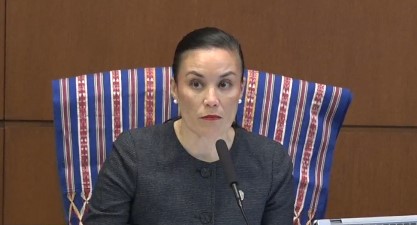
Jones added that, as some council members complained they did not have time enough to fully examine the proposal or secure comprehensive public input, an election date move had enough support from data, studies, and an overwhelming majority of audience members at the council meeting.
“Why would we not just take advantage of this opportunity if we understand the benefit?” Jones said.
Many council members agreed that by moving the May election date to November, the city will have to eventually schedule a public vote on a charter amendment to ratify the shift, educate community members, and work with local school districts that may also want to align their board elections with the new city election date.