By Edmond Ortiz
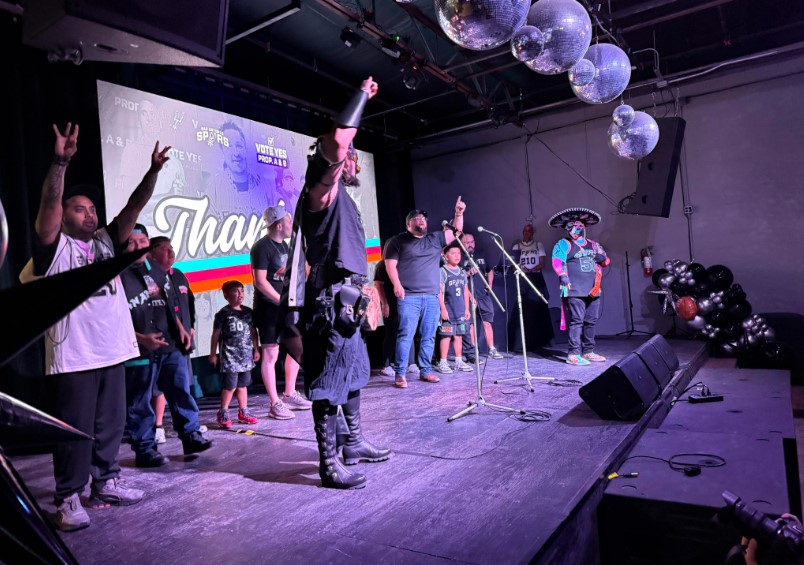
The San Antonio Spurs’ made a giant leap forward Nov. 4 in their mission to land a new, downtown arena as voters approved an otherwise controversial funding proposal.
What you should know
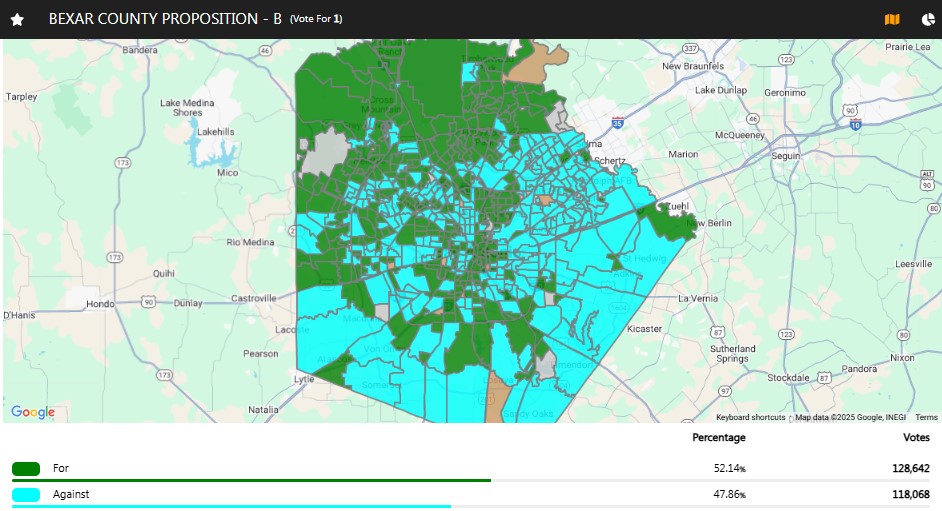
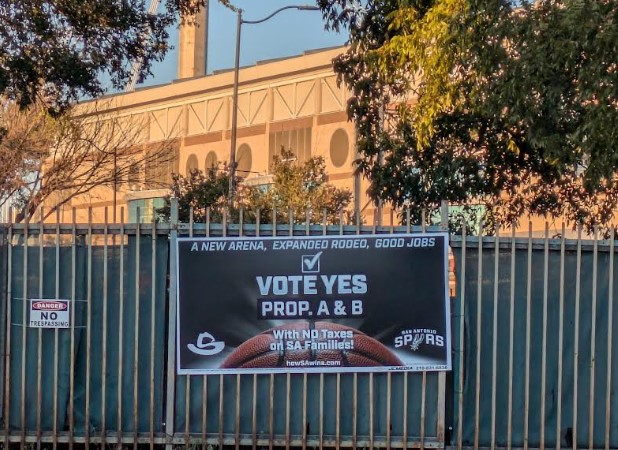
According to the Bexar County Elections Department, 52% of voters approved Proposition B, which authorizes the county to increase its hotel occupancy and vehicle rental taxes, which Spurs officials said would be used in part to finance the construction of a new arena at Hemisfair.
Such a new arena, Spurs and city leaders have said, could be the centerpiece of a proposed sports and entertainment district at Hemisfair.
Nearly 60% of voters approved Proposition A, which authorizes the county to increase the aforementioned venue taxes to create a year-round stock show and rodeo district containing the Frost Bank Center – the Spurs’ current home – and the neighboring Freeman Coliseum and adjacent facilities.
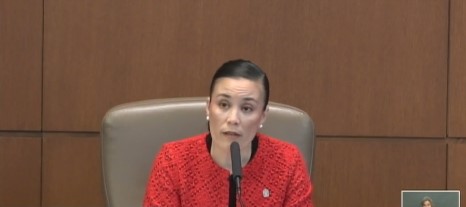
Mayor Gina Ortiz Jones, who criticized the Spurs for not providing an independent economic impact analysis and who asked the team to offer more community concessions in an arena development term sheet, said she will work with fellow city leaders, the Spurs and others to “ensure this generational investment helps to revitalize our downtown and strengthen our city.”
“Great cities are built through collaboration, persistence, and a willingness to keep working toward bold visions,” Jones said in a statement. “Our urban core represents an opportunity to remake a vital part of our city—one that can drive economic activity, create quality jobs, and add affordable housing stock that our community desperately needs. I remain committed to working with my council colleagues, city staff, the Spurs, and with community leaders to develop a plan that ushers in an era of progress and affordability downtown.”
More than 19% of local registered voters participated in this special election, which saw the Spurs spend more than $6 million in a campaign to persuade the public that a new arena not only would assure the franchise’s permanence in San Antonio, but could become an economic generator and be part of a transformative downtown project.
Spurs officials and backers of Props A and B insisted that only approving the proposals would raise only venue taxes that primarily impact tourists.
The San Antonio Board of Realtors, which endorsed both proposals, issued a statement of gratitude to voters who approved the measures. SABOR CEO Gilbert Gonzalez said Project Marvel, centered around a new Spurs arena, could be game-changing development for downtown San Antonio.
“At SABOR, we believe that voting is one of the most powerful ways to create meaningful change. We are incredibly proud of our members, partners and the broader community who took the time to engage in this important decision,” Gonzalez said in a statement. “Coming together as a community like this is truly what makes San Antonio great.”
But such messages did not resonate with opponents, whose campaign included grassroots groups such as COPS/Metro.
Many critics claimed that revenue from any taxes should go to basic citywide services, and not to specialty projects that they said would benefit a segment of the population.
Detractors also faulted the Spurs, county and city for failing to spark economic development around Frost Bank Center, and claimed voters were being pressed to approve proposals only to aid Spurs ownership and fellow wealthy allies.
Most opponents echoed Jones’ concerns that the Spurs lacked an independent economic impact study, and that broader socioeconomic problems were being overshadowed by talk of a new Spurs arena.
While pre-election polling reflected a tight race for both proposals, early voting totals included more than 20 polling sites that each saw 1,000-plus voters casting a ballot, mainly on the North Side.
According to county elections data, most voters who said “yes” to Prop B live in the North and far West sides of town. Other parts of Bexar County, such as the Alamo Heights area and few portions of the near East and South sides also gave a thumbs up to Prop B. But more voting precincts on the near West, South and East sides voted against both proposals.
COPS/Metro issued a statement Nov. 6, applauding the voters who cast a ballot. Organization representatives also said they respect the outcome of the election, and that they will keep working to ensure public funds are spent on overarching basic city operations and community needs.
“Our community has critical needs to be addressed, and we will work to represent the priorities of families and neighborhoods. These include long-needed investments in neighborhood and flood control infrastructure, public safety, schools and workforce development,” COPS/Metro leaders stated.
COPS/Metro leaders also asked the following be part of Project Marvel conversations taking place among city, county and Spurs officials going forward:
• Workers on the project receive living wages, with a demonstrated preference for union and locally-owned contractors in all aspects of Project Marvel;
• The city incorporate clear accountability measures in all contracts;
• The city prioritize and direct funding for infrastructure and other community needs through upcoming bond issues;
• The establishment of a citizen’s review committee to provide public oversight for every stage of Project Marvel, with an official capacity to report to the City Council and the public.
Other perspectives
Jon Taylor, political science professor at the University of Texas at San Antonio, said while pre-election polling for Propositions A and B was tight, the Spurs may have persuaded more voters to their side in recent weeks thanks largely to the millions of company dollars spent on the Win Together public campaign.
“The money that the Spurs spent made a difference. They made an advertising blitz. You couldn’t escape those ads,” Taylor said.
Taylor said Prop A garnered more support likely because many voters feel that the city, county and the Spurs are even more committed to ensuring the creation of a permanent stock show and rodeo complex on the East Side will help to spark some economic revival in the area — something that had not happen in the 20-plus years since the opening of the AT&T Center, now Frost Bank Center.
Regarding the narrow margin of approval for Prop B, Taylor said many critics are Spurs fans and want the team to stay in San Antonio, but were skeptical of the funding proposals, how fast things were moving in conversations between local government officials and the Spurs, and a perceived lack of public transparency.
According to Taylor, many local financially strapped residents did not care for the proposals because they feel they may not get to frequently afford a chance to enjoy a Spurs game at the new downtown arena or other envisioned destinations at the proposed sports and entertainment district.
The thin margin of victory, Taylor said, should serve as a wakeup call to the Spurs, city and county going forward. He also suggested the Spurs and their development partners be clear about supposed community benefits of Project Marvel, such as the resulting employment opportunities. Taylor said community members should clearly realize that most of the project jobs will be seasonal or short-term.
“Those numbers should be sobering to the Spurs, city, county and movers and shakers downtown,” Taylor said. “If I were the Spurs, I’d keep hammering the importance and positives (of Project Marvel) and I’d work together with the community and get them into the conversation.”
What’s next
Spurs and city officials have said, if all goes well, a new arena would be financed by revenues from the venue tax increases and by income generated from more specific taxing mechanisms, which would be created and applied to certain properties in the envisioned sports and entertainment district.
City officials have also floated the prospect of calling a May 2026 election, where San Antonio voters could mull a mechanism for funding infrastructure citywide – including streets, drainage, lighting and traffic signals around the Hemisfair area.
Local leaders say such infrastructure upgrades, if approved by voters, could help to accommodate future development connected to a sports and entertainment district.
But city officials have also scrapped, for now, an initially envisioned land bridge by-passing U.S. 281/I-37 and linking a renovated Alamodome with a Hemisfair sports and entertainment district, mostly because of concerns over escalating costs and fallout from the current federal government shutdown.
There is no timeline yet revealed for construction of a Spurs arena or other potential developments at the envisioned sports and entertainment district. The Spurs’ present lease at the Frost Bank Center expires in 2032.