By Edmond Ortiz
Given the projected growth that is taking place in Cibolo and Schertz, the leaders of both cities are hoping to take firm action – sooner than later – to secure the future of their respective water supplies.
What you should know
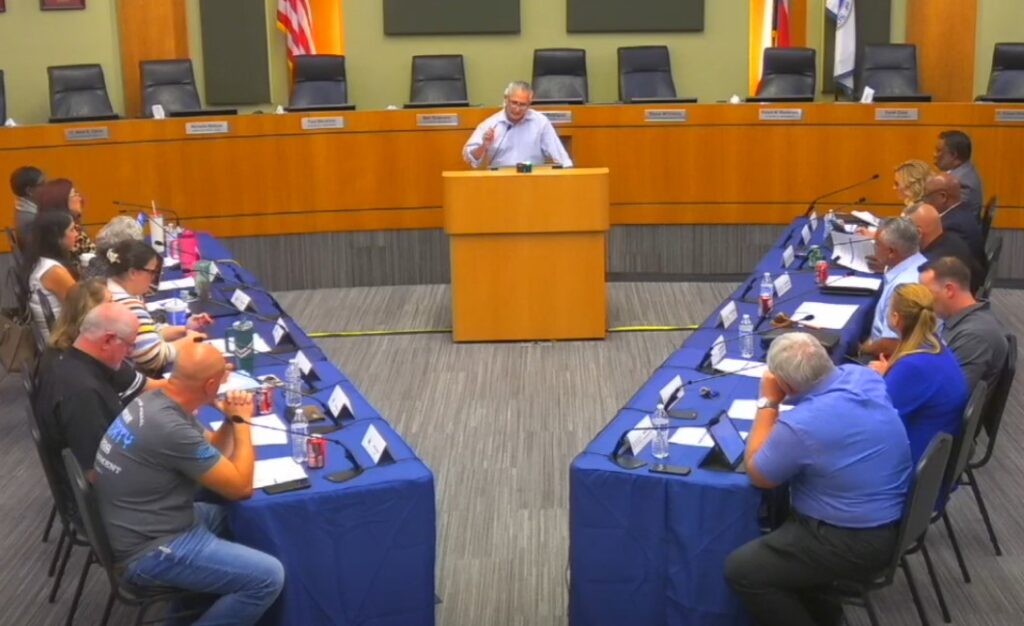
Cibolo and Schertz’s city councils held a rare joint public meeting Oct. 22 to discuss their respective community’s water needs.
While no official action took place at that meeting, councilors from both cities agreed it is important for them to consider next steps regarding current and long-term water rights.
Specifically, both cities are mulling what to do with the assets that they have tied up with the Cibolo Valley Local Government Corp., an entity that Cibolo, Schertz, Converse, Selma and Seguin formed in 2011 to develop future water resources.
Converse, Selma and Seguin later withdrew from CVLGC, which is now owned by Cibolo and Schertz. The organization is similar to yet separate from the Schertz-Seguin Local Government Corp., which Schertz and Seguin launched in the 2000s.
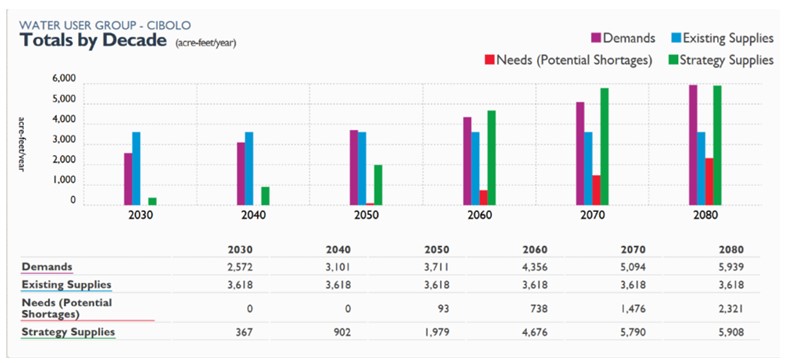
Cibolo currently has 3,800 acre-feet per year of water to serve its customers water that comes from five sources, including Lake Dunlap and the city of Schertz.
Cibolo’s current annual water consumption is approximately 2,550 acre-feet/year. According to Cibolo officials, the city’s water supply is sufficient until 2050.
That is the earliest water shortage that the Texas Water Development Board predicts for Cibolo if the city fails to do anything else to keep pace with water demands between now and then. Cibolo officials say another maximum of 1,000 acre-feet of water is needed to help serve residents through 2080.
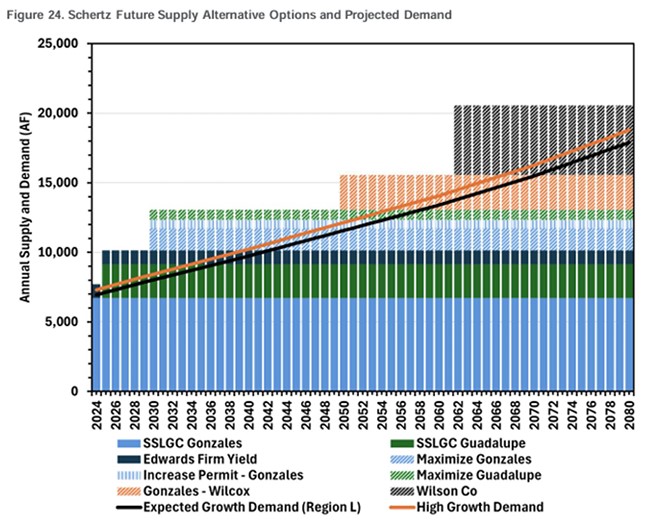
Schertz officials estimate their city will need an additional 2,500 acre-feet by 2070 to adequately respond to their projected growth scenario.
Today, CVLGC owns 78 leases on Carrizo-Wilcox Aquifer groundwater across 11,000-acres in Wilson County. Independent valuations hold that, if permitted, the leases are worth $11 million collectively.
For the moment, Midland, Texas-based Commodore Midstream Partners is proposing that Cibolo and Schertz create a public facility corporation, which would receive CVGLC assets, such as water leases and well site options. The corporation would then assign to Commodore commercial development and operating rights in exchange for negotiated royalties.
According to the proposal, Commodore would bear risks such as the estimated $40 million in capital expenditures needed to develop wells, pipelines and other facilities to extract the water and prepare it for delivery. Cibolo and Schertz would stay sponsor cities in control of the PFC.
Commodore representatives have said, if a future project fails, their company assumes the risks and not the cities. If a project succeeds, the cities receive recurring revenue.
Separately, the Marion-based Green Valley Special Utility District is proposing to acquire CVLGC assets to expand its municipal water supply for Cibolo and Schertz with excess water to be made available for wholesale to one or both cities at a negotiated price.
What they are saying
One key question for Cibolo and Schertz is what to do with the existing groundwater rights in a time of inactivity. Schertz leaders are also wondering whether it makes sense for CVLGC to develop the water, and find their city in a situation where it supports two water corporations, and faces duplication of costs and overhead.
Schertz City Councilmember Paul Macaluso said both towns should remain patient and find a deal that is mutually beneficial to all parties.
“I feel like there’s a little bit of urgency that’s really unnecessary because right now we have two proposals. We need more than that. I think that is giving us very few to no options to review. We need some kind of competition,” he said.
Schertz Councilmember Benjamin Guerrero agreed with Macaluso: “I agree. Two proposals are not enough. We must use common sense and keep our water rights. We don’t know what the future is going to bring.”
Cibolo Mayor Kara Latimer posed a question about how Cibolo Valley LGC should operate: “Is CVLGC something that we’re just looking at – providing water for our individual cities – or is it something that we’re a part of benefiting from and but then also provide water to other entities?”
Schertz Mayor Ralph Rodriguez responded, agreeing with the idea that CVLGC should not benefit only his city and Cibolo.
“I feel that we should also take advantage of whatever water is left and that we should be able to raise some revenue from it,” he added.
Cibolo Councilmember Norma Sanchez-Stephens asked her colleagues and counterparts to keep in mind planned and recommended local strategies, such as a proposed capital expansion for Schertz-Seguin LGC.
“It includes the shared pipeline infrastructure with CVLGC. So, there’s even more that we should actually be considering than just what we have in front of us,” Sanchez-Stephens said. “We need to be exploring all of those options because that could significantly reduce the cost to create a transmission corridor.”
Former Schertz Mayor Ralph Gutierrez addressed the Oct. 22 meeting, urging both cities to have foresight about their near-term and long-term water needs, and to closely study any proposal that asks them to sell water rights.
Gutierrez was particularly skeptical about Green Valley SUD’s proposal and that organization’s ability to provide water to Schertz. He also pointed to the TWDB’s long-range regional water strategy plan that describes Wilson County as a key water source for multiple growing area communities for decades to come.
“It’s extremely important that you take a closer look at the water rights, the surplus, and what is necessary in the future,” Gutierrez added.