By Edmond Ortiz
A local nonprofit aims to boost Bexar County’s efforts to develop a system for helping young families who struggle to stay together amid personal crises.
What is happening
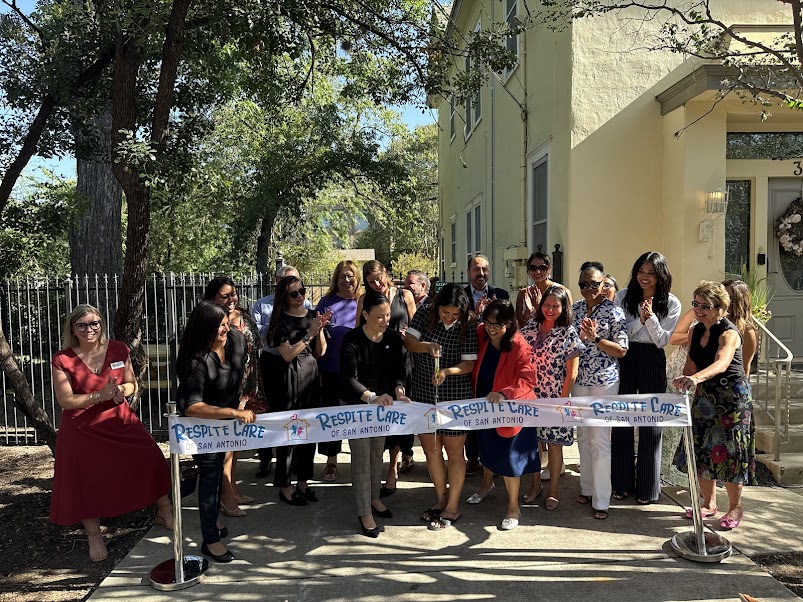
Officials with Respite Care of San Antonio said Aug. 18 that they are growing the San Antonio-area’s first crisis nursery, a safety net of sorts that is meant to keep children safe, bolster families, and prevent child abuse and neglect before they happen.
Respite Care of San Antonio is able to offer overnight care for children with disabilities and complex medical needs, and care for their siblings. Through its Safety Nest Network collaboration, RCSA can connect clients to wraparound family support services that help young families to stay stable and together.
According to a press release, a parent recovering from surgery, escaping domestic violence, securing housing, addressing a mental health crisis, or managing another unexpected emergency presents a situation that could yield an at-risk child.
Recognizing such challenges as a potential public safety issue, Bexar County commissioners voted in July to have county staff pursue the development of a crisis nursery, which would also help to keep at-risk minors out of a larger system where they may otherwise become a ward of the state or end up in abusive or neglectful situations.
Until now, El Paso has been the lone Texas community to have a crisis nursery. Respite Care of San Antonio officials cited troubling figures from around Bexar County:
*22.3% of children live in poverty, while 45% of households do not earn enough income to meet basic household expenses. A news release stated that housing instability, financial hardship, family violence, medical emergencies, and the relentless demands of caring for children with complex needs can overwhelm many families.
*In 2025 alone, 18,752 children in Bexar County were the subject of child abuse and neglect investigations. Thirteen children died because of abuse or neglect, most under the age of 3. *Currently, 1,932 children remain in foster care in Bexar County, and as of May 2026, 594 children were receiving family-based safety services.
What they are saying
Such statistics, RCSA officials said, show the need for early intervention that helps young families before personal crises worsen.
“Every parent deserves to know there is somewhere safe to turn before a crisis becomes a tragedy,” said Rebecca Helterbrand, RCSA’s president and CEO, said in a statement.
“The expansion of our region’s first crisis nursery represents more than a new building. It represents hope. Families should never have to choose between leaving a child in an unsafe situation and facing a crisis alone.”
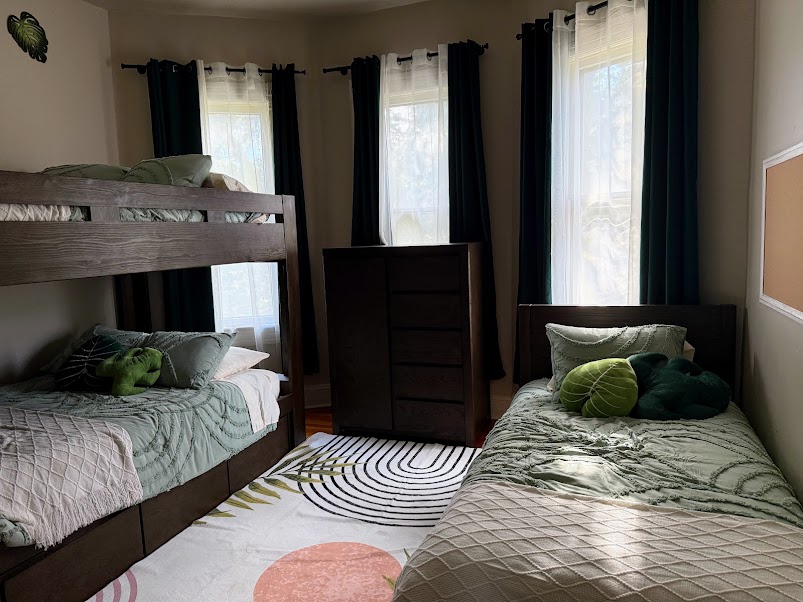
The home that Helterbrand mentioned is a house that Respite Care owns in the Monte Vista neighborhood. The nonprofit used $500,000 in philanthropic funds to renovate the residential structure so that it can meet the city’s specifications and fully accommodate young children in need of such services extended by a crisis nursery.
“The crisis nursery model is an innovative approach that leverages trusted organizations already embedded in a community,” said Eric Meadows, president and CEO of The Meadows Foundation, in a statement. The Meadows is among several organizations that have donated towards renovation and expansion of Respite Care’s housing.
“By expanding support for children with complex needs and their families before a crisis leads to abuse, neglect, or family separation, this collaborative model has the potential to strengthen families in San Antonio and provide a scalable blueprint for other cities and communities to provide safer environments for vulnerable children.”
Respite Care and its supporters and allies are also celebrating the recent expansion of a nearby facility, the organization’s H-E-B House, also in Monte Vista. The H-E-B House, where renovations were funded by the grocer and Noble Charities, provides day, night, and weekend out Respite Care services alongside camps when school is not in session.
Additionally, the Davidson Respite Home, another residential structure in Monte Vista, re-opened earlier this year after a remodel of children’s bedrooms, murals and other spaces. The Davidson home serves as a residential facility for children with disabilities and complex medical needs, and their siblings who are removed from their home, the release stated.
Respite Care also has a developmental childcare center located near the aforementioned homes.
Each RCSA program is staffed by educators, nurses, therapists from community partners, and behavioral health professionals who are trained to tend to children with developmental disabilities, chronic illnesses, and medically complex conditions, while also providing care for their siblings and support for their caregivers.
The Safety Nest Network includes partner organizations such as ChildSafe, YWCA San Antonio, YMCA of Greater San Antonio, AVANCE, Family Service Association, Brighton Center, SJRC Texas | Belong, and UT Health San Antonio.
Randy McGibeny, ChildSafe’s president and CEO, said the most important form of child abuse prevention is assisting vulnerable young families before they reach a breaking point.
“The Safety Nest Network gives parents a place to ask for help without fear or judgment. It provides immediate safety for children while connecting families with the resources they need to overcome challenges,” McGibeny said in a statement.
“This is what prevention looks like when we meet families where they are, preserve relationships, and create a stronger upstream solution for our community.”