By Edmond Ortiz
The San Antonio Independent School District board voted Aug. 17 to put a property tax increase and a new bond package on the local Nov. 3 ballot.
But some school board members admit the election measures will be a hard sell to voters.
What is happening
San Antonio ISD is joining five other San Antonio-area school districts in asking voters to approve a property tax hike, which in this case would raise the maintenance and operations portion of the SAISD’s total tax rate 3.17 cents per $100 valuation. The current total rate is $1.15 per $100 valuation.
SAISD officials said such a property tax increase, if approved, would generate $5.5 million in additional tax revenue, which would fund a one-time supplement for employees, among other compensation initiatives, as well as continued support for college and career-readiness programs, and teacher recruitment and retention.
Separately at the Nov. 3 election, the district is proposing three bond propositions totaling $600 million. Proposition A would include $492 million for school modernization, capital system replacements, safety and security upgrades, the addition of a bus fleet with three-point seat belts, and enhancements for the district’s police fleet.
Proposition B would provide $102 million for information technology improvements, such as network infrastructure and teaching and learning devices. Proposition C would allocate $6 million for improvements at Alamo Stadium and the Alamo Convocation Center.
According to SAISD officials, the impact to the average SAISD homeowner would be a monthly increase of $1.99 in 2026, if voters were to pass all four proposals. In 2027, that average tax bill impact is estimated to increase to total $3.25 per month, a figure would incrementally go up to $5.76 a month by 2030.
However, SAISD property taxes for senior citizens would not be affected by any approved proposals as long as a homestead exemption and over-65 exemption application has been filed with the Bexar County Appraisal District, and a district homeowner will have owned the home as of Jan. 1, 2026.
San Antonio-area school districts have had a mixed record of floating a property tax hike to voters in recent years.
Last November, four outlying districts proposed property tax increases, with only Boerne Independent School District’s measure prevailing. Judson ISD officials have said they would forgo offering a similar proposal there this year.
This fall, Northside, South San, East Central, and Schertz-Cibolo-Universal City independent school districts will seek voter approval to raise their respective property tax rate above a state-mandated cap.
What they are saying
Leaders in multiple Texas public school districts have argued that the state’s compression of school property tax rates, and lawmakers being slow to react to adequately fund teachers have contributed to the need for districts to pursue tax increases at the ballot box.
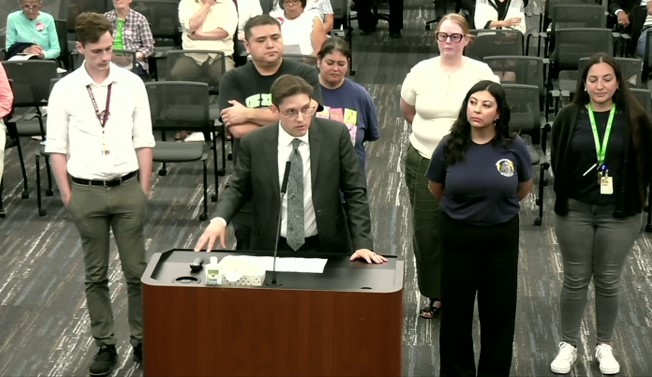
Adrian Reyna, an SAISD educator, urged district leaders to keep in mind a pay raise of some type for non-teaching staff if voters were to approve a property tax increase.
“Our students and our stakeholders have made it clear that SAISD’s backbone is our school workers. Our district cannot run without them. Our students cannot thrive without them, and we must invest in every single one of our valuable staff members,” Reyna said.
As for the bond election, 2020 marked the last time that SAISD last had a successful public vote for capital improvements districtwide.
A blue ribbon task force that helped to develop general bond package recommendations said approved proposals would give the district the flexibility to build at least one new elementary school if needed.
Otherwise, an approved future bond would help to support renovations and expansions to existing campuses, especially on the district’s east and south sides. SAISD officials said this would be an effort to maximize existing schools and stave off any further campus closures, which mostly have resulted from declining enrollment.
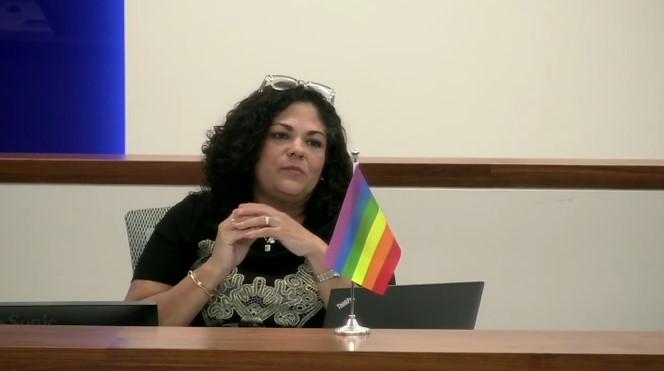
Trustee Stephanie Torres, who represents the traditional West Side in the school district, said SAISD leaders must work hand in hand with community members to convince them that the new bond proposals would benefit all SAISD residents. Torres argued that schools in her area have seen less-than-desired outcomes from the 2020 bond.
“They don’t trust us,” Torres said of many of her constituents.
Board members agreed that the SAISD must do plenty of community engagement to inform voters about the property tax hike and bond proposals, and how any of those ballot measures would positively affect them and the district as a whole.
“I think about what are we going to say to the community,” trustee Christina Martinez said. “I think for the board, we need to have a larger response…and we need to make sure we’re in alignment.”