By Edmond Ortiz
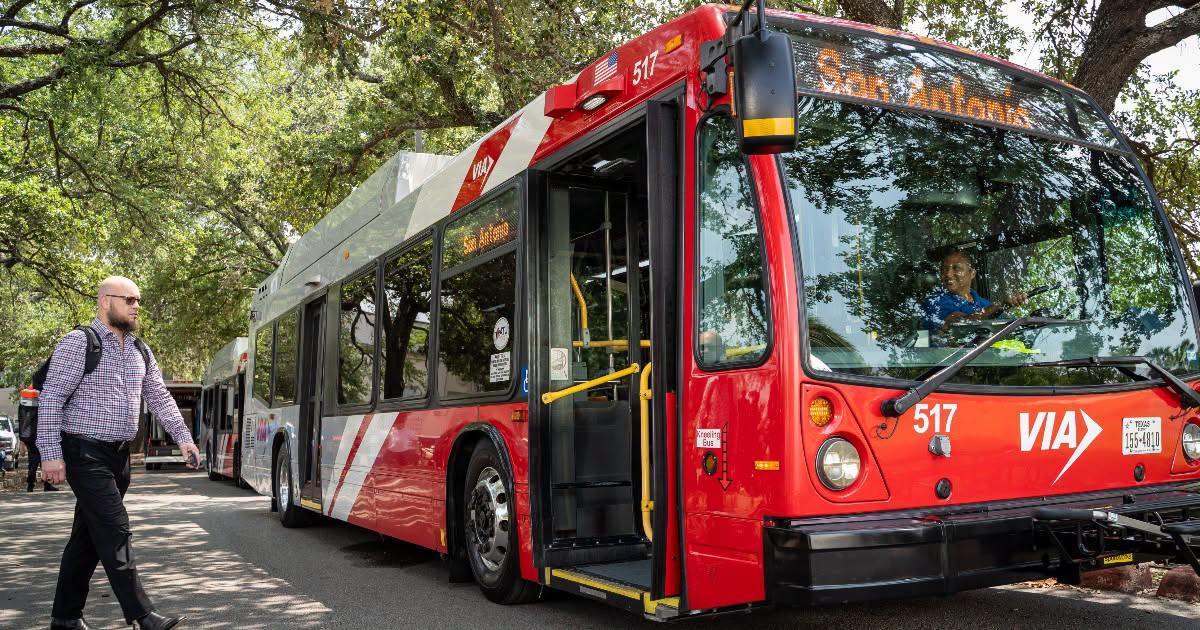
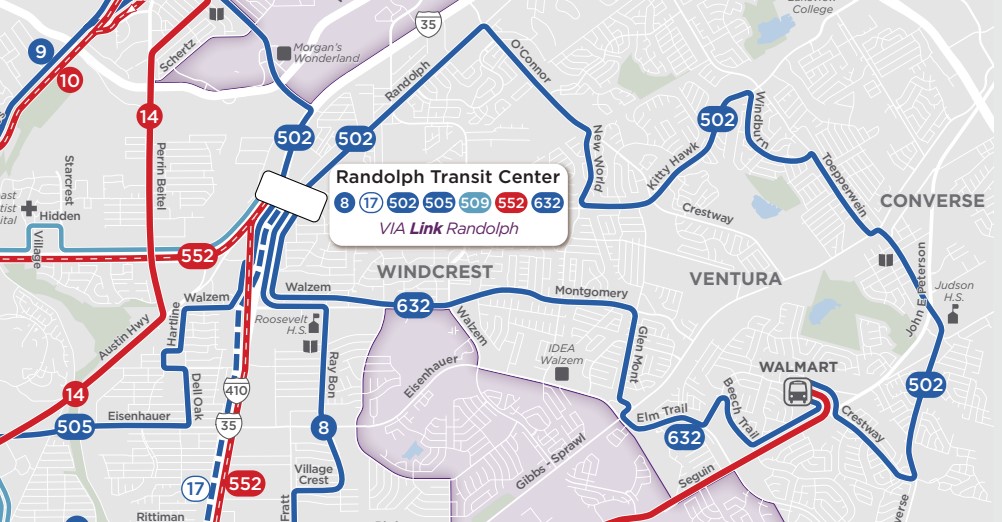
Converse voters will go to the polls Nov. 3 to determine whether the city should keep VIA Metropolitan Transit service.
What is happening
City Council voted Aug. 12 to formally put the VIA service withdrawal proposal on a local ballot, an action that officials said would allow the city to free up more than $2 million to use internally on city road upgrades, public safety enhancements, park improvements and other basic operations.
Converse leaders are also exploring alternative mass transit options that the city could use at a potentially lower price, and serve those residents who would otherwise lean on VIA service.
VIA typically receives 0.5% share of Converse’s local sales tax. The agency’s funding sources include a part of local sales tax revenues collected by cities that VIA serves across Bexar County.
City officials said it is no longer cost-efficient for Converse to keep allocating $2 million-plus in sales tax collections annually for three routes and 37 stops. That monetary allocation is projected to pass $3 million in 2030. More than 75,600 trips originate in Converse annually, according to VIA data.
According to City Manager Stan Farmer, Converse leaders past and present have sought to negotiate with VIA toward a lower sales tax rate but to no avail.
City Attorney Ryan Henry said the city has received no response from VIA despite repeated attempts to communicate with the agency this year.
Over the years, cities such as Universal City and Windcrest have withdrawn from VIA service, and other suburbs such as Castle Hills have considered discontinuing their partnership. Years ago, a few towns surrounding what is now Joint Base San Antonio-Randolph informally discussed developing their own regional public transit system, but nothing came from that.
VIA Link, the agency’s on-demand rideshare program, operates in a network of designated stops within a service area, such as the Randolph Zone, which exists in the city of Kirby and in between Windcrest and Converse city limits.
The Converse-based Greater Randolph Area Services Program runs a shuttle that Windcrest residents can use at certain times for $5 per trip within a 5-mile radius.
There are a lot of projects and improvements that can be completed with an extra $2 million,” Farmer said on the issue at an Aug. 4 council meeting.
“So today, it’s time to let the city of Converse voters decide if they want us to continue paying $2 million-plus. We’re also exploring alternatives for those that do ride the bus. We’re not leaving them out.”
What they are saying
What is not clear are the alternative mass transit options that Converse officials are considering in the event that voters choose to have the city withdraw from VIA service.
Several meeting attendees, including some living in the unincorporated areas surrounding Converse, told the council that they heavily rely on VIA to travel to work, school, to get groceries, pick up medications, and make medical appointments.
A few attendees asked the city to stick with VIA while others urged officials to share potential transit alternatives soon. Focus on San Antonio is reaching out to VIA representatives for comments.
“I’m asking you not to move forward yet. I support being responsible with tax dollars if another provider can truly offer the same or better transportation for less,” resident Melissa Franklin said.
“But before we get something cheaper or better, can we prove it? Show us the routes, hours, fairs, disability access, student benefits, regional connections, service limits, and total cost.”
Mayor Al Suarez said the city would respect whatever voters decide in November, but that choosing to leave VIA would give Converse more power to use its sales tax allocation how it sees fit, and still provide a more cost-efficient mass transit option to residents.
“I think it was a great idea in the 1970s, but it’s not there anymore,” Suarez said of VIA. “With the modern innovation that we have (on-demand rideshare and other options), we can do our own service now, for less money, and control it.”
Councilmembers such as Jessica Hannah and Renee Paschall said they feel for residents who fear losing VIA service. They urged city staff to openly share details about VIA’s current service, the upcoming election, potential alternative transit options, and how the freed up funds could be spent.
Farmer said the city will offer public meetings leading up to the special election. Converse’s Nov. 3 ballot will contain a proposal to reauthorize a segment of local sales tax to continue funding road maintenance. That same ballot could also offer contested races for the town’s regular council election.
“We all are in agreement that public transportation matters. It’s a necessity. Clearly, there’s a need for it in Converse. Our residents need access to jobs, child care, health care – to all things,” Hannah said.
“And not everybody has the resources to have their own personal vehicles, so it’s important, as a city, that we respond to our residents’ needs and to assist them.”
VIA provided Focus on San Antonio a comprehensive response to the Converse council authorizing the special election. Agency representatives said they have been in communication with city officials in recent months and years, even responding to a city request for operating expenses and service specifics.
While city officials suggested whether they and VIA could renegotiate a lower rate of sales tax portion that goes from the city to the agency, VIA representatives said Converse voters are the ones who elected to set the tax rate and participate in the VIA system.
“VIA cannot reduce the sales tax of a member city. Converse, like every other member jurisdiction in VIA’s service area, contributes a 1/2-cent (0.5%) sales tax to fund transit operations,” VIA representatives said. “That rate was established when VIA became Texas’s first metropolitan transit authority created by public vote in the 1970s, and state law requires the same rate to be collected uniformly across all member cities. It cannot be negotiated.”
Despite two VIA officials offering some information at an Aug. 12 meeting, they received no questions or other forms of interaction with Converse council members or other officials.
VIA representatives said while they are open to further talks with local leaders, they urged Converse voters to be informed before going to the polls, including the acknowledgment that if they were to approve withdrawal from the agency, service would immediately stop but funds would not be freed up right away.
“Under the Texas Transportation Code, a withdrawing city remains obligated to continue collecting the 1/2-cent sales tax until it satisfies its share of VIA’s outstanding debt — an amount of approximately $12 million for Converse,” VIA’s statement read. “At current collection rates, that process is expected to take about six years, during which the funds would not be available for alternative use by the city.”
VIA representatives said the end of regular bus service in Converse would also affect 14,000-plus annual VIAtrans paratransit trips, which provide transportation to disabled individuals who cannot use fixed-route bus service, that begin or end in Converse.
VIA’s services provide transit options to Converse residents that can get them where they need to go across the system’s 1,210-square-mile service area, all for $1.30. Many categories of riders — including children, seniors and members of the military — also qualify for fares reduced by 50%,” VIA representatives also said. “Additionally, seniors 62 and older only pay 25 cents between 9 a.m. and 3 p.m. on weekdays and ride free on weekends.”