By Edmond Ortiz
Local organizations responsible for promoting New Braunfels as a tourist destination will soon have a new source of funds for their marketing efforts.
What is happening
New Braunfels City Council voted unanimously March 9 to approve and validate petitions that support the creation of a local Tourism Public Improvement District.
Once established, a New Braunfels TPID would put a 2% assessment on the room rate of each participating hotel that has five or more rooms within city limits.
This assessment, which is separate from the Hotel Occupancy Tax, will not be placed on short-term rentals or on hotels that receive most of its revenues from the sales of a specific tourist event or attraction.
The city will collect TPID revenues, and a new non-profit TPID board will oversee the administration of district operations, where the new income will help to enhance marketing and promotion of the city as a tourist destination.
The new TPID will be allowed to operate for 10 years, and can only be renewed by a new petition drive with consent from participating hoteliers.
The city’s chamber of commerce and convention and visitors bureau will implement the service plan. City officials and petitioners estimate that TPID assessments will produce about $1.1 million annually, with 85% of those revenues going to marketing and sales for the local hospitality industry.
What they are saying
Local hoteliers and their supporters who pushed for the creation of a TPID in New Braunfels said the idea has several benefits, such as that the program is led by private employers who would derive the most positives from the district.
Proponents added that enhanced marketing of the city can lead to more tourists, resulting in increased local tax revenues and higher income for area hotels, restaurants, bars and entertainment venues.
Texas currently has 10 PIDS. The city of San Antonio has had a TPID in operation for seven years, with two zones of participating hotels–one in the downtown area, and one covering other hotels outside of the central business district but within city limits.
But Jared Werner, assistant city manager, noted that while New Braunfels’ hospitality industry had a brief surge in HOT revenues between 2023 and 2023, after the height of the COVID-19 pandemic, such revenue levels have stagnated locally in more recent years. He also said that tourism impacts sales tax revenues, which in turn help to reduce the city’s reliance on property taxes.
“We have a clear season in New Braunfels for tourism activity. However, we have the facilities and the workforce that really would benefit from a balanced, year-round tourism experience,” Werner added.
According to petitioners, 61% of affected hoteliers supported creation of a TPID – slightly over the minimum 60% threshold. A couple of residents not in the hospitality industry said they did not back creating the TPID, saying more tourists would only prompt even more traffic and parking issues for local residents.
But some hoteliers who did address the council said the district will help them to bring in more business in the long term.
Shailesh Bhakta, a Texas Hotel and Lodging Association board member who has designed and run several New Braunfels hotels, backs the TPID. He said he has heard from some hoteliers who are worried that the new assessments will force them to raise their room rates, which could discourage tourists who may go elsewhere.
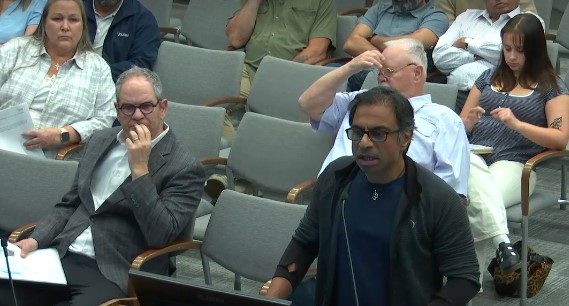
Bhakta added that hotels in many surrounding cities are raising their rates to more significant levels, but New Braunfels remains a bargain.
“This is a marketing tactic at the end of the day. When you throw money at something, if it doesn’t stick, you move on to something else. It’s common knowledge. That’s all this is,” Bhakta said. “If it doesn’t work, the board of directors will dissolve this and move on to something else, but you can’t give up without trying.”
What’s next
Council will meet again March 23 to consider a resolution formally creating the New Braunfels TPID, and the first reading of an ordinance that establishes the assessment on hotel room rates. Council will also consider an agreement between the city, TPID board and the chamber toward administration of the district.
Council will then meet April 23 to consider a final reading of the assessment ordinance, The city will formally notify affected properties in May about the coming TPID, with webinars and workshops being scheduled in June to serve as orientation for those property owners. The district assessments go into effect July 1.