By Edmond Ortiz
San Antonio city staff sat with City Council Jan. 14 to brief the elected leaders on the latest developments and next steps regarding the envisioned construction of a new downtown sports and entertainment district, and the building of a new San Antonio Missions stadium.
Project Marvel plans
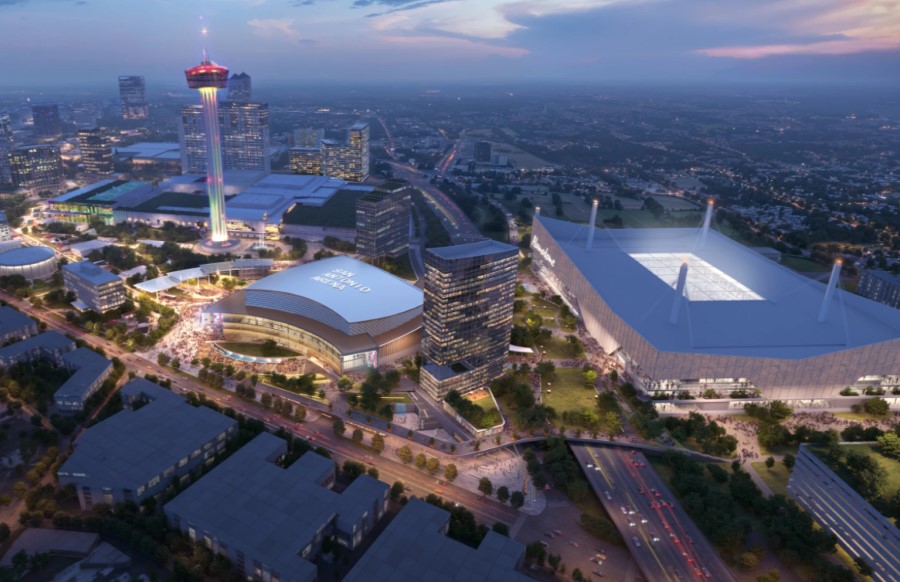
Ben Gorzell, the city’s chief of financial and administrative services, and City Manager Erik Walsh updated council members on plans surrounding Project Marvel, the effort to develop a multi-use development anchored around a new San Antonio Spurs arena.
Council also got caught up on plans concerning the Missions’ upcoming Double-A ballpark, which is eyed for construction on the western edge of downtown.
A notable step was scheduled to take place at the council’s Jan. 15 meeting when the council considers having the city make a formal offer of $30 million to the General Services Administration to acquire the federal government building at 727 E. Cesar Chavez St. and two adjacent parking lots.
The Spurs are providing the $30 million to the city in order to execute the purchase. The plan is for the federal government to remain a tenant in the multi-story structure until Project Marvel-related construction – including building of the nearby Spurs arena at the former Institute of Texan Cultures site – begins.
If all works out, the acquisition, which covers 5.7 acres, would be fully completed by this August, Gorzell said. The city will receive a fee-simple title to the property subject to a contingency deed, which will be held in escrow until arena-related construction kicks off.
City officials have all of 2026 to finish an estimated $60 million acquisition of the former ITC property; Gorzell said the city’s Midtown Tax Increment Reinvestment Zone, among other possible sources, could be used to fund the purchase of the former ITC site.
Local officials are also spending 2026 expending $3.7 million in federal grant funds, approved by the U.S. Department of Transportation in 2024, to study ways to improve transit-related connections between downtown and the East Side.
Gorzell said the goal is to examine the feasibility of potential solutions to obstacles created by the presence of Interstate 37, including more sidewalks, mid-block crossings, or a land bridge.
While a pedestrian bridge does exist between the Alamodome and the Henry B. Gonzalez Convention Center, Spurs officials and city staff have envisioned a land bridge linking a renovated dome and the new sports and entertainment complex, which would sit at Hemisfair next to the convention center, as part of Project Marvel. The city has until Dec. 31, 2026, to spend all grant money.
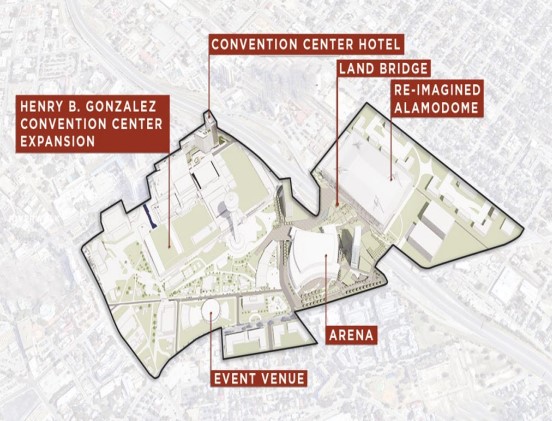
Gorzell said the city is expected to issue on Jan. 16 a request for proposals for a consultant to help determine the cost of serving the proposed sports and entertainment district, including the use of projected city general fund revenues, and identification of new revenue opportunities.
The consultant on the $350,000 study will help to come up with an estimated cost of needed services related to traffic, security, fire/EMS protection, and district maintenance around the new development.
On Jan. 16, the city will also issue a request for qualifications for a consultant, who will coordinate and manage new construction and physical upgrades of new development within the sports and entertainment district. This person, called an executive program manager, would begin work this spring and stay on through the first phase of Project Marvel projects.
The city is scheduled in February to issue an RFP for a consultant to study new and existing city- and privately owned parking facilities to see how much parking space would be needed to accommodate future residents, merchants and visitors at the sports and entertainment district. The study, Gorzell said, will also consider the planned increased use of VIA Metropolitan Transit vehicles, and the impact on taxis and rideshare companies operating in San Antonio.
Meanwhile, the San Antonio Water System is leading a feasibility study with options for providing chiller water cooling to new and expanded venues and mixed-use development within the Project Marvel zone.
Those options, according to Gorzell, include relocating or expanding the existing chilled water plant on Market Street, expanding the chilled water plant on Cherry Street, and/or expanding the chilled water system at satellite location(s) within or near the sports and entertainment district. SAWS’ recommendations are due at the end of this year.
Additionally, the city is slated to take all of 2026 working with the Spurs, Bexar County and the team’s private development partner to shore up all Project Marvel-related documents, including a community benefits pact and an economic development agreement.
An updated feasibility study into expanding the convention center, another major part of Project Marvel, is scheduled for presentation to the City Council this September, Gorzell said.
September is also the same month when the council expects to receive city staff’s recommendations on giving the Alamodome long-range improvements.
Additionally, city staff will meet with council in September to look at recommendations for enhancing road-related infrastructure around the Project Marvel area. Those recommendations, according to Gorzell, will include input from VIA and the Texas Department of Transportation. Local officials have informally discussed possibly conducting an infrastructure bond election to help support road, sidewalk, drainage and traffic control upgrades around the project area.
Elsewhere, the city’s neighborhood and housing services department is slated to submit this spring an assessment on how to minimize displacement that the new sports and entertainment district could cause among surrounding neighborhoods.
Mayor Gina Ortiz Jones and all council members provided feedback on the two-hour Project Marvel briefing.
Several councilors said it will be important to prioritize accountability oversight, and to get accurate, timely information from city staff in order to regularly engage constituents, especially those who live or own a business in or near the Project Marvel area.
Other council members said they hope things such as affordable housing for future residents in the sports and entertainment district, and quality wages and benefits for arena employees, will remain part of ongoing talks among city officials, the Spurs, and potential development partners.
District 1 Council member Sukh Kaur, who represents the central business district, said the evolution of Project Marvel is a prime opportunity for the city to enhance downtown for visitors and residents alike in different ways.
“We want to build a downtown where not only tourists are going to naturally come to because it’s what you look up when you come to San Antonio – you come to the Riverwalk,” Kaur said. “But we want to build a downtown where our residents want to come down to as well, and don’t feel it a burden and don’t only come down when there’s a big event.”
Missions stadium report
Gorzell and Walsh provided an update on efforts to relocate the Missions from their longtime home at Wolff Stadium on the West Side to near San Pedro Creek and Fox Tech High School.
From February through June, the Missions with city input will work with a consultant to conduct a bond feasibility study. A newly created organization, San Pedro Creek Development Authority, would own the new ballpark and issue bonds to leverage revenues from the Houston Street Tax Increment Reinvestment Zone, where the stadium would be located.
Missions officials estimate bonds could produce $126 million in Houston Street TIRZ revenues to pair with a $34 million contribution from the baseball team to develop a multi-purpose facility with 7,500-attendee capacity. Plans call for the new stadium to open in time for the start of the 2028 Texas League season.
Missions officials and the team’s private development partner, Weston Urban, have proposed an estimated $1 billion worth of hospitality and multi-family residential development, which would be built over four phases near the new stadium through 2031.
The city and county would derive property tax revenue from the new ballpark and new private development, all of which would be designated a municipal management district.
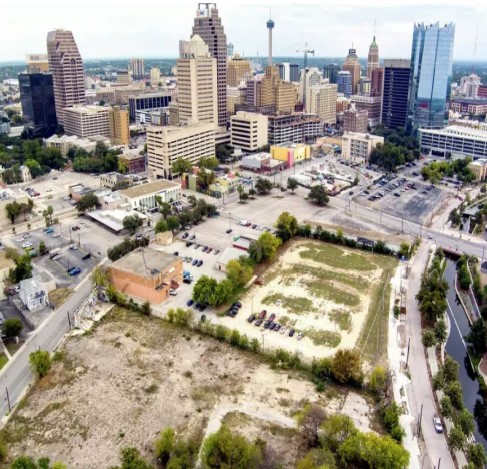
In the meantime, buildings making up the former Soap Factory Apartments in the 500 block of North Santa Rosa Street are scheduled for demolition after this January; the remaining structures in the 600 block of North Santa Rosa are to be razed in late 2027 and 2029.
Gorzell said all residents from 189 apartment units in the 500 block of North Santa Rosa have been relocated, with eligible families receiving some financial assistance from Weston Urban and the city. Forty-three of these tenants moved into units in the 600 block of North Santa Rosa. Their leases will lapse before their respective segment of the property is cleared. A total of $274,000 remains for relocation aid for the current tenants
According to Gorzell, the Missions, the city and their partners will spend part of this spring developing a traffic and security plan for event days at the new ballpark.
Additionally, the city will issue this July an RFQ for a design consultant who will address necessary improvements at the intersection of Martin and Flores streets. Project partners said the new ballpark area development will require the closure of part of Pecan Street.
Also this spring, the city will produce a displacement impact assessment, and shore up agreements with the project partners.
Plans for a new Missions downtown venue do include pledges of community benefits, such as: new public green and park spaces, quality wages for stadium workers, venue use by the city, county and San Antonio Independent School District, hiring veterans for gameday operations, free tickets for youth groups, and a new foundation making yearly contributions to initiatives meant to support at-risk youths and homeless veterans.
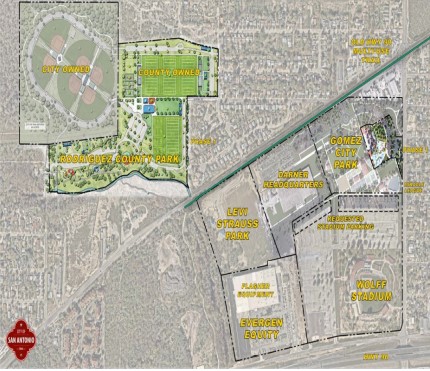
Gorzell said the city is simultaneously looking ahead to the future of Wolff Stadium, with an REQ going out in March for a consultant who can craft a conceptual plan for the 32-year-old ballpark’s redevelopment.
Like with Project Marvel, many council members said they want the new Missions development to positively affect neighbors and the larger community.
“We have such an opportunity here when you think about the district that’s going to be on one half of downtown and this new stadium on the other side of downtown,” District 10 Councilmember Marc Whyte said.
“We know about (the new San Antonio International Airport terminal) that’s coming as well. Our city, over the next six to seven years, has such an opportunity to progress and grow into something where the economic development that we see here becomes much, much more substantial. The purpose of that is to create a revenue stream for our city that we can use to enhance folks’ day-to-day lives.”