By Edmond Ortiz
A state-of-the-art flood warning system will become a reality as a result of a partnership between the San Antonio River Authority and Bexar County.
What you should know
An interlocal agreement regarding the creation of a next-generation flood warning system was passed by county commissioners on Dec. 16, and by SARA board members on Dec. 17.
The river authority will manage the implementation of a program that includes upgrades to high water detection locations, improvements to flood alerts and communications, enhancements to the predictive flood model, and a public outreach campaign.
The collaboration was largely prompted by a fatal flash-flooding event that happened last June in northeast San Antonio. County officials said they were also moved by the catastrophic Hill Country floods that killed more than 130 people last July.
In August, leaders from Bexar County, SARA and the city of San Antonio publicly pledged to work together toward developing the next-generation flood warning system, with the county committing $21 million toward the project.
The newly adopted interlocal pact outlines tasks for the preliminary phase of work, including condition assessments, surveys, identification of flood stage thresholds, initial development of an advanced predictive flood model version, the crafting of a public outreach campaign, and capital planning for future program phases.
The county is agreeing to reimburse SARA up to $2.4 million in expenses for pre-development of the new flood warning system.
A closer look
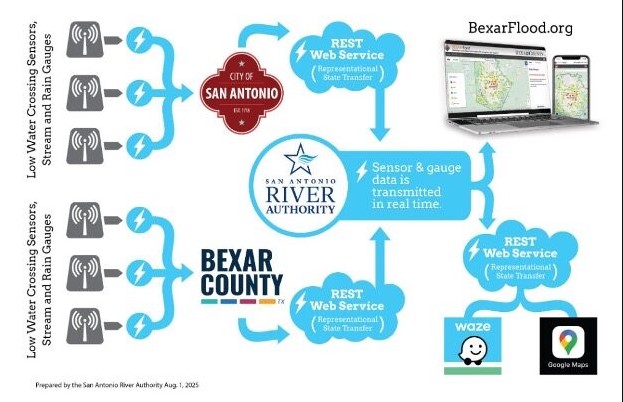
SARA officials said that the flood warning system relies on real-time data from hundreds of gauges and sensors to provide fast, accurate alerts to emergency first responders and the public. Local authorities have already invested millions of dollars in improving other forms of flood mitigation, such as upgrading drainage in high-risk areas.
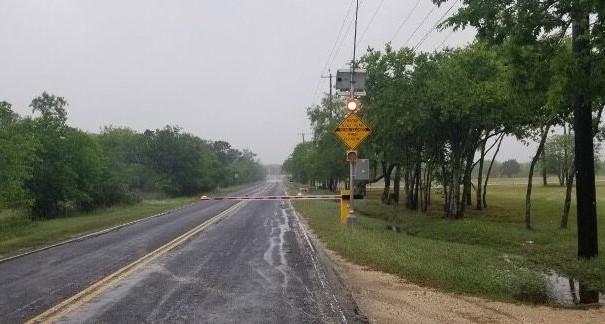
Planned improvements will affect automated road closure barricades, flashing warning lights, and street lighting in flood-prone areas, according to SARA representatives. Project partners said they want the new system fully implemented within two years.
“This approval demonstrates our commitment to innovation and our goal of zero lost lives during a flood event,” county Judge Peter Sakai said.